EUDR Compliance Challenges: From Supplier Data Gaps to Finished-Product Traceability
Published
, 9 minute read
Share this article
Quick summary: EUDR compliance challenges go beyond submitting a Due Diligence Statement. Businesses must manage supplier data, geolocation, deforestation and legality evidence, risk assessment, mitigation, raw-material traceability, production, and finished-product linkage. Discover how businesses can address these challenges and build a connected, audit-ready EUDR compliance workflow.
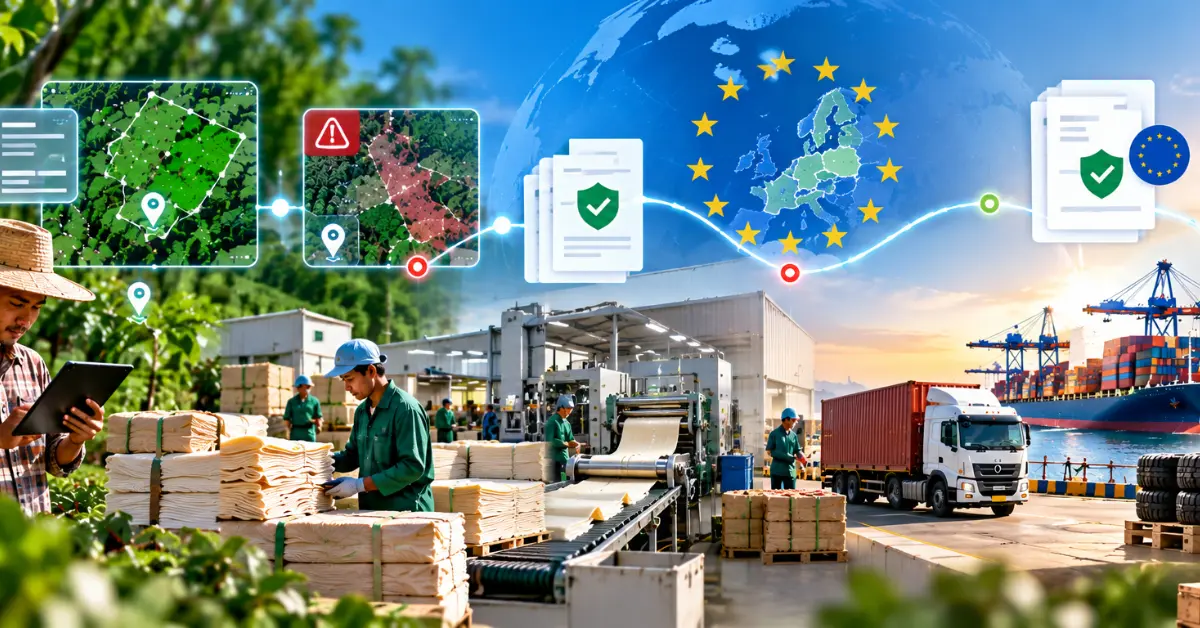
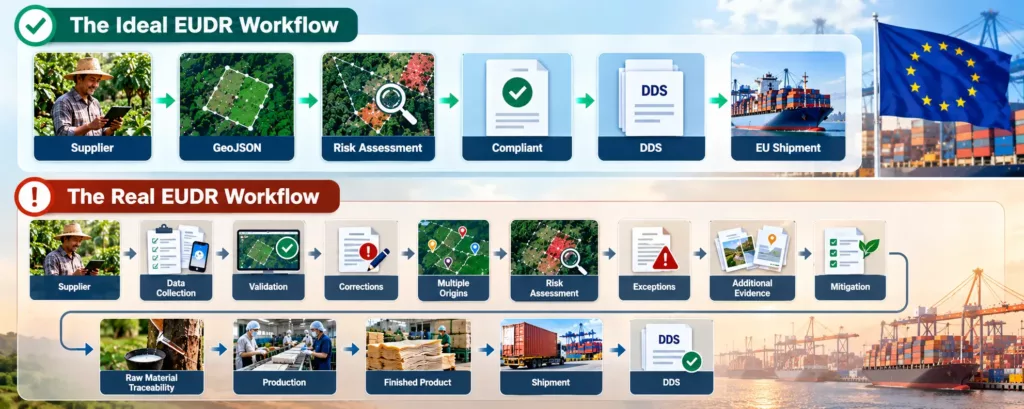
EUDR Compliance Challenges are rarely about simply understanding the regulation. The real difficulty begins when businesses try to apply EUDR requirements across complex, fragmented supply chains. EUDR compliance can look straightforward on paper: collect supplier information, capture geolocation, assess risk, confirm negligible risk, submit the Due Diligence Statement, and move the product to the EU. In real supply chains, these steps rarely happen in a clean, linear sequence.
Suppliers may not have usable GeoJSON. Polygons may need correction. One aggregator may represent hundreds of farmers. A finished product may contain raw materials from multiple origins, suppliers and batches. Procurement may sit in an ERP while geolocation and risk evidence sit somewhere else. And when an assessment identifies an exception, someone still has to investigate the evidence, decide what to do, document the decision and connect it back to the product or shipment.
That is why the real EUDR challenge is not simply understanding the regulation. It is building a repeatable operational workflow that connects information, risk, evidence and physical supply-chain movement. The European Commission describes due diligence as information collection, risk assessment and, where necessary, risk mitigation, supported by a maintained due diligence system. Where relevant products are made from several sources or geolocations, risk needs to be assessed for each source or geolocation.
Key Takeaways
EUDR compliance is not a linear workflow: Real supply chains introduce missing data, corrections, multiple origins, exceptions and complex product relationships.
Supplier data quality is foundational: Incorrect or incomplete source information can affect every downstream compliance decision.
Every relevant source matters: When products involve multiple sources or geolocations, risk assessment needs to account for those sources.
Traceability must reach the finished product: Businesses need to connect origin and raw materials to batches, production, finished goods and shipments.
Integration matters: EUDR data often sits across ERP, procurement, supplier and compliance systems.
Governance makes compliance defensible: Businesses need clear ownership for review, approval, evidence and decision-making.
The real goal is a connected evidence trail: A compliant outcome should be supported by the information, assessment, mitigation and traceability records behind it.
Download our eBook to assess your EUDR readiness, uncover data gaps, and take proactive steps towards stronger compliance.
Article 9 requires information including product details, quantity, country of production, supplier information, geolocation of all relevant plots and appropriate evidence relating to deforestation-free production and legality. If required information cannot be collected, the product cannot be placed on the EU market or exported.
Supplier does not have GeoJSON: A supplier may have coordinates in spreadsheets, PDFs, GPS exports or another format. The business needs a controlled way to collect, convert, validate and standardise the information.
Incorrect polygons: A file may contain invalid geometry, duplicate features, gaps, overlaps or locations that do not match the expected production area. Validation needs to happen before the assessment becomes a compliance decision.
Excel-based data: Spreadsheets can work for collection but become difficult to control when thousands of suppliers, plots, commodities and transactions are involved.
Missing information: A supplier may submit geolocation but not legality evidence, production dates, quantity or other required information.
Supplier corrections: Data collection is often iterative. Suppliers need a way to correct submissions while the business retains visibility into what changed and why.
2. Origin & Risk Challenges
The Commission guidance states that where products are made with commodities derived from several sources or geolocations, risk must be assessed for each source or geolocation. Risk assessment must consider the relevant Article 10 criteria and be tailored to the product and supply chain.
Multiple farmers → one aggregator: An aggregator can represent many production locations. The connection between the aggregator, individual sources and the relevant commodity must remain visible.
Multiple commodities → one supplier: A supplier relationship alone is not enough. Risk and traceability need to be understood at the relevant commodity and product level.
Multiple origins → one product: A product may contain relevant material from several production locations. Those sources cannot simply be collapsed into one generic origin.
Risk assessment exceptions: An assessment may identify plots or sources that require further investigation rather than producing a clean binary outcome.
Additional evidence and mitigation: Where risk is identified, businesses may need additional information, documents, surveys or audits and other proportionate measures to reduce risk to negligible levels.
3. Traceability Challenges
Article 9 requires information about relevant commodities or products contained in, or used to make, a relevant product. Where multiple plots are involved, the geolocation of all relevant plots needs to be captured.
Multiple raw materials: A finished product may use several EUDR-relevant inputs. Each relevant input needs to remain identifiable through the supply-chain workflow.
Multiple batches: The same raw material or product may be received and processed across different batches, making quantity and origin reconciliation important.
Multiple production locations: Manufacturing may occur across plants or processing sites, requiring the digital record to follow material through relevant steps.
RM → FG linkage: A business needs to know which assessed raw materials contributed to a finished product and which shipment contains that product.
Quantity reconciliation: Supplier quantities, purchase orders, goods receipts, production consumption, finished goods and shipments need to make operational sense together.
Discover how businesses can connect suppliers, farms, geolocation, raw materials, batches, finished products, and shipments to build transparent, auditable supply chains and meet EUDR traceability requirements.
The EUDR Information System is the regulatory submission environment, but companies still need internal processes to collect, validate, analyse and connect underlying information. The current system framework also supports APIs and other technical functionality.
ERP has commercial data but not geolocation: An ERP may know supplier, purchase order, quantity and material code but not plot coordinates or deforestation assessment.
Supplier systems are disconnected: Different suppliers may use different formats, portals or spreadsheets, creating a fragmented upstream data environment.
Compliance data sits outside procurement: If EUDR risk is assessed only after a purchase is made, procurement may not know whether a supplier or source is ready before the transaction progresses.
Manual data transfers: Repeated exports, uploads and copy-paste activities increase inconsistent records and make an auditable connection harder.
5. Governance & Decision Challenges
Due diligence is not simply a technical workflow. Operators need to demonstrate how information was collected, how risks were assessed, what mitigation was applied and how decisions were reached. Due-diligence records must also be maintained and kept available as required.
Who reviews exceptions?: Businesses need a defined workflow for investigating non-standard results, data-quality issues and evidence gaps.
Who approves compliance?: A clear approval model helps distinguish automated assessment results from the organisation’s final compliance decision.
How is evidence retained?: Documents, assessment outputs, supplier responses, mitigation measures and decisions need to remain connected to relevant supply-chain records.
How do you demonstrate why a product was considered compliant?: The business should be able to reconstruct what information was collected, how it was assessed, what risks were found, what mitigation occurred and why the final decision was reached.
Discover how businesses can connect supplier data, geolocation, risk assessment, risk mitigation, traceability, evidence, and DDS preparation into one structured workflow for efficient and audit-ready EUDR compliance.
The strongest EUDR systems are not designed only for the perfect scenario. They are designed for what happens when the perfect scenario breaks.
A supplier does not have the right file. A polygon fails validation. One aggregator represents hundreds of farms. A product contains material from several origins. A risk assessment identifies an exception. Evidence is missing. A supplier needs to correct its data. A finished product needs to be linked back to multiple raw-material sources.
That is the operational gap between having an EUDR tool and having an EUDR-ready supply chain.
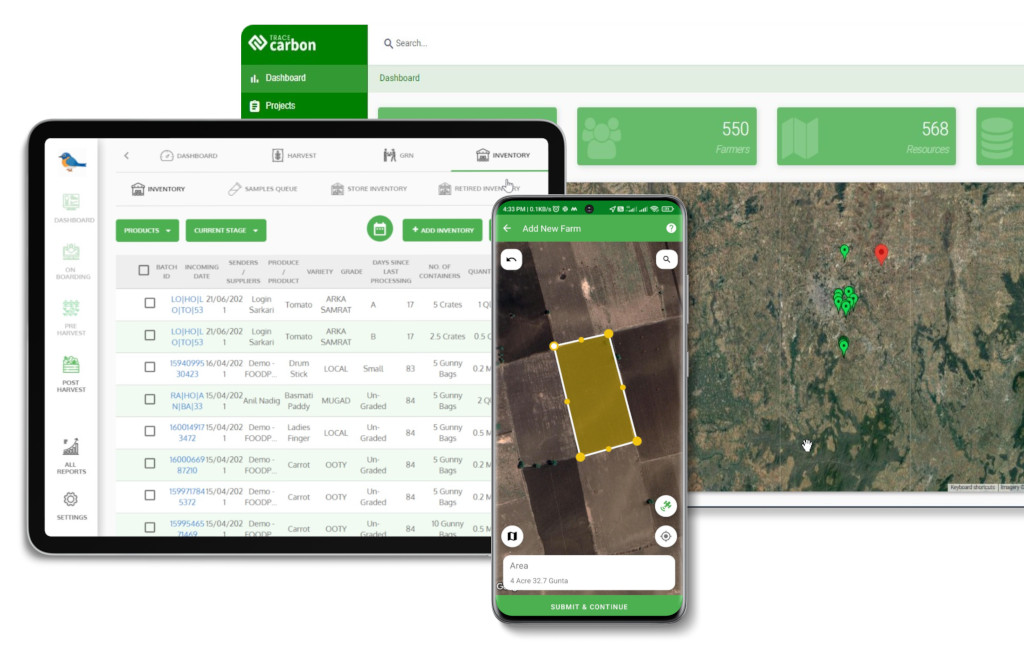
TraceX helps businesses connect supplier data, geolocation, risk assessment, mitigation, procurement, raw-material traceability, production, finished products, shipments and compliance evidence into one connected workflow.
How Businesses Can Close the EUDR Compliance Gap
Map the real EUDR journey from supplier onboarding through EU shipment—not just the DDS submission step.
Define the minimum data required from each supplier and create a structured process for missing or incorrect information.
Validate geolocation files before they become part of a compliance decision.
Preserve source-level traceability when aggregators, multiple commodities or multiple production locations are involved.
Connect risk assessment results to evidence, mitigation actions and approval decisions.
Link raw materials to batches, production, finished products and shipments.
Integrate EUDR workflows with ERP and procurement processes wherever possible.
Create clear ownership for exception review, compliance approval and evidence retention.
Build a More Resilient EUDR Workflow with TraceX
EUDR readiness is not about creating another isolated compliance process. It is about connecting the data and decisions that already exist across procurement, supplier management, sustainability, compliance, supply chain and IT.
TraceX EUDR Solutions helps businesses manage supplier and origin data, geolocation, risk assessment, risk mitigation, traceability, procurement, production and compliance evidence through a connected digital EUDR workflow.
Identify Your EUDR Gaps and Build Readiness with TraceX
The biggest EUDR compliance challenges include incomplete supplier data, incorrect geolocation, multiple production sources, complex raw-material traceability, disconnected ERP and compliance systems, and unclear ownership of risk and evidence decisions.
Why is EUDR geolocation difficult in practice?
EUDR Geolocation is difficult in practice as suppliers may lack usable geospatial files, provide incorrect polygons, or represent multiple production locations through an aggregator. Businesses need validation and correction workflows before using the data for risk assessment.
How do multiple origins affect EUDR due diligence?
Multiple origins affect EUDR Due diligence where relevant products are made with commodities from several sources or geolocations, the Commission guidance states that risk needs to be assessed for each source or geolocation.
Why does EUDR require more than a risk assessment?
EUDR requires more than a risk assessment as due diligence includes information collection, risk assessment and, where necessary, risk mitigation. Businesses also need a maintained due diligence system and documentation showing how the process was carried out.
How can businesses make EUDR compliance more scalable?
Businesses can make compliance more scalable by a structured digital workflow that can connect supplier data, geolocation, risk assessment, evidence, mitigation, procurement, traceability and shipment information instead of managing each activity separately.
Start using TraceX
Transparency, Trust, & Success for your Climate Journey.
We use cookies on our website to give you the most relevant experience by remembering your preferences and repeat visits. By clicking “Accept All”, you consent to the use of ALL the cookies. However, you may visit "Cookie Settings" to provide a controlled consent.
This website uses cookies to improve your experience while you navigate through the website. Out of these, the cookies that are categorized as necessary are stored on your browser as they are essential for the working of basic functionalities of the website. We also use third-party cookies that help us analyze and understand how you use this website. These cookies will be stored in your browser only with your consent. You also have the option to opt-out of these cookies. But opting out of some of these cookies may affect your browsing experience.
Necessary cookies are absolutely essential for the website to function properly. These cookies ensure basic functionalities and security features of the website, anonymously.
Cookie
Duration
Description
cookielawinfo-checkbox-analytics
11 months
This cookie is set by GDPR Cookie Consent plugin. The cookie is used to store the user consent for the cookies in the category "Analytics".
cookielawinfo-checkbox-functional
11 months
The cookie is set by GDPR cookie consent to record the user consent for the cookies in the category "Functional".
cookielawinfo-checkbox-necessary
11 months
This cookie is set by GDPR Cookie Consent plugin. The cookies is used to store the user consent for the cookies in the category "Necessary".
cookielawinfo-checkbox-others
11 months
This cookie is set by GDPR Cookie Consent plugin. The cookie is used to store the user consent for the cookies in the category "Other.
cookielawinfo-checkbox-performance
11 months
This cookie is set by GDPR Cookie Consent plugin. The cookie is used to store the user consent for the cookies in the category "Performance".
viewed_cookie_policy
11 months
The cookie is set by the GDPR Cookie Consent plugin and is used to store whether or not user has consented to the use of cookies. It does not store any personal data.
Functional cookies help to perform certain functionalities like sharing the content of the website on social media platforms, collect feedbacks, and other third-party features.
Performance cookies are used to understand and analyze the key performance indexes of the website which helps in delivering a better user experience for the visitors.
Analytical cookies are used to understand how visitors interact with the website. These cookies help provide information on metrics the number of visitors, bounce rate, traffic source, etc.
Advertisement cookies are used to provide visitors with relevant ads and marketing campaigns. These cookies track visitors across websites and collect information to provide customized ads.
Download the 2026 Traceability Scorecard and Benchmark Your Supply Chain Across 10 Critical Capabilities.
Download our eBook
Don’t Wait for an Audit to Find Your EUDR Gaps
The 2026 Simplification Package changes how HS codes, DDS pass-through and geolocation rules apply to you. Get the free guide and 20-point readiness checklist before enforcement catches you unprepared.