From Fiber to Fashion – Mapping the Textile Value Chain
Published
, 20 minute read
Share this article
Quick summary: Mapping the textile value chain from fiber to fashion enables traceability, ESG compliance, and sustainable sourcing. Learn how transparency supports responsible textile supply chains.
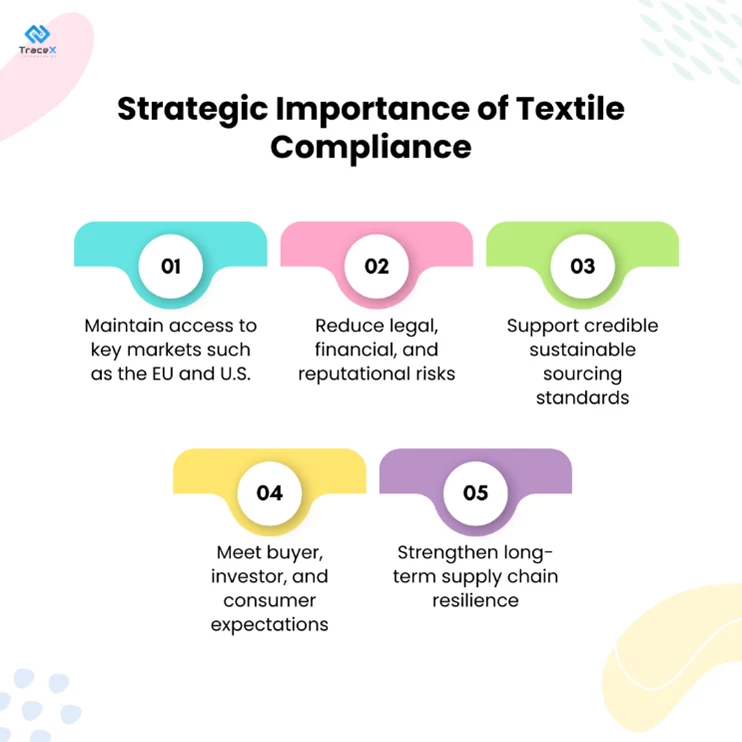
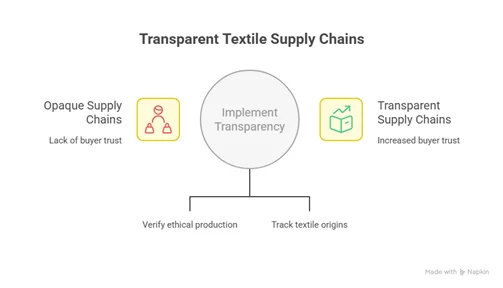
The global fashion industry is being reshaped by one undeniable reality: transparency is no longer optional. What was once a fragmented, behind-the-scenes network of suppliers is now under regulatory, investor, and consumer scrutiny. Brands that cannot clearly demonstrate where materials come from, how they are processed, and under what conditions they are produced risk regulatory penalties, reputational damage, and market exclusion. At the center of this transformation lies the textile value chain the interconnected system that spans from raw fiber production to finished garments on retail shelves. Understanding the textile value chain is no longer just an operational exercise; it is a strategic imperative for compliance, sustainability, and long-term brand credibility.
Textile supply chains are no longer simple, linear systems they are complex, multi-country networks involving raw material producers, mills, dye houses, factories, traders, logistics providers, and retailers. Much of the data across these tiers remains fragmented, manual, and siloed, making true visibility difficult. Without structured oversight, brands face growing exposure across compliance, ESG, and reputational dimensions.
Key Pain Points in the Textile Value Chain
Undetected labor violations Limited tier visibility increases the risk of hidden subcontracting, unsafe working conditions, and human rights non-compliance.
Environmental non-compliance Poor monitoring of dyeing, water usage, chemical discharge, and waste practices can lead to regulatory penalties and brand damage.
Regulatory exposure under evolving EU laws Fragmented documentation makes it difficult to meet Digital Product Passport (DPP) and sustainability disclosure requirements.
Loss of consumer trust due to unverifiable claims Without traceable, certified proof of origin and recycled content, sustainability messaging risks being challenged.
Digital traceability solutions from TraceX enable brands to digitize supplier data, validate material origin, automate compliance workflows, and generate audit-ready Digital Product Passports transforming fragmented supply chains into transparent, resilient ecosystems.
In an era of tightening regulations and growing ESG expectations, mastering the textile value chain means building transparency into every thread of the supply network.
Key Takeaways
The textile value chain covers the entire journey from raw fiber production to finished garments, and mapping it is essential for sustainability, ethical compliance, and regulatory readiness.
Farm-level traceability ensures sustainable fiber sourcing by verifying origin, preventing deforestation and forced labor, and supporting credible ESG claims.
Transparency in textile processing and manufacturing is critical to monitor water use, emissions, chemical management, and labor conditions, while garment production and assembly ensure traceability through documented supplier relationships, audits, and chain-of-custody controls.
Key ESG indicators include environmental metrics (water, carbon, chemicals), social factors (working conditions, child labor prevention, fair wages), and governance elements such as compliance and reporting.
EU regulations like EUDR and ESPR are reshaping global textile supply chains by requiring proof of origin, due diligence, and product-level sustainability data.
However, mapping textile supply chains remains challenging due to fragmented sourcing, data gaps at farms and factories, and greenwashing risks.
Platforms from TraceX address these challenges by enabling end-to-end farm-to-fashion traceability, compliance-ready ESG monitoring, and scalable solutions for farmers, manufacturers, and brands making sustainable fashion verifiable rather than aspirational.
What is the Textile value chain?
The textile value chain spans multiple interconnected stages, each playing a critical role in determining product quality, sustainability, cost, and compliance. Understanding how these stages connect is essential for achieving transparency, traceability, and sustainability in modern fashion and apparel supply chains.
1. Raw Material Sourcing
The textile supply chain begins with raw material production. Natural fibers such as cotton, wool, silk, and flax are grown or sourced from farms, while synthetic fibers like polyester, nylon, and acrylic are derived from petrochemicals or recycled plastics. At this stage, sustainability risks are highest water use, pesticide application, land degradation, labour practices, and deforestation are closely scrutinized by regulators and buyers. Traceability at the fiber level is foundational for sustainable textiles and responsible sourcing claims.
2. Fiber Processing and Yarn Production
Raw fibers are cleaned, processed, and spun into yarns through spinning mills. This stage determines yarn strength, uniformity, and quality. Energy consumption, chemical usage, and waste generation become significant concerns, making process transparency important for environmental reporting and compliance.
3. Fabric Formation: Weaving, Knitting, and Dyeing
Yarns are converted into fabrics through weaving or knitting, followed by dyeing, printing, and finishing. This is one of the most environmentally intensive stages of the textile supply chain due to high water usage, chemical dyes, and wastewater discharge. Sustainable textile initiatives increasingly demand data on dye chemicals, water treatment, and emissions at this level.
4. Garment Manufacturing
Fabrics are cut, stitched, and assembled into finished garments. Labor conditions, worker safety, and ethical sourcing are major focus areas here. Brands face growing pressure to ensure fair wages, safe working environments, and traceable subcontracting.
5. Packaging, Distribution, and Retail
Finished products are packaged, labeled, and distributed to global markets. Increasingly, brands must provide product-level transparency through labels, QR codes, or Digital Product Passports, enabling fashion traceability from fiber to fashion.
Together, these stages form the textile value chain where traceability, sustainability, and compliance are no longer optional but central to competitiveness in the global fashion industry.
Discover how cotton moves from farm to fabric—read our deep dive into cotton traceability now
Why is Farm-level traceability critical for sustainable fiber sourcing?
Fiber sourcing is the most critical and most scrutinized stage of the textile value chain. For natural fibers such as cotton and wool, traceability must begin at the farm to meet rising ESG expectations, regulatory requirements, and buyer sustainability commitments.
Cotton & Wool Sourcing from Smallholders and Farms
A significant share of global cotton and wool is produced by smallholder farmers. These fragmented supply bases create challenges around visibility, consistency, and verification. Farm-level traceability enables brands and mills to identify exactly where fibers originate, how they are produced, and under what environmental and social conditions.
KYC and GPS-Mapped Farm Data
Digital farm profiling is essential for farm-to-fiber traceability. Know-Your-Customer (KYC) verification establishes farmer identity, land ownership or tenure, and participation in supply programs. GPS-mapped farm boundaries provide geospatial proof of origin, helping verify production zones, prevent fraud, and support deforestation-free sourcing claims.
See how integrated KYC is transforming farmer onboarding
Capturing farm-level data on inputs, water use, labor practices, and agronomic activities allows continuous ESG monitoring at the source. This data forms the evidence base for sustainable cotton sourcing, responsible wool standards, and regulatory compliance. Rather than relying on declarations, brands gain proof-based sustainability linked directly to fiber origin.
By enabling farm-to-fiber traceability, textile supply chains can reduce risk, improve transparency, and build credible sustainability narratives from the very first step of production.
Why is Transparency important in textile processing and manufacturing?
Processing and manufacturing are the most resource-intensive and risk-prone stages of the textile value chain. Spinning, weaving or knitting, dyeing, and finishing transform raw fibers into finished fabrics but they also introduce major compliance, quality, and sustainability challenges if not transparently managed.
Spinning, Weaving, Dyeing, and Finishing
At this stage, fibers from multiple sources are processed across different facilities, often in different geographies. Lack of visibility during spinning and fabric formation can obscure fiber origin, while dyeing and finishing processes account for a significant share of water use, chemical consumption, and effluent discharge in textiles. Transparent process data is essential to demonstrate responsible production.
Batch-Level Traceability to Prevent Mislabeling or Contamination
Batch-level traceability links incoming fiber or yarn batches to specific production runs, machines, and outputs. This prevents unauthorized fiber blending, mislabeling of organic or certified materials, and cross-contamination between conventional and sustainable lines. Each fabric batch can be traced back to its source materials, processing conditions, and production date—enabling rapid root-cause analysis and recall readiness.
Chemical Management and Environmental Compliance
Textile processing requires strict control over dyes, auxiliaries, and finishing chemicals. Digital tracking of chemical inputs, restricted substance lists (RSLs), wastewater treatment data, and discharge parameters supports compliance with environmental regulations and buyer standards. Transparent chemical management is also critical for eco-friendly dyeing claims and downstream certifications.
By enabling textile processing traceability and real-time manufacturing transparency, brands and suppliers can reduce compliance risk, improve environmental performance, and build trust in sustainable textile claims across global markets.
How does Garment production and assembly ensure traceability and ethical compliance in the textile value chain?
Garment production is the stage where fibers, yarns, and fabrics are transformed into finished apparel, making it a critical control point for traceability, ethics, and compliance. Linking fibers to finished garments ensures that sustainability, origin, and certification claims made at the farm or mill level are accurately carried through to the final product. This is achieved through batch-level identifiers, production orders, and digital records that connect fabric lots to specific garment SKUs.
Monitoring labor standards and worker safety is equally essential at this stage. Brands and regulators increasingly require proof of fair wages, safe working conditions, and compliance with international labor frameworks. Digitized audits, worker records, and facility-level compliance data help reduce social risks and support ethical apparel manufacturing.
Chain-of-custody models define how materials are tracked through production. Identity-preserved models maintain strict separation of certified materials, enabling product-specific claims, while mass balance models allow controlled mixing with verified volume reconciliation. Choosing the right model depends on regulatory requirements, certification standards, and buyer expectations, making garment-level traceability foundational for credibility and market access.
What are the key ESG indicators used to assess sustainability in the textile industry?
Sustainability and ESG (Environmental, Social, and Governance) mapping in the textile industry involves tracking impacts, risks, and performance across the entire value chain from raw material sourcing to manufacturing, distribution, retail, use, and end-of-life. This approach enables brands and suppliers to improve transparency, reduce risk, meet regulatory requirements, and respond to growing consumer and investor expectations.
1. Environmental Indicators
Environmental performance is critical in textiles due to the industry’s high resource intensity and pollution footprint.
a. Water Use
Cotton farming and wet processing (dyeing, finishing) are among the most water-intensive stages.
ESG mapping evaluates:
Total water consumption and water intensity per unit of fabric
Water sourcing in water-stressed regions
Wastewater treatment, discharge quality, and compliance with local regulations
Best practices include closed-loop water systems, low-liquor dyeing, and water stewardship programs.
b. Carbon Footprint
Emissions occur across:
Raw material production (e.g., cotton cultivation, synthetic fiber production)
Energy-intensive manufacturing processes
Transportation and logistics
ESG assessment tracks:
Scope 1, 2, and 3 greenhouse gas emissions
Energy mix (renewable vs. fossil fuels)
Decarbonization strategies include renewable energy adoption, energy efficiency, and material substitution (e.g., recycled fibers).
c. Chemical Management
Textile processing uses thousands of chemicals, some hazardous to humans and ecosystems.
Key ESG metrics include:
Use of restricted or hazardous substances
Compliance with standards such as ZDHC (Zero Discharge of Hazardous Chemicals)
Chemical traceability and safe handling practices
Certifications like OEKO-TEX® help ensure consumer and environmental safety.
2. Social Indicators
Social responsibility is a core pillar of ESG in textiles, given the industry’s reliance on global labor networks.
a. Labor Conditions
Assessment includes:
Health and safety standards in factories
Working hours and freedom of association
Auditing and remediation processes
ESG mapping identifies high-risk regions and suppliers for targeted improvements.
b. Child Labor Prevention
Child labor risks are particularly relevant in raw material sourcing and informal subcontracting.
Responsible brands implement:
Supplier codes of conduct
Age verification systems
Third-party audits and community monitoring programs
c. Fair Wages
ESG frameworks increasingly go beyond minimum wage compliance to assess:
Living wage benchmarks
Gender pay equity
Transparent payroll systems
Fair wage practices contribute to worker well-being and long-term supply chain resilience.
3. Alignment with SDGs, Reporting, and Certifications
Fair Trade – fair wages and safe working conditions
OEKO-TEX® – chemical safety and product compliance These standards support credible sustainable fashion practices and reduce greenwashing risks.
How do EU textile regulations such as EUDR and ESPR affect global textile supply chains?
Regulatory compliance and third-party certifications play a critical role in ensuring sustainable sourcing, responsible production, and ethical trade across the global textile supply chain. As governments tighten environmental and social regulations and buyers demand proof of sustainability, textile companies must navigate a complex landscape of regional laws, import standards, and voluntary certification schemes.
Key Regulatory Frameworks Affecting Textiles
European Union Regulations
The EU is at the forefront of sustainability regulation, with several laws directly impacting textile manufacturers, exporters, and brands.
1.ESPR (Ecodesign for Sustainable Products Regulation)
Establishes mandatory sustainability requirements for products sold in the EU.
Digital Product Passports (DPPs) containing material, environmental, and compliance data
Encourages circular textile design and transparency throughout the lifecycle.
2. United States Import Standards
Textile imports into the U.S. must comply with several regulatory and trade requirements, including:
Customs and Border Protection (CBP) rules on country-of-origin labeling
Forced Labor Enforcement (Uyghur Forced Labor Prevention Act – UFLPA), requiring proof that goods are not linked to forced labor
Consumer Product Safety Commission (CPSC) standards for flammability and chemical safety Non-compliance can result in shipment detentions, fines, or import bans.
Textile-Specific Certifications and Standards
Certifications provide third-party verification of sustainability and ethical claims, helping companies demonstrate compliance and build trust.
1. GOTS (Global Organic Textile Standard)
Covers the entire organic textile supply chain, from fiber to finished product.
Key requirements:
Use of certified organic fibers
Restricted chemical inputs
Environmental management systems
Social criteria aligned with ILO conventions
2. OEKO-TEX®
Focuses on chemical safety and consumer protection.
Ensures textiles are free from harmful substances.
Widely used to demonstrate compliance with EU chemical regulations such as REACH.
3. Fair Trade
Emphasizes social responsibility and economic fairness.
Includes:
Fair wages and premiums
Safe working conditions
Worker empowerment and community development
4. BCI (Better Cotton Initiative)
Promotes more sustainable cotton farming practices.
Addresses:
Reduced water and pesticide use
Improved soil health
Better labor practices at farm level
Often used by brands seeking scalable sustainable sourcing standards rather than full organic certification.
Continuous Monitoring vs. Periodic Audits
Traditional textile compliance relies heavily on periodic audits, typically conducted annually or semi-annually. While audits remain important, they have limitations:
Provide only a snapshot in time
May fail to detect ongoing or hidden risks
Can be costly and reactive
Continuous monitoring is increasingly adopted as a best practice:
Uses digital tools, supplier data platforms, and traceability systems
Enables real-time tracking of compliance indicators (labor, environmental, sourcing risks)
Supports proactive risk management and faster corrective actions
Aligns better with emerging regulations requiring ongoing due diligence (e.g., EUDR, ESPR, UFLPA)
What are the Challenges in Mapping Textile Supply Chains
Mapping textile supply chains is essential for transparency, compliance, and sustainability, but it remains one of the most difficult tasks in the fashion and textile industry. The sector’s globalized, multi-tiered structure creates significant visibility, data, and credibility challenges, particularly beyond Tier 1 suppliers.
1. Fragmented Sourcing and Informal Suppliers
The textile supply chain is highly fragmented, often spanning:
Smallholder farms (cotton, wool, silk)
Ginners, spinners, weavers, dyers, and finishers
Multiple tiers of subcontractors across different countries
Widespread use of informal or unauthorized subcontractors, especially during peak demand
Frequent supplier changes driven by cost, seasonality, or geopolitical risks
This fragmentation makes it difficult to trace materials back to origin, assess ESG risks, and ensure compliance with labor and environmental standards.
2. Data Gaps in Remote Farms and Factories
Accurate data collection is a major obstacle, particularly at upstream stages.
Common data gaps include:
Lack of digital record-keeping at small farms and rural facilities
Inconsistent or non-standardized ESG metrics across regions
Limited access to internet, technology, and training in developing countries
As a result:
Environmental data (water use, pesticide application, emissions) is often estimated rather than measured
Social data (working hours, wages, age verification) may be incomplete or unreliable
Traceability systems struggle to validate real-world practices
These gaps weaken ESG reporting, regulatory compliance, and decision-making.
3. Greenwashing Risks and Unverified Sustainability Claims
As demand for sustainable fashion grows, so does the risk of greenwashing misleading or exaggerated environmental and social claims.
Challenges include:
Over-reliance on self-reported supplier data
Selective disclosure of positive impacts while omitting negative ones
Use of vague terms such as “eco-friendly” or “responsibly sourced” without evidence
Without robust verification mechanisms:
Brands risk regulatory penalties and consumer backlash
Buyers and investors struggle to distinguish credible sustainability efforts from marketing claims
Trust in sustainability certifications and ESG reporting can erode
4. Traceability Gaps Across Multiple Tiers
True end-to-end traceability is difficult due to:
Mixing of raw materials from different sources (e.g., cotton blending)
Lack of chain-of-custody documentation
Limited integration between suppliers’ systems
These traceability gaps are especially problematic under new regulations (e.g., EU deforestation and due-diligence laws) that require proof of origin and continuous monitoring.
Addressing fashion supply chain challenges requires digital traceability tools, supplier engagement, standardized data frameworks, third-party verification, and continuous monitoring rather than one-time audits.
TraceX ‘s Traceability Solutions are designed to address the most persistent challenges in textile supply chains limited visibility, fragmented sourcing, and increasing regulatory pressure. By enabling end-to-end transparency, ESG data capture, and compliance-ready reporting, TraceX helps fashion brands, manufacturers, and raw-material producers build credible and scalable sustainable supply chains.
End-to-End Farm-to-Fashion Traceability
TraceX Traceability solutions enable full visibility across the textile value chain, from raw material origin to finished garment.
Key capabilities include:
Farm-level traceability for natural fibers such as cotton, wool, and man-made cellulosics
Digital chain-of-custody tracking across ginning, spinning, weaving, dyeing, and garment manufacturing
Batch- and lot-level tracking to reduce material mixing and traceability loss
Integration of geolocation and origin data to support deforestation-free and ethical sourcing claims
This farm-to-fashion traceability helps brands validate sustainability claims, meet buyer requirements, and comply with emerging due-diligence regulations.
Compliance-Ready Reporting and ESG Monitoring
TraceX Regulatory Compliance Platform supports textile ESG reporting by transforming supply chain data into audit-ready and regulation-aligned insights.
Key features include:
ESG data capture across environmental and social indicators (water use, emissions, labor practices)
Automated documentation for regulations such as EU due-diligence and U.S. forced-labor import requirements
Support for certification reporting (e.g., GOTS, Fair Trade, OEKO-TEX) through structured data and evidence management
Continuous monitoring dashboards that flag risks and non-compliance in near real time
By shifting from periodic audits to ongoing ESG monitoring, TraceX enables proactive risk management and greater transparency.
Scalable Solutions Across the Textile Ecosystem
TraceX platform is designed to be inclusive and scalable, supporting diverse stakeholders across the textile supply chain.
Smallholders and farmers benefit from simplified data capture, digital records, and improved market access
Manufacturers and processors gain operational visibility, streamlined compliance workflows, and reduced audit fatigue
Brands and retailers receive end-to-end traceability, credible sustainability data, and reporting aligned with global standards
The platform’s modular design allows organizations to start small—focusing on high-risk materials or regions and scale traceability and ESG coverage over time.
Enabling Credible Sustainable Fashion
By combining traceability, ESG monitoring, and compliance support, TraceX helps reduce:
Traceability gaps across multiple supply chain tiers
Greenwashing risks through verified data and documentation
Regulatory and reputational risks associated with opaque sourcing
Ultimately, TraceX empowers companies to move beyond claims toward measurable, verifiable, and compliant sustainable fashion practices.
From Fiber to Fashion – Building Transparent and Responsible Textile Value Chains
Mapping the textile value chain from fiber to finished fashion is no longer optional—it is essential for sustainability, regulatory compliance, and long-term competitiveness. As environmental pressures, social accountability, and regulatory scrutiny intensify, brands and suppliers must gain end-to-end visibility across fragmented and multi-tiered supply chains. By integrating traceability, ESG monitoring, and credible certifications, textile companies can close data gaps, reduce greenwashing risks, and make informed decisions that support responsible sourcing. A well-mapped textile value chain not only strengthens compliance and resilience but also builds trust with consumers, investors, and regulators paving the way for a more sustainable fashion industry.
Explore how brands are building ethical supply chains
Our supply chain is too complex to map fully. Is end-to-end visibility realistic?
Yes. While textile supply chains span multiple countries and tiers, digital traceability tools allow phased mapping starting with Tier 1 suppliers and expanding upstream. Visibility improves progressively and delivers immediate risk reduction even before full mapping is complete.
We already collect supplier documents. Why do we need structured value chain mapping?
Static documents don’t provide real-time traceability or audit defensibility. Structured value chain mapping links fiber origin, batch data, and compliance records into a unified system — reducing regulatory risk and preventing greenwashing exposure.
Isn’t traceability only required for large brands under EU regulations?
No. Regulatory frameworks like ESPR and Digital Product Passports impact manufacturers, exporters, and suppliers placing products in the EU market. Smaller suppliers without traceability risk losing contracts with global buyers.
Will mapping the textile value chain increase operational costs?
Initially, there may be setup investment. However, structured traceability reduces recall risk, audit preparation time, compliance penalties, and reputational damage delivering long-term operational and financial savings.
How does value chain mapping improve brand competitiveness?
Transparent supply chains strengthen ESG reporting, support verified sustainability claims, enable Digital Product Passport readiness, and build consumer trust turning compliance into competitive advantage.
Start using TraceX
Transparency, Trust, & Success for your Climate Journey.
We use cookies on our website to give you the most relevant experience by remembering your preferences and repeat visits. By clicking “Accept All”, you consent to the use of ALL the cookies. However, you may visit "Cookie Settings" to provide a controlled consent.
This website uses cookies to improve your experience while you navigate through the website. Out of these, the cookies that are categorized as necessary are stored on your browser as they are essential for the working of basic functionalities of the website. We also use third-party cookies that help us analyze and understand how you use this website. These cookies will be stored in your browser only with your consent. You also have the option to opt-out of these cookies. But opting out of some of these cookies may affect your browsing experience.
Necessary cookies are absolutely essential for the website to function properly. These cookies ensure basic functionalities and security features of the website, anonymously.
Cookie
Duration
Description
cookielawinfo-checkbox-analytics
11 months
This cookie is set by GDPR Cookie Consent plugin. The cookie is used to store the user consent for the cookies in the category "Analytics".
cookielawinfo-checkbox-functional
11 months
The cookie is set by GDPR cookie consent to record the user consent for the cookies in the category "Functional".
cookielawinfo-checkbox-necessary
11 months
This cookie is set by GDPR Cookie Consent plugin. The cookies is used to store the user consent for the cookies in the category "Necessary".
cookielawinfo-checkbox-others
11 months
This cookie is set by GDPR Cookie Consent plugin. The cookie is used to store the user consent for the cookies in the category "Other.
cookielawinfo-checkbox-performance
11 months
This cookie is set by GDPR Cookie Consent plugin. The cookie is used to store the user consent for the cookies in the category "Performance".
viewed_cookie_policy
11 months
The cookie is set by the GDPR Cookie Consent plugin and is used to store whether or not user has consented to the use of cookies. It does not store any personal data.
Functional cookies help to perform certain functionalities like sharing the content of the website on social media platforms, collect feedbacks, and other third-party features.
Performance cookies are used to understand and analyze the key performance indexes of the website which helps in delivering a better user experience for the visitors.
Analytical cookies are used to understand how visitors interact with the website. These cookies help provide information on metrics the number of visitors, bounce rate, traffic source, etc.
Advertisement cookies are used to provide visitors with relevant ads and marketing campaigns. These cookies track visitors across websites and collect information to provide customized ads.
Download the 2026 Traceability Scorecard and Benchmark Your Supply Chain Across 10 Critical Capabilities.
Download our eBook
Don’t Wait for an Audit to Find Your EUDR Gaps
The 2026 Simplification Package changes how HS codes, DDS pass-through and geolocation rules apply to you. Get the free guide and 20-point readiness checklist before enforcement catches you unprepared.