How Technology is Shaping Input Distribution in Agriculture
Published
, 14 minute read
Share this article
Quick summary: Boost farm productivity with automated input distribution! Discover how digital records streamline operations, enhance compliance, and ensure farmers get the right inputs on time.
Technology is revolutionizinginput distribution in agriculture by streamlining processes through real-time data, automation, and traceability. Blockchain technology enables precise tracking of agricultural inputs from suppliers to farmers, ensuring efficient distribution and compliance with sustainability standards. By automating inventory management, predicting demand, and optimizing logistics, technology reduces manual errors, delays, and costs. As a result, input distribution in agriculture becomes more efficient, transparent, and scalable, ultimately improving operational efficiency and sustainability across the entire supply chain.
In today’s agriculture sector, input distribution is a critical, yet often overlooked, process.
Farmers, agribusinesses, and suppliers are constantly grappling with the inefficiencies caused by manual processes, delays, and a lack of real-time visibility.
These challenges not only slow down operations but also hinder the ability to meet timely demands and sustainability standards.
As a result, farmers may face delays in receiving essential supplies, which can impact planting schedules and overall productivity.
However, technology is rapidly reshaping the input distribution landscape, offering solutions that improve efficiency, transparency, and accountability throughout the supply chain. By integrating automated systems, real-time tracking, and predictive tools, agribusinesses can streamline their operations, reduce costs, and improve outcomes for everyone involved. TraceXfarm management solutions further enhance this transformation by digitizing field operations, enabling real-time farm data capture, improving input-use visibility, and strengthening end-to-end traceability from farm to market.
For agribusiness owners, farm managers, and supply chain professionals, understanding how technology can solve these challenges is key to staying competitive and sustainable in an increasingly complex industry.
Key Takeaways
Input distribution in agriculture ensures that essential inputs like seeds, fertilizers, and pesticides reach farmers on time and in the right quantities.
However, traditional methods face challenges like manual errors, coordination issues, and lack of real-time data.
Technology is transforming the process by offering real-time tracking, automation in inventory management, and blockchain for traceability, improving efficiency and compliance.
TraceX’s Digital Input Distribution System streamlines farm operations by enhancing supply chain visibility, optimizing logistics, and ensuring sustainability compliance, resulting in more efficient and scalable agricultural practices.
Discover how a leading food manufacturer streamlined input tracking, ensured supplier compliance, and eliminated inefficiencies with TraceX’s Input Management & Inventory Tracking Solution.
What is the importance of Input Distribution in Agriculture?
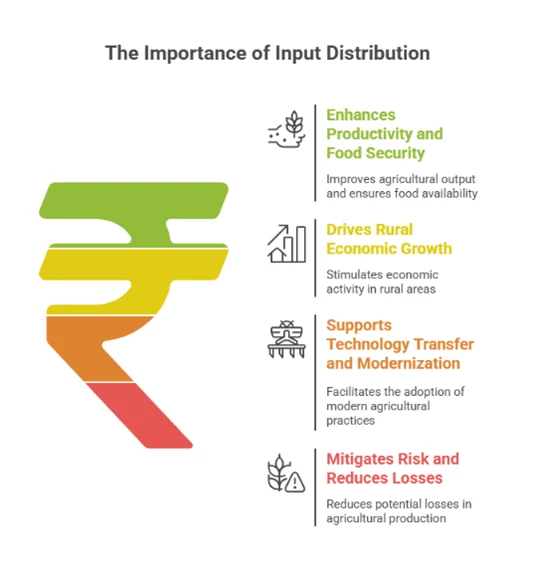
Input distribution in agriculture refers to the process of ensuring the timely and equitable availability of essential materials such as seeds, fertilizers, agrochemicals, machinery, and technology at the farm level. Its importance is fundamental to agricultural productivity, rural livelihoods, sustainability, and food security.
Efficient input distribution is central to maximizing agricultural output, improving rural incomes, ensuring food security, and supporting the sustainable growth of the entire sector. It demands coordinated effort across supply chain actors, robust infrastructure, informed extension services, and supportive policies
Dive into our latest blogson:
Traceability starts on the farm. Discover how digital farm management improves visibility, data accuracy, and compliance readiness.
Ready to digitize your farm operations? Explore how a digital farm management platform transforms productivity and traceability.
What are the Challenges of Input Distribution in Agriculture?
In traditional input distribution processes, the reliance on manual systems and paper-based records creates numerous inefficiencies that hinder the smooth operation of agricultural supply chains. Here’s a deeper look at the critical pain points:
Manual Processes
Despite advancements in many sectors, the agricultural supply chain often relies on outdated manual entry for inventory tracking and order management. This means that farmers, suppliers, and distributors must manually input data, which can lead to data entry errors. These errors can result in misplaced orders, incorrect inventory levels, and delayed deliveries. Furthermore, inventory tracking is often done on spreadsheets or other non-integrated systems, which increases the risk of discrepancies and reduces visibility into actual stock levels.
Impact: These manual processes are time-consuming, labor-intensive, and prone to human error, directly impacting the efficiency of input distribution and creating bottlenecks in the supply chain.
Coordination Issues
Coordination between suppliers, distributors, and farmers is a significant challenge in the traditional system. Due to a lack of centralized communication platforms, each party operates in separate silos, leading to misaligned timelines and delayed orders. For instance, a supplier might not be aware of inventory shortages at a distribution center, which then results in delayed deliveries to farmers. Similarly, farmers may receive products late, affecting their planting schedules and ultimately productivity.
Impact: This disconnect in communication and coordination results in missed deadlines, inventory shortages, and frustration across all parties in the supply chain. It’s a ripple effect that compromises the entire timeliness of the distribution process.
Data Gaps
One of the most significant pain points in the traditional input distribution process is the lack of real-time data. Without an integrated system, it’s nearly impossible to have accurate, up-to-date insights into the movement of inputs. Inventory discrepancies are common due to inaccurate records, while communication breakdowns between stakeholders lead to delays in order fulfillment.
When farm managers cannot track exact delivery dates or inventory status in real time, it becomes difficult to make informed decisions. If a product isn’t available or has been misrouted, there’s often a lag before the issue is identified and resolved, further causing delays in production.
Impact: The absence of live data or predictive insights leads to poor decision-making, stockouts, and unsatisfied customers. These data gaps negatively impact operational efficiency and hinder the ability to quickly respond to unexpected disruptions, leaving the supply chain vulnerable.
Impact on Efficiency
The cumulative effect of these challenges, including manual processes, poor coordination, and data gaps results in significant disruptions to the overall efficiency of the supply chain. Delays in distribution lead to untimely delivery of essential inputs, meaning that farmers cannot plant crops on time, supply chain optimization is compromised, and production cycles are delayed.
For agribusinesses, this lack of efficiency directly affects their bottom line. Increased operational costs arise from the need for more manual oversight, corrective actions, and last-minute fixes. Supply chain optimization efforts are rendered ineffective, and businesses lose the opportunity to create cost-effective solutions that benefit everyone in the chain.
Impact: Delays in input delivery, combined with inefficiencies and communication gaps, lead to unpredictable costs, increased waste, and a lack of scalability. As businesses expand, this becomes an even greater issue, slowing down growth and preventing them from meeting increasing consumer demand.
By recognizing and addressing these pain points from manual inventory tracking to coordination silos the agricultural industry can harness technology to streamline input distribution. Digital solutions like cloud-based platforms, AI-powered predictive analytics, and blockchain traceability are the key to resolving inefficiencies, improving real-time visibility, and enhancing overall supply chain accountability. Embracing automation, real-time data, and integrated communication systems not only solves current challenges but sets up the industry for future-proofing and growth.
The shift toward technology-driven input distribution doesn’t just solve operational problems; it ensures long-term success in the face of evolving challenges in agriculture.
Struggling with inefficiencies in input distribution?
Discover how digital traceability can streamline operations, ensure compliance, and boost productivity.
Digital Input Distribution Solution – Core Capabilities Explained
1. Digital Recording of All Input Distributions
Every distribution of agricultural inputs such as seeds, fertilizers, crop protection products, or equipment is logged digitally in real time. This eliminates paper registers and manual spreadsheets, reducing errors and ensuring a reliable record of what was distributed, when, where, and to whom.
2. Farmer-Level Allocation Tracking
Inputs are assigned and tracked at the individual farmer level. Each farmer’s entitlement, receipt, and usage history are digitally recorded, ensuring fair allocation, preventing leakages, and enabling accurate subsidy or program monitoring.
3. Tiered Stakeholder Mapping
The system maps all actors in the distribution network: manufacturers, distributors, cooperatives, field officers, retailers, and farmers. This tiered visibility ensures accountability at every stage and helps organizations monitor how inputs flow through the ecosystem.
4. Batch-Level Input Traceability
Each input batch is tracked from source to end user. Batch IDs allow organizations to trace product origin, distribution path, and final allocation. This is critical for quality control, recall management, compliance reporting, and impact measurement.
5. Financial Ledger Integration
Distribution data connects directly with financial systems to record payments, subsidies, credit allocations, and reimbursements. This integration improves transparency, reduces reconciliation effort, and ensures financial accuracy across programs.
6. Audit-Ready Transaction Records
All transactions are securely stored with timestamps, user actions, and verification trails. These tamper-resistant records ensure readiness for audits, regulatory reviews, donor reporting, and compliance verification.
How the System Works
Step 1: Input Procurement
The process begins with sourcing agricultural inputs such as seeds, fertilizers, crop protection products, or equipment from approved suppliers. Once received, every item is digitally logged into the inventory system with details like product type, quantity, supplier information, and batch numbers. This creates a transparent stock record and ensures that all inputs entering the distribution network are accounted for.
Step 2: Stakeholder Mapping
Next, all stakeholders in the distribution ecosystem are digitally registered. This includes farmers, cooperatives, field officers, distributors, retailers, and program managers. Farmers are onboarded with verified profiles containing identity details, farm information, and program eligibility. Mapping stakeholders creates a structured network that enables controlled input allocation and clear accountability.
Step 3: Distribution Recording
Each input delivery is digitally captured at the point of distribution, ensuring real-time transparency. The system records:
Farmer identity — Who received the inputs
Input type and quantity — What was distributed and how much
Date and location — When and where the transaction occurred
Batch references — Which product batch the inputs came from
This step creates a verifiable chain of custody from inventory to end user.
Step 4: Financial Ledger Entry
All distribution transactions are automatically recorded in integrated financial ledgers. Payments, subsidies, credit allocations, and reimbursements are logged without manual reconciliation. This ensures financial accountability, simplifies reporting, and supports transparent program audits.
How TraceX’s Digital Input Distribution System Transforms Farm Operations
VST Industries operates a structured agricultural sourcing model that integrates farmers into a transparent, accountable, and digitally traceable ecosystem. The company works closely with two categories of farmers:
Nursery Farmers
Leaf Tobacco Farmers
To streamline agricultural input management, financial accountability, and supply chain traceability, VST leverages a structured feature called Input Distribution.
This case study explains how the Input Distribution model enables financial transparency, operational efficiency, and seamless net-off settlement between stakeholders.
Each input and output is digitally tracked, enabling:
Batch-wise crop monitoring
Farmer-level ledger transparency
Audit readiness
Financial Transparency
Real-time ledger updates
Clear visibility of farmer liabilities
Automated net-off calculations
Supply Chain Control
Controlled distribution of agricultural inputs
Structured procurement process
Reduced leakage and misuse
The Future of Farm Input Distribution is Digital
Efficient farm input distribution is the backbone of agricultural productivity. By automating input tracking with digital records, agribusinesses can eliminate inefficiencies, reduce waste, and ensure farmers receive the right resources at the right time. A digital-first approach not only enhances productivity but also strengthens compliance, sustainability, and transparency across the supply chain. The future of farming is data-driven. Are you ready to transform your operations?
Enhance Your Agricultural Operations Today! Explore howefficient procurement, farm managementstrategies, andsustainable sourcingpractices can help streamline your agricultural supply chain, reduce costs, and boost sustainability.
Want full visibility into farmer transactions? Discover how digital farmer ledgers improve accountability and financial transparency.
Stronger farmer partnerships start with clear agreements. Read our guide to creating effective digital farmer agreements.
Is digital input distribution only useful for large agribusinesses?
No. Modern platforms are scalable and mobile-friendly, making them accessible for cooperatives, NGOs, and smallholder programs as well as large enterprises.
Won’t digital systems be difficult for farmers to use?
Not necessarily. Most solutions use simple mobile apps, assisted data entry, and local-language interfaces designed for low digital literacy environments.
Can technology really prevent leakages and diversion of inputs?
Yes. Digital records, farmer-level tracking, and batch traceability create accountability and make diversion or duplication easy to detect.
Is implementation too expensive for public or subsidy programs?
Digital systems often reduce administrative overhead, fraud, and reconciliation costs making them cost-effective over time.
Do digital platforms replace existing distribution networks?
No. They enhance existing networks by adding visibility, coordination, and data-driven decision-making without disrupting field operations.
Start using TraceX
Transparency, Trust, & Success for your Climate Journey.
We use cookies on our website to give you the most relevant experience by remembering your preferences and repeat visits. By clicking “Accept All”, you consent to the use of ALL the cookies. However, you may visit "Cookie Settings" to provide a controlled consent.
This website uses cookies to improve your experience while you navigate through the website. Out of these, the cookies that are categorized as necessary are stored on your browser as they are essential for the working of basic functionalities of the website. We also use third-party cookies that help us analyze and understand how you use this website. These cookies will be stored in your browser only with your consent. You also have the option to opt-out of these cookies. But opting out of some of these cookies may affect your browsing experience.
Necessary cookies are absolutely essential for the website to function properly. These cookies ensure basic functionalities and security features of the website, anonymously.
Cookie
Duration
Description
cookielawinfo-checkbox-analytics
11 months
This cookie is set by GDPR Cookie Consent plugin. The cookie is used to store the user consent for the cookies in the category "Analytics".
cookielawinfo-checkbox-functional
11 months
The cookie is set by GDPR cookie consent to record the user consent for the cookies in the category "Functional".
cookielawinfo-checkbox-necessary
11 months
This cookie is set by GDPR Cookie Consent plugin. The cookies is used to store the user consent for the cookies in the category "Necessary".
cookielawinfo-checkbox-others
11 months
This cookie is set by GDPR Cookie Consent plugin. The cookie is used to store the user consent for the cookies in the category "Other.
cookielawinfo-checkbox-performance
11 months
This cookie is set by GDPR Cookie Consent plugin. The cookie is used to store the user consent for the cookies in the category "Performance".
viewed_cookie_policy
11 months
The cookie is set by the GDPR Cookie Consent plugin and is used to store whether or not user has consented to the use of cookies. It does not store any personal data.
Functional cookies help to perform certain functionalities like sharing the content of the website on social media platforms, collect feedbacks, and other third-party features.
Performance cookies are used to understand and analyze the key performance indexes of the website which helps in delivering a better user experience for the visitors.
Analytical cookies are used to understand how visitors interact with the website. These cookies help provide information on metrics the number of visitors, bounce rate, traffic source, etc.
Advertisement cookies are used to provide visitors with relevant ads and marketing campaigns. These cookies track visitors across websites and collect information to provide customized ads.
Download the 2026 Traceability Scorecard and Benchmark Your Supply Chain Across 10 Critical Capabilities.
Download our eBook
Don’t Wait for an Audit to Find Your EUDR Gaps
The 2026 Simplification Package changes how HS codes, DDS pass-through and geolocation rules apply to you. Get the free guide and 20-point readiness checklist before enforcement catches you unprepared.