EUDR Due Diligence for Coffee Importers: Requirements, Process and Compliance Software
Published
, 8 minute read
Share this article
Quick summary: Learn how coffee importers can meet EUDR due diligence requirements through supplier data collection, farm geolocation, deforestation checks, risk assessment and DDS workflows.
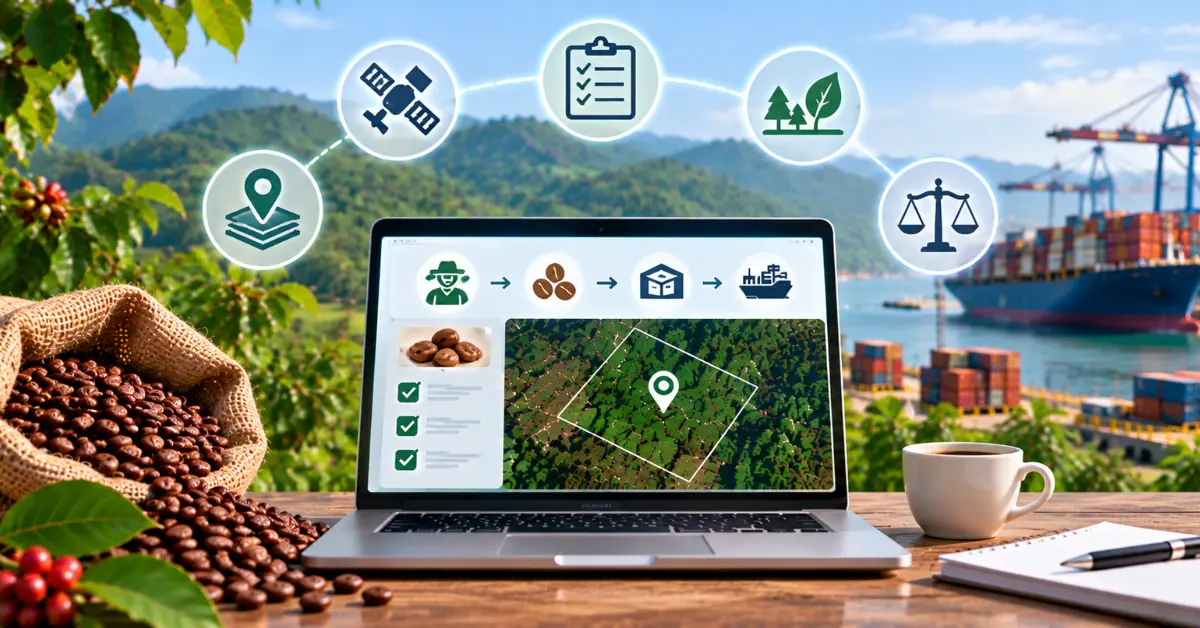
EUDR due diligence for coffee importers requires a structured approach to supplier data collection, farm geolocation, deforestation risk assessment and Due Diligence Statement (DDS) management. For coffee importers supplying the European Union market, EUDR compliance involves more than requesting a declaration from an exporter. Importers need a structured due diligence process that connects the coffee they place on the market with the farms where it was produced, the evidence supporting its origin, and the risk assessment carried out before the relevant product is placed on the EU market.
The EU Deforestation Regulation (EUDR), Regulation (EU) 2023/1115, covers coffee and relevant coffee products listed in Annex I. This guide explains what EUDR due diligence for coffee importers involves, what information must be collected, how risk should be assessed and where compliance software can support the process.
Key Takeaways
Verify product scope: Confirm that imported coffee products fall under EUDR Annex I.
Collect supplier data: Maintain accurate farmer, supplier, product and sourcing information.
Validate farm geolocation: Obtain and verify coordinates or polygon boundaries for all relevant production plots.
Assess deforestation risks: Verify that coffee was not produced on land subject to deforestation after 31 December 2020.
Check legal compliance: Gather evidence that coffee production complies with relevant laws in the country of origin.
Conduct risk mitigation: Address identified risks before placing products on the EU market.
Manage DDS requirements: Ensure the responsible operator submits the required Due Diligence Statement with supporting information.
Connect supply-chain records: Link farm-level data with procurement, inventory and shipment records.
Download our eBook to assess your EUDR readiness
Uncover data gaps, and take proactive steps towards stronger compliance.
What does EUDR due diligence mean for coffee importers?
EUDR due diligence is the process of collecting the information required by the Regulation, assessing the risk that a relevant product is non-compliant, and taking mitigation measures where necessary. The operator must be able to demonstrate that the coffee is deforestation-free, was produced in accordance with relevant legislation in the country of production, and is covered by the required due diligence process.
The deforestation-free requirement uses a cut-off date of 31 December 2020. For coffee, businesses must establish that the land on which it was produced has not been subject to deforestation after that date. The Regulation also requires compliance with relevant laws in the country of production, which may concern land-use rights, environmental protection, labour and human rights, third-party rights, tax, anti-corruption, trade and customs.
Start with product scope: Confirm that the exact coffee product and customs classification are included in the current EUDR Annex I. The obligations and application date should be checked against the product, company role and current legal text.
Discover the key EUDR requirements, traceability processes and how compliance software can simplify your coffee supply chain.
An operator placing a relevant product on the EU market for the first time, or exporting it from the EU, generally has the core due diligence responsibility. An importer may therefore be the operator responsible for ensuring that the required information has been collected, the risk assessed and any necessary mitigation completed before the product is placed on the market.
The position can differ for downstream operators and traders, and for micro and small primary operators. Businesses should identify their role under the Regulation rather than assume that an exporter, supplier or another company in the chain has completed every legal obligation on their behalf. Contractual arrangements can help obtain information, but they do not automatically transfer statutory responsibility.
The EUDR due diligence process for coffee importers
1. Collect supplier and product information
Article 9 sets out the information operators must collect. This includes the product description and quantity, country of production, supplier and buyer details, and the geolocation of all plots of land where the coffee was produced. The operator also needs the relevant production period or date information and adequately conclusive and verifiable information showing that the product is deforestation-free and legally produced.
For coffee sourced through several cooperatives, aggregators or exporters, importers need a process to obtain consistent information for all contributing farms. A country-of-origin certificate or a list of supplier names alone does not replace plot-level information.
2. Obtain and validate farm geolocation
Geolocation links the imported coffee to its production land. Under the general EUDR rule, plots larger than four hectares used to produce relevant commodities other than cattle require polygon geolocation; smaller plots may use a point location. Importers should verify the applicable requirements and exceptions in the current Regulation and guidance.
3. Assess deforestation risk
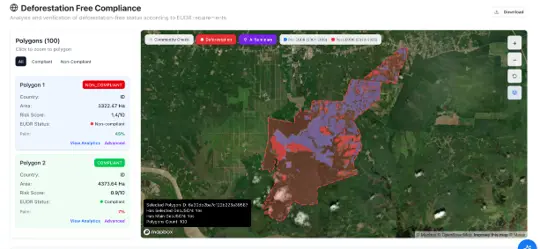
Importers need adequately conclusive and verifiable information that coffee was not produced on land subject to deforestation after 31 December 2020. Satellite imagery and forest-cover datasets can help compare plot boundaries with relevant forest baselines and identify potential land-cover change.
4. Verify legal production
The importer must assess whether coffee was produced in accordance with relevant legislation in the country of production. The applicable evidence depends on the country and sourcing context. It may include documents or other reliable information relating to land-use rights, permits, environmental requirements, labour conditions, third-party rights, taxes and customs. Build a country- and supplier-specific evidence process rather than relying on a single generic supplier declaration.
5. Assess and mitigate risk
Article 10 requires the operator to assess the risk of non-compliance using relevant criteria. These include the country or region risk classification, the presence of forests, prevalence of deforestation, supply-chain complexity, concerns relating to rights and other factors specified in the Regulation.
If the assessment does not establish that the risk is negligible, the operator must take appropriate mitigation measures before placing the product on the EU market or exporting it. Measures may include requesting additional information, independent surveys or audits, or other steps suited to the identified risk. The decision and supporting evidence should be recorded.
Ready to explore it yourself?
Experience how digital compliance management can simplify your preparation.
Where required, the operator submits a Due Diligence Statement (DDS) through the EU EUDR Information System before placing the relevant coffee product on the EU market or exporting it. The DDS is based on the information collected and due diligence carried out. Importers should establish checks to ensure that the statement relates to the correct products and supply chain, and retain the statement reference and supporting records as required.
How EUDR compliance software supports importers
A dedicated EUDR platform can help organise the data and workflows behind due diligence. When evaluating software, coffee importers should look for capabilities that support:
Supplier onboarding and structured collection of farmer, farm and product information.
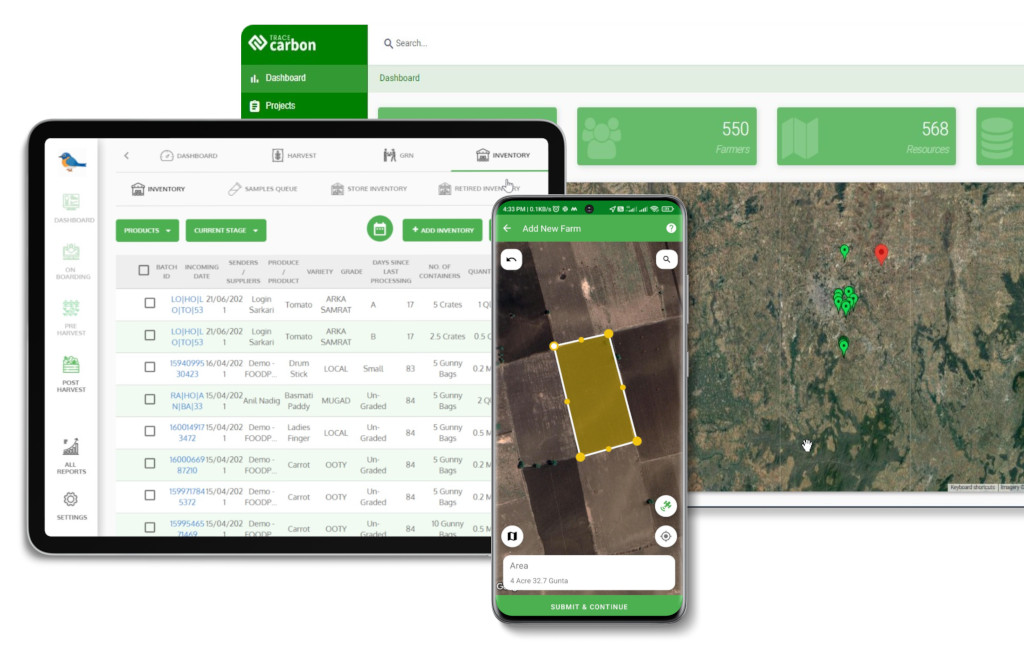
Geospatial capture, upload and validation for coordinates and plot polygons.
Satellite-backed screening and a record of assessment findings.
Risk assessment workflows, evidence management and mitigation tracking.
Traceability linking farms and suppliers to procurement, inventory, processing lots and shipments.
DDS preparation support and controlled handover to the EU Information System.
TraceX’s EUDR platform supports supplier and farm data management, geospatial validation, satellite-backed deforestation-risk assessment, supply-chain traceability and EUDR due diligence workflows. For coffee importers, the focus is on connecting plot-level origin data with procurement and shipment records, so that the information supporting due diligence is organised and retrievable.
EUDR application dates: what coffee importers should check
As of November 2026, the European Commission states that EUDR applies from 30 December 2026 to large and medium operators, and from 30 June 2027 to most micro and small operators. Micro and small operators already covered by the EU Timber Regulation have the 30 December 2026 application date. The June 2027 date does not apply to every SME.
Certain products newly added to the scope, including soluble coffee, are scheduled to become subject to EUDR from 30 December 2027. Importers should confirm the exact Annex I classification, their role and company size, and check the latest Commission guidance before relying on a deadline.
Coffee importer due diligence checklist
Confirm the coffee product is covered by the current Annex I.
Determine whether your business is an operator, downstream operator or trader.
Map suppliers and obtain farm-level geolocation for all contributing plots.
Validate coordinates, polygons, plot-to-supplier links and volume records.
Collect evidence of deforestation-free production and relevant legal compliance.
Document risk assessment, mitigation actions and the negligible-risk conclusion.
Connect plot data with purchase, processing, inventory and shipment records.
Prepare the required DDS and retain its reference and supporting evidence.
Prepare your coffee import process for EUDR
Effective EUDR due diligence for coffee importers starts with reliable supplier information and plot-level geolocation, but it must continue through risk assessment, evidence management and shipment traceability. Importers that identify data gaps early can work with suppliers to improve information quality before it affects purchasing and market access.
Talk to TraceX
See how EUDR Solutions can help organise supplier onboarding, farm geolocation, satellite-backed risk assessment and plot-to-shipment traceability.
Do coffee importers need farm geolocation under EUDR?
Yes. The operator must collect geolocation for the plots where the coffee was produced, in the format required by the Regulation.
Can an importer rely on an exporter’s EUDR declaration?
Supplier information can support due diligence, but the responsible operator must ensure that the information is adequate, assess risk and meet its own legal obligations.
Can software guarantee EUDR compliance?
No. Software can support collection, validation, assessment, traceability and records, but the responsible business remains accountable for adequate due diligence.
Start using TraceX
Transparency, Trust, & Success for your Climate Journey.
We use cookies on our website to give you the most relevant experience by remembering your preferences and repeat visits. By clicking “Accept All”, you consent to the use of ALL the cookies. However, you may visit "Cookie Settings" to provide a controlled consent.
This website uses cookies to improve your experience while you navigate through the website. Out of these, the cookies that are categorized as necessary are stored on your browser as they are essential for the working of basic functionalities of the website. We also use third-party cookies that help us analyze and understand how you use this website. These cookies will be stored in your browser only with your consent. You also have the option to opt-out of these cookies. But opting out of some of these cookies may affect your browsing experience.
Necessary cookies are absolutely essential for the website to function properly. These cookies ensure basic functionalities and security features of the website, anonymously.
Cookie
Duration
Description
cookielawinfo-checkbox-analytics
11 months
This cookie is set by GDPR Cookie Consent plugin. The cookie is used to store the user consent for the cookies in the category "Analytics".
cookielawinfo-checkbox-functional
11 months
The cookie is set by GDPR cookie consent to record the user consent for the cookies in the category "Functional".
cookielawinfo-checkbox-necessary
11 months
This cookie is set by GDPR Cookie Consent plugin. The cookies is used to store the user consent for the cookies in the category "Necessary".
cookielawinfo-checkbox-others
11 months
This cookie is set by GDPR Cookie Consent plugin. The cookie is used to store the user consent for the cookies in the category "Other.
cookielawinfo-checkbox-performance
11 months
This cookie is set by GDPR Cookie Consent plugin. The cookie is used to store the user consent for the cookies in the category "Performance".
viewed_cookie_policy
11 months
The cookie is set by the GDPR Cookie Consent plugin and is used to store whether or not user has consented to the use of cookies. It does not store any personal data.
Functional cookies help to perform certain functionalities like sharing the content of the website on social media platforms, collect feedbacks, and other third-party features.
Performance cookies are used to understand and analyze the key performance indexes of the website which helps in delivering a better user experience for the visitors.
Analytical cookies are used to understand how visitors interact with the website. These cookies help provide information on metrics the number of visitors, bounce rate, traffic source, etc.
Advertisement cookies are used to provide visitors with relevant ads and marketing campaigns. These cookies track visitors across websites and collect information to provide customized ads.