Contact: +91 99725 24322 |
Menu
Menu
The EUDR Compliance Practical Guide is your hands-on guide to navigating the EU’s deforestation regulation with confidence. Learn the essential steps, tools, and timelines to build a supply chain that’s not only compliant—but resilient, transparent, and future-ready.
The EUDR system refers to the EU Regulation on Deforestation-Free Products (Regulation EU 2023/1115), which mandates that key commodities—such as cocoa, coffee, soy, palm oil, rubber, cattle, and wood—must be proven to come from land not deforested after December 31, 2020, to enter or be exported from the EU market. Businesses classified as operators or traders must perform strict due diligence, including geolocation of farm plots, legal documentation of land use, and submission of a Due Diligence Statement (DDS) through the EU TRACES system. The goal is to curb global deforestation and ensure sustainable, transparent supply chains across borders.
The EU Deforestation Regulation (EUDR) targets the root causes of forest loss by requiring companies to prove their products—like cocoa, soy, palm oil, and timber—are deforestation-free and legally sourced. Under EUDR, businesses must conduct due diligence, trace products to their exact origin via geo-coordinates, and submit a Due Diligence Statement (DDS) through TRACES. Non-compliance can lead to severe penalties. Digital platforms like TraceX help simplify the compliance workflow through automation, traceability, and risk monitoring—making EUDR compliance scalable and audit-ready for 2025 and beyond.
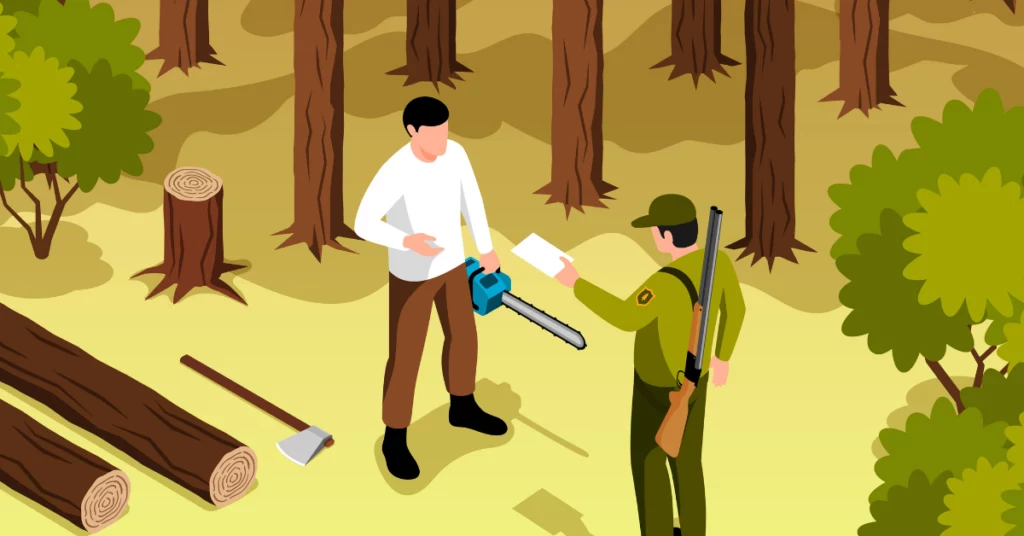
Deforestation isn’t just an environmental issue. It’s a supply chain issue. It’s a reputation issue. And increasingly, it’s a regulatory issue too. For companies sourcing agricultural and forest-based commodities, the land your products come from now matters as much as the quality of the product itself.
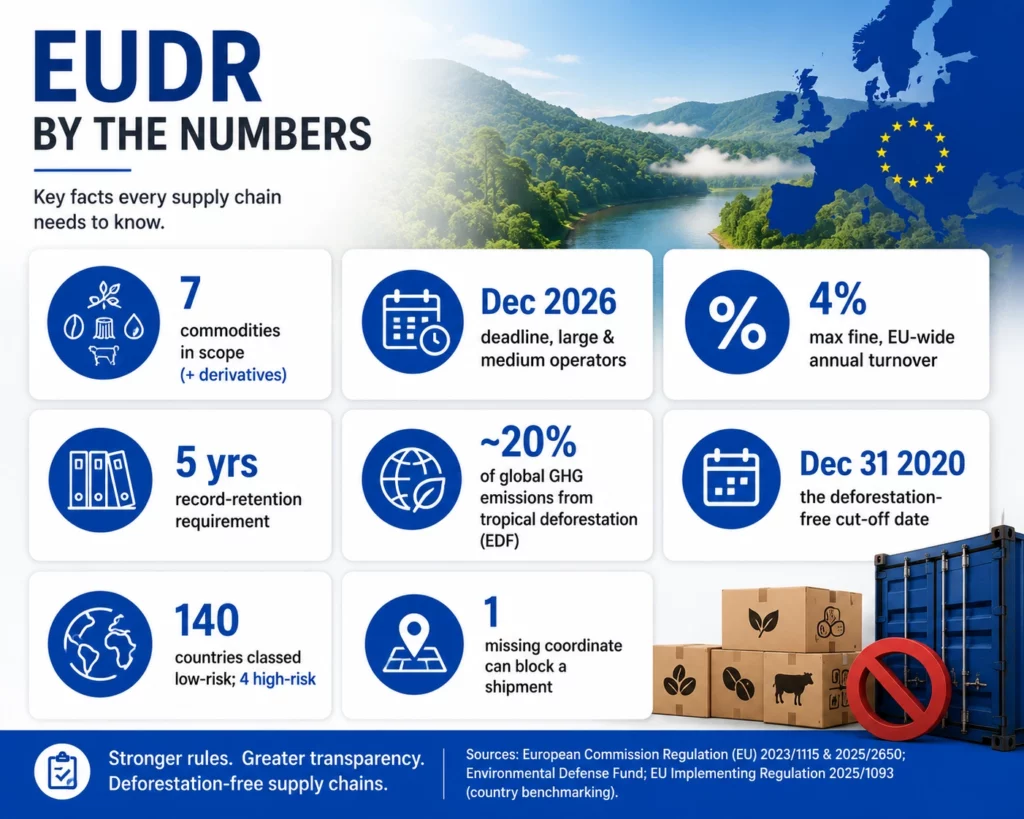
According to Environmental Defense Fund, Tropical deforestation contributes about 20% of annual global greenhouse gas (GHG) emissions, and reducing it will be necessary to avoid dangerous climate change.
What’s Causing It?
The root causes of deforestation are largely human-driven — and tied directly to the global commodities trade. We’re talking:
And yes — many of these activities are directly or indirectly tied to global demand, including demand from the EU.
So Why Is the EU Regulating It?
Because the EU wants to stop being part of the problem.
With the EU Deforestation Regulation (EUDR), the EU is now holding itself — and every business that supplies it — accountable. That means any company that imports soy, cocoa, palm oil, rubber, timber, or coffee (plus many derivative products) must now prove their goods are:
This isn’t about punishment — it’s about prevention. The EUDR aims to reduce the EU’s environmental footprint, support sustainable sourcing, and protect both forests and the communities who rely on them.
The EUDR is not just about forests—it’s about your entire supply chain.
Whether you’re a coffee trader in Kenya, a cocoa exporter in Côte d’Ivoire, a furniture manufacturer in Vietnam, or a soy importer in the EU, you are affected. The EU Deforestation Regulation (EUDR) applies to both EU-based operators and traders, as well as non-EU companies that supply products to the EU market.
The EUDR applies to seven key commodities and many of their derived products, including:
Even finished products such as chocolate bars, leather bags, books, and wooden desks fall under this regulation if they contain one or more of these core commodities.
Everyone in the value chain.
From producers and cooperatives to processors, exporters, traders, and EU importers—every actor involved in placing these products on the EU market must comply. This includes:
Even if you’re outside the EU, you’ll need to provide documentation to your EU buyers proving traceability and compliance.
The EUDR makes no exception for product complexity or country of origin. Whether your coffee comes from a low-risk country or your soy is genetically traceable, you still need to prove that your product didn’t cause deforestation after Dec 31, 2020.
The EUDR’s country benchmarking (low, standard, or high risk), does NOT change the core due diligence obligations. All operators must submit a Due Diligence Statement (DDS) and trace products back to deforestation-free geolocations—regardless of the risk level.
Smallholder farmers are often at the heart of global commodity supply chains, yet they face the biggest barriers to meeting EUDR compliance—like limited digital literacy, offline environments, and lack of plot-level documentation. This content angle focuses on practical, scalable ways to bring smallholders into the compliance fold through mobile-first traceability apps, GPS-enabled onboarding, satellite-linked plot validation, and multilingual training tools. With AI-driven automation and farmer-friendly workflows, agribusinesses can bridge the digital divide and build deforestation-free supply chains—without leaving their producers behind.
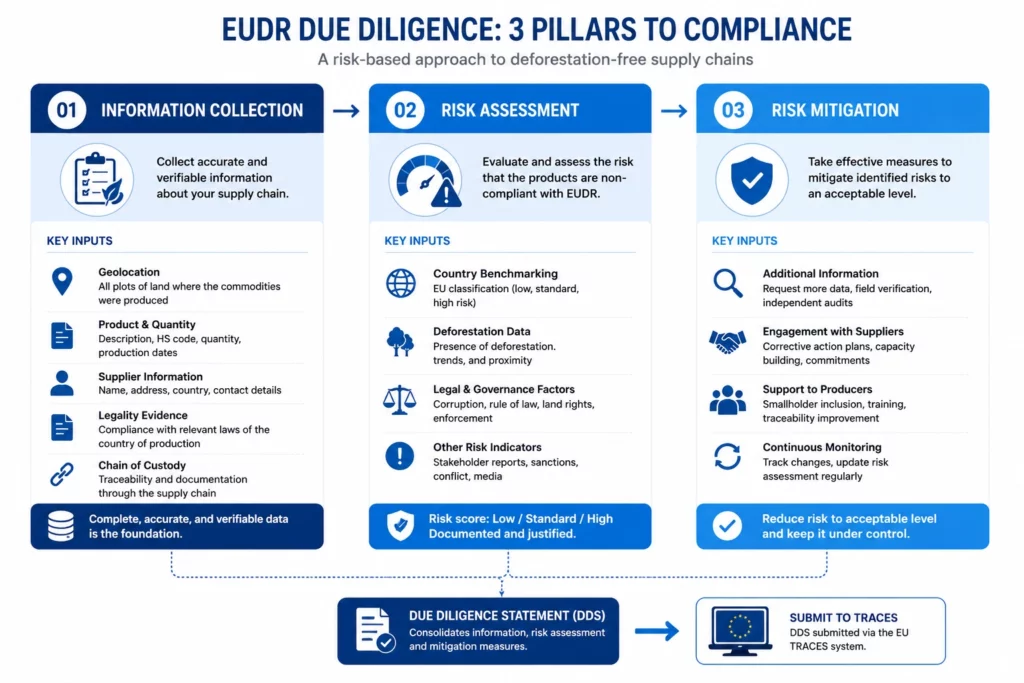
Under the EU Deforestation Regulation (EUDR), due diligence is a mandatory process that companies must follow to ensure products are deforestation-free and legally sourced. It includes collecting geolocation data, conducting risk assessments based on country and supplier history, and taking mitigation steps like audits or documentation if risks are identified. A Due Diligence Statement (DDS) must be submitted before products are placed on the EU market.
The Three Pillars of EUDR Due Diligence
Whether you’re a procurement lead at an agribusiness or a sustainability officer at a trader-exporter company, EUDR due diligence is your responsibility. And it’s not just one form — it’s an end-to-end process:
To start, you must gather and maintain the following data before placing a product on the EU market:
With data in hand, you now must evaluate the risk that the product was produced on deforested land or violated local laws. This involves:
If any non-negligible risk remains after assessment, the regulation mandates mitigation steps. These include:
Before any in-scope product hits the EU market, a Due Diligence Statement (DDS) must be submitted on TRACES, the EU’s electronic platform.
The DDS must confirm:
No DDS = No access to the EU market. Even a delay in DDS submission can lead to shipment holds, rejections, or penalties.
The EU will classify countries into:
But risk level doesn’t mean exemption. Whether you’re sourcing cocoa from Côte d’Ivoire, timber from Brazil, or palm oil from Indonesia, you must submit full documentation—regardless of the risk tier.
If you’re a procurement or compliance lead, you’re likely asking: “Can I prove exactly where this product came from—and whether deforestation occurred after 31 December 2020?” Under the EU Deforestation Regulation (EUDR), it’s no longer enough to say your supply chain is clean. You need traceability that’s provable, plot-level, and audit-ready.
EUDR mandates that every product linked to at-risk commodities—like coffee, cocoa, soy, palm oil, timber, and rubber—must be traced back to the precise land it was produced on. That means:
No coordinates? No market access. The regulation is that clear.
Explore how farm-level mapping and traceability tools help meet EUDR compliance with confidence.
[Download the Case Study] and start your deforestation-free journey today.
From Farm to Final Product: Batch-Level Traceability Is Essential
It’s not just about where your commodities started—you must show where they went. This means tracking:
This is especially crucial for exporters juggling multiple smallholder suppliers, or for processors who aggregate inputs. A missing link in the chain can result in DDS rejection—or worse, blocked shipments.
You’ll need full documentation that shows how the product moved through your supply chain without breaking integrity. This involves:
With the TRACES system accepting only compliant Due Diligence Statements (DDS), any inconsistency here can flag you for investigation.
Modern EUDR compliance isn’t possible without digital tools. Leading organizations are leveraging:
These aren’t just “nice-to-have”—they’re becoming business-critical. Without automation, you risk falling behind as enforcement tightens and buyers demand bulletproof traceability.
Step 1: Onboard Suppliers & Collect Land/Ownership Records
Before you worry about batch codes or TRACES, you need supplier buy-in. That means collecting land titles, farm maps, cooperative affiliations, and legal ownership documents.
“But our suppliers are smallholders who’ve never used digital tools.”
We hear this often. Consider language support, offline functionality, and trust-building through local partners.
Step 2: Capture Geolocation & Validate No-Deforestation Status
Once your supplier network is in place, map every farm using polygon-based geolocation data—not just pin drops. Then cross-check this with satellite imagery to prove that the land wasn’t deforested after Dec 31, 2020.
“Is this just a formality?”
Absolutely not. This step will make or break your compliance. If you can’t verify deforestation-free status, your product doesn’t enter the EU. Period.
Step 3: Assess Risk Based on Supplier & Country Profile
This is where things get nuanced. Not all suppliers or countries are treated equally under EUDR. You need a contextual risk score: Is the origin country flagged for deforestation risk? Are your suppliers transparent? Is land ownership legally recognized?
“We’ve sourced from this region for years—why do we need a risk score now?”
Because under EUDR, ‘good faith’ isn’t enough. You need documented, data-backed due diligence. The EU expects traceability, not trust.
Step 4: Generate Due Diligence Statement (DDS) with Batch-Specific Info
Now that you’ve done your homework, it’s time to submit your Due Diligence Statement. This includes:
Step 5: Submit DDS via TRACES
TRACES is the EU’s central system for importing regulated goods. If your DDS isn’t in TRACES, your shipment doesn’t move.
“Can I upload Excel sheets or PDFs?”
Not anymore. You’ll need to integrate or manually enter data into TRACES using approved formats. This is why automation tools or EUDR-ready platforms can save time (and headaches).
Step 6: Maintain Audit Records for 5+ Years
This is the part most companies overlook. The EUDR mandates record retention—for at least 5 years. If your systems aren’t audit-ready, a random inspection can unravel your whole operation.
“Can’t we just keep everything in a Google Drive?”
Sure, until an audit demands trace-level metadata or access logs. Structured, searchable data storage is your legal armor.
What started as a regulatory hurdle is now a chance to build market trust, protect ecosystems, and future-proof your brand. Whether you’re a sustainability officer, trader, or program manager, EUDR is forcing the industry to evolve—for the better.
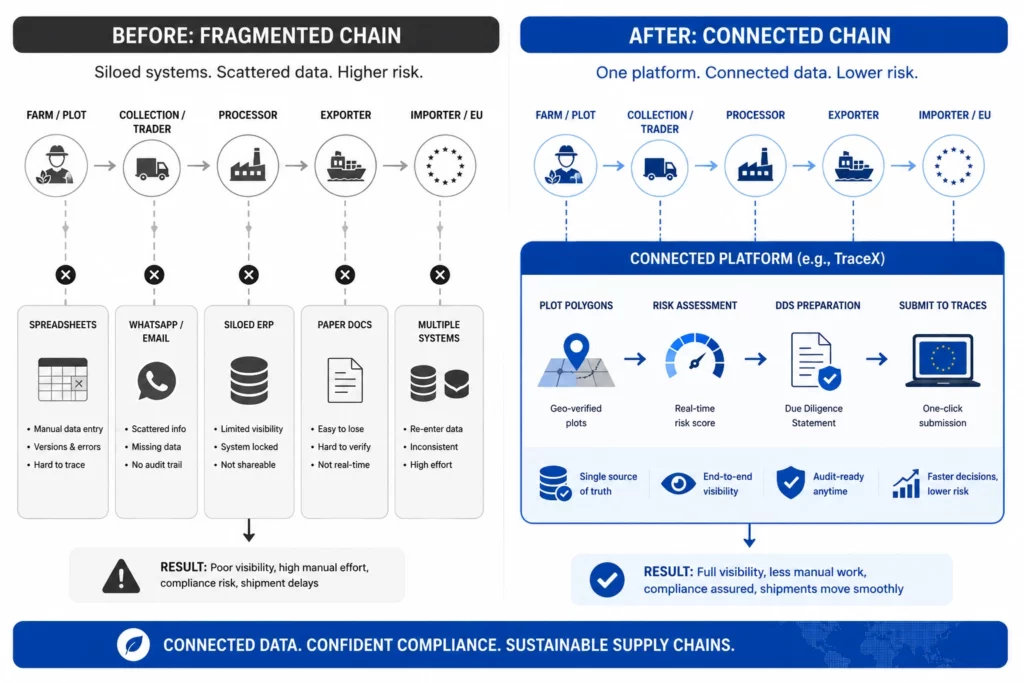
If you’re still managing this workflow in spreadsheets or relying on verbal updates from suppliers, now is the time to modernize.
Articles 9, 10, and 11 of the EU Deforestation Regulation are the backbone of compliance — covering risk assessments, mitigation steps, and the Due Diligence Statement (DDS) itself.
Explore the breakdown of each article
Are You Integrated Enough?
If you’re racing to meet EUDR deadlines and still juggling Excel sheets, siloed ERP entries, and manual document uploads—you might be running a compliance relay with your shoelaces tied together.
Here’s the truth: EUDR compliance doesn’t just depend on traceability—it demands integration. That means your ERP, your customs systems, and your traceability platform must speak the same language… fluently.
The EU takes enforcement of the Deforestation Regulation (EUDR) seriously. To deter violations, regular inspections are conducted. Companies found non-compliant face a range of penalties, varying in severity based on the specific infringement and decided by each EU member state
Remember, complying with the EUDR isn’t just about avoiding penalties; it’s about demonstrating your commitment to a sustainable future.
One Regulation, Many Realities: Why EUDR Isn’t One-Size-Fits-All
Complying with EUDR is tough enough even with a straightforward supply chain. Now imagine you’re sourcing cocoa from Côte d’Ivoire, coffee from Colombia, and rubber from Vietnam. Same law. Totally different realities.
While the EU’s regulation is clear—no deforestation, legal sourcing, traceable supply chain—the way you achieve that in each country? That’s where the real strategy begins.
Achieving compliance with the EU Deforestation-Free Regulation (EUDR) can be complex, but several tools and technologies can help streamline the process. These technologies offer transparency, traceability, and real-time monitoring, ensuring that businesses can meet regulatory requirements efficiently.
Blockchain for Traceability: Real-Time Monitoring of Supply Chains
Blockchain technology provides an immutable, transparent record of transactions that is particularly useful for traceability in supply chains. By using blockchain, businesses can track the entire journey of a commodity from its source to its final destination, ensuring that it’s sourced sustainably and in line with EUDR requirements.
Geolocation Tools: Mapping Deforestation-Free Sourcing Regions
Geolocation tools are key in mapping and verifying the origins of commodities. These tools utilize satellite data, GPS, and other location-based technologies to track the geographic coordinates of sourcing regions, ensuring that commodities are coming from deforestation-free areas.
AI for Risk Assessment and Compliance Reporting
Agentic AI play a critical role in evaluating supply chain risks and ensuring ongoing compliance with EUDR requirements. These tools analyze large volumes of data from various sources, such as geolocation, transaction records, and environmental factors, to assess potential risks and generate compliance reports.
The TraceX EUDR Compliance Platform is an blockchain-powered AI driven solution designed to help businesses meet the stringent requirements of the EU Deforestation-Free Regulation (EUDR). It offers an integrated approach to ensure supply chain traceability, deforestation-free sourcing, and compliance with EU regulations for commodities like soy, palm oil, cocoa, beef, rubber, coffee, and wood.
The platform uses blockchain technology to offer end-to-end traceability across your supply chain. This means businesses can track their products in real-time, ensuring that every commodity—from raw materials to finished products—can be traced back to its source. With the EUDR’s emphasis on transparency, having this level of traceability is crucial to demonstrate compliance.
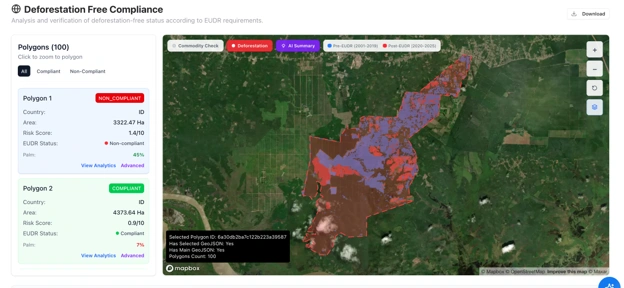
To meet EUDR requirements, it is essential to track the geographical location of sourcing regions. TraceX integrates geolocation tools that allow businesses to map where their commodities are sourced and ensure that these areas are deforestation-free.
The risk assessment capabilities of the TraceX platform through agentic AI help businesses identify potential deforestation risks within their supply chains. By analyzing sourcing regions and environmental data, the platform provides actionable insights to mitigate risks and ensure continued compliance.
With TraceX, businesses can generate the required compliance reports for submission to the EU. The platform automates the generation of these reports, ensuring that all necessary documentation—such as geolocation data, commodity sourcing, and sustainability certifications—are included in the correct format and meet EU guidelines.
TraceX offers features that facilitate supplier collaboration. It allows businesses to engage their suppliers directly through the platform, ensuring they are aligned on the data collection process and EUDR compliance requirements.
Addressing deforestation and promoting sustainability are pivotal in the global effort to combat climate change and protect biodiversity. The EU’s Deforestation Regulation (EUDR) is a significant step toward these goals, offering a model for responsible supply chain management. Achieving a balance between environmental goals and economic interests is essential, and international cooperation is paramount. Both businesses and consumers have a role to play in fostering a more sustainable and eco-conscious world.
The EU Deforestation Regulation (EUDR) mandates that businesses placing certain commodities in the EU market must prove they are not linked to deforestation. Importers, traders, and producers in sectors like cocoa, coffee, soy, palm oil, rubber, and timber must comply by December 2024.
EUDR due diligence involves collecting geolocation data, verifying legality of production, assessing risk, and submitting a Due Diligence Statement (DDS) through the TRACES system — all before placing products on the EU market.
Digital traceability platforms automate geolocation capture, validate land data, assess risk, and generate audit-ready DDS reports—reducing manual effort and ensuring consistent compliance with evolving EU regulations.
We use cookies on our website to give you the most relevant experience by remembering your preferences and repeat visits. By clicking “Accept All”, you consent to the use of ALL the cookies. However, you may visit "Cookie Settings" to provide a controlled consent.
| Cookie | Duration | Description |
|---|---|---|
| cookielawinfo-checkbox-analytics | 11 months | This cookie is set by GDPR Cookie Consent plugin. The cookie is used to store the user consent for the cookies in the category "Analytics". |
| cookielawinfo-checkbox-functional | 11 months | The cookie is set by GDPR cookie consent to record the user consent for the cookies in the category "Functional". |
| cookielawinfo-checkbox-necessary | 11 months | This cookie is set by GDPR Cookie Consent plugin. The cookies is used to store the user consent for the cookies in the category "Necessary". |
| cookielawinfo-checkbox-others | 11 months | This cookie is set by GDPR Cookie Consent plugin. The cookie is used to store the user consent for the cookies in the category "Other. |
| cookielawinfo-checkbox-performance | 11 months | This cookie is set by GDPR Cookie Consent plugin. The cookie is used to store the user consent for the cookies in the category "Performance". |
| viewed_cookie_policy | 11 months | The cookie is set by the GDPR Cookie Consent plugin and is used to store whether or not user has consented to the use of cookies. It does not store any personal data. |
WhatsApp us
Your Blueprint for Traceable & Sustainable Supply Chain
Don’t miss out on your chance to grab access to our early bird offer!
Your essential compliance guide