PPWR Compliance for Cosmetic Manufacturers in the Netherlands
Published
, 6 minute read
Share this article
Quick summary: Learn how cosmetic manufacturers in the Netherlands can prepare for PPWR compliance with guidance on packaging requirements, technical documentation, conformity assessments, recycled content, and August 2026 readiness.
The Netherlands is one of Europe’s largest cosmetics markets, home to globally recognized beauty brands, private-label manufacturers, and contract manufacturers supplying products across the European Union. As the Packaging and Packaging Waste Regulation (PPWR) introduces harmonized packaging requirements, cosmetic manufacturers must rethink how they design, document, and manage packaging information.
Unlike previous regulations that focused primarily on waste management, PPWR requires businesses to demonstrate compliance through comprehensive packaging data, technical documentation, supplier evidence, and declarations. For cosmetic manufacturers handling thousands of SKUs, packaging variants, and supplier relationships, compliance quickly becomes a data management challenge.
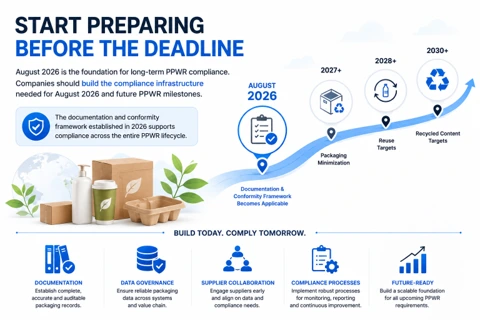
Don’t Wait Until PPWR Deadlines Create Compliance Challenges
Preparing for PPWR requires more than understanding the regulation—it requires a structured implementation strategy.
The cosmetics industry relies heavily on packaging for product protection, branding, customer experience, and regulatory labeling. Products often include multiple packaging components such as bottles, pumps, jars, tubes, cartons, caps, inserts, and labels sourced from different suppliers.
Under PPWR, manufacturers must ensure that packaging complies with applicable requirements before products are placed on the EU market.
This requires organizations to maintain accurate packaging information throughout the product lifecycle rather than collecting documentation only during audits.
Key PPWR Requirements Affecting Cosmetics
Cosmetic manufacturers should prepare for requirements covering:
Packaging minimization
Design for recyclability
Recycled content in applicable plastic packaging
Restrictions on hazardous substances
Technical documentation
Declaration of Conformity
Packaging identification
Supplier documentation
Traceability of packaging materials
Meeting these obligations requires collaboration across packaging development, procurement, quality assurance, sustainability, and regulatory affairs.
The Biggest Challenge Isn’t Packaging, It’s Packaging Data
Many cosmetic companies already possess the required information.
The challenge is that it is often scattered across:
ERP systems
PLM platforms
Excel spreadsheets
Supplier emails
Laboratory reports
Packaging specifications
Artwork approvals
Sustainability databases
When compliance teams need to prepare technical dossiers or respond to regulatory requests, collecting this information becomes time-consuming and error-prone.
A centralized Packaging Data Management Platform eliminates these silos by creating a single source of truth for packaging information.
Why Dutch Cosmetic Manufacturers Should Prepare Early
The Netherlands exports cosmetic products throughout Europe and globally.
Delaying PPWR preparation can result in:
Increased compliance costs
Supplier data collection delays
Manual documentation efforts
Product launch delays
Higher regulatory risk
Organizations that digitize packaging information today will be better positioned to adapt as PPWR implementation progresses.
Early preparation also allows businesses to engage suppliers, validate packaging specifications, and improve data quality without disrupting ongoing operations.
Technology is transforming how cosmetic manufacturers prepare for PPWR by replacing fragmented, manual processes with centralized, digital workflows. Instead of managing packaging information across spreadsheets, emails, and disconnected systems, organizations can use modern Packaging Data Management platforms to streamline compliance from end to end.
Centralized Packaging Data
A Packaging Data Management Platform creates a single source of truth for packaging specifications, material composition, supplier declarations, technical documents, and compliance records, making information easy to access and maintain.
Digital Supplier Collaboration
Technology enables seamless collaboration with packaging suppliers through standardized workflows for collecting declarations, recycled content information, certificates, and supporting documentation, reducing delays and improving data consistency.
Automated Document Management
Technical dossiers, packaging specifications, laboratory reports, and compliance evidence can be securely stored, organized, and retrieved from a centralized repository, simplifying audit preparation and regulatory reporting.
Real-Time Compliance Monitoring
Digital dashboards provide visibility into packaging portfolios, highlighting missing documentation, incomplete supplier information, and potential compliance gaps before they become business risks.
End-to-End Traceability
Technology helps manufacturers maintain traceability across packaging components by linking suppliers, materials, specifications, and compliance documents throughout the product lifecycle.
Better Collaboration Across Teams
Packaging development, procurement, sustainability, quality assurance, and regulatory teams can work from the same platform, ensuring everyone has access to accurate, up-to-date information and reducing duplication of effort.
Scalable Compliance Management
As packaging portfolios grow and regulatory requirements evolve, technology provides the flexibility to manage large volumes of products, packaging components, and supplier data without increasing administrative complexity.
By adopting a digital Packaging Data Management Platform, cosmetic manufacturers can simplify PPWR compliance, improve data accuracy, strengthen supplier collaboration, and maintain audit-ready documentation while supporting long-term regulatory readiness.
How TraceX Helps Cosmetic Manufacturers Prepare for PPWR
TraceX Packaging Data Management Platform enables cosmetic manufacturers to digitize and manage packaging information from design through compliance.
Key capabilities include:
Centralized packaging inventory
AI-assisted packaging data management
Supplier onboarding and document collection
Packaging specification management
Technical dossier management
Declaration of Conformity support
Compliance dashboards
Packaging reporting and audit readiness
By creating a single source of truth for packaging data, TraceX helps organizations simplify compliance while reducing manual effort and improving collaboration across departments.
Ready to Simplify Your PPWR Compliance Journey?
Whether you’re just starting or building a long-term compliance strategy, our PPWR experts can help.
Ready to Simplify Your PPWR Compliance Journey?
Book a complimentary PPWR Readiness Assessment with a TraceX expert and discover how digital packaging data management can accelerate your compliance journey.
For cosmetic manufacturers in the Netherlands, PPWR represents more than a regulatory obligation — it is an opportunity to modernize packaging data management.
Organizations that adopt AI-driven packaging data management today will be better equipped to manage technical documentation, collaborate with suppliers, maintain audit-ready records, and respond confidently to evolving regulatory requirements.
As packaging compliance becomes increasingly data-intensive, investing in digital packaging intelligence is no longer optional — it is becoming a competitive advantage.
Frequently Asked Questions
Does PPWR apply to cosmetic manufacturers in the Netherlands?
Yes. Cosmetic manufacturers placing packaged products on the EU market must ensure that their packaging complies with the applicable provisions of the PPWR and maintain the documentation needed to demonstrate compliance.
Does PPWR apply to cosmetic packaging?
Yes. PPWR covers cosmetic packaging, including primary, secondary, and transport packaging, regardless of whether it is made from plastic, glass, paper, metal, or composite materials.
Are refillable cosmetic packaging systems mandatory under PPWR?
PPWR promotes reusable and refillable packaging in certain contexts, but the specific obligations depend on the packaging type and the applicable provisions. Cosmetic manufacturers should monitor future delegated acts and implementing guidance while evaluating refill opportunities as part of their sustainability strategy.
What documentation should cosmetic manufacturers maintain?
Typical documentation includes packaging specifications, Bills of Materials, supplier declarations, technical documentation, conformity assessment records, laboratory reports, recycled-content evidence, packaging drawings, and Declarations of Conformity.
How can digital platforms support PPWR compliance?
Digital platforms centralize packaging data, supplier documentation, technical files, and compliance records while automating workflows and improving audit readiness. This reduces manual effort and helps manufacturers maintain consistent, up-to-date compliance information across their product portfolio.
Start using TraceX
Transparency, Trust, & Success for your Climate Journey.
We use cookies on our website to give you the most relevant experience by remembering your preferences and repeat visits. By clicking “Accept All”, you consent to the use of ALL the cookies. However, you may visit "Cookie Settings" to provide a controlled consent.
This website uses cookies to improve your experience while you navigate through the website. Out of these, the cookies that are categorized as necessary are stored on your browser as they are essential for the working of basic functionalities of the website. We also use third-party cookies that help us analyze and understand how you use this website. These cookies will be stored in your browser only with your consent. You also have the option to opt-out of these cookies. But opting out of some of these cookies may affect your browsing experience.
Necessary cookies are absolutely essential for the website to function properly. These cookies ensure basic functionalities and security features of the website, anonymously.
Cookie
Duration
Description
cookielawinfo-checkbox-analytics
11 months
This cookie is set by GDPR Cookie Consent plugin. The cookie is used to store the user consent for the cookies in the category "Analytics".
cookielawinfo-checkbox-functional
11 months
The cookie is set by GDPR cookie consent to record the user consent for the cookies in the category "Functional".
cookielawinfo-checkbox-necessary
11 months
This cookie is set by GDPR Cookie Consent plugin. The cookies is used to store the user consent for the cookies in the category "Necessary".
cookielawinfo-checkbox-others
11 months
This cookie is set by GDPR Cookie Consent plugin. The cookie is used to store the user consent for the cookies in the category "Other.
cookielawinfo-checkbox-performance
11 months
This cookie is set by GDPR Cookie Consent plugin. The cookie is used to store the user consent for the cookies in the category "Performance".
viewed_cookie_policy
11 months
The cookie is set by the GDPR Cookie Consent plugin and is used to store whether or not user has consented to the use of cookies. It does not store any personal data.
Functional cookies help to perform certain functionalities like sharing the content of the website on social media platforms, collect feedbacks, and other third-party features.
Performance cookies are used to understand and analyze the key performance indexes of the website which helps in delivering a better user experience for the visitors.
Analytical cookies are used to understand how visitors interact with the website. These cookies help provide information on metrics the number of visitors, bounce rate, traffic source, etc.
Advertisement cookies are used to provide visitors with relevant ads and marketing campaigns. These cookies track visitors across websites and collect information to provide customized ads.
Download the 2026 Traceability Scorecard and Benchmark Your Supply Chain Across 10 Critical Capabilities.
Download our eBook
Don’t Wait for an Audit to Find Your EUDR Gaps
The 2026 Simplification Package changes how HS codes, DDS pass-through and geolocation rules apply to you. Get the free guide and 20-point readiness checklist before enforcement catches you unprepared.