Quick summary: Explore how farm digitization software for agribusinesses connects farmer, farm, crop, input, harvest and traceability data to improve operational visibility and compliance.
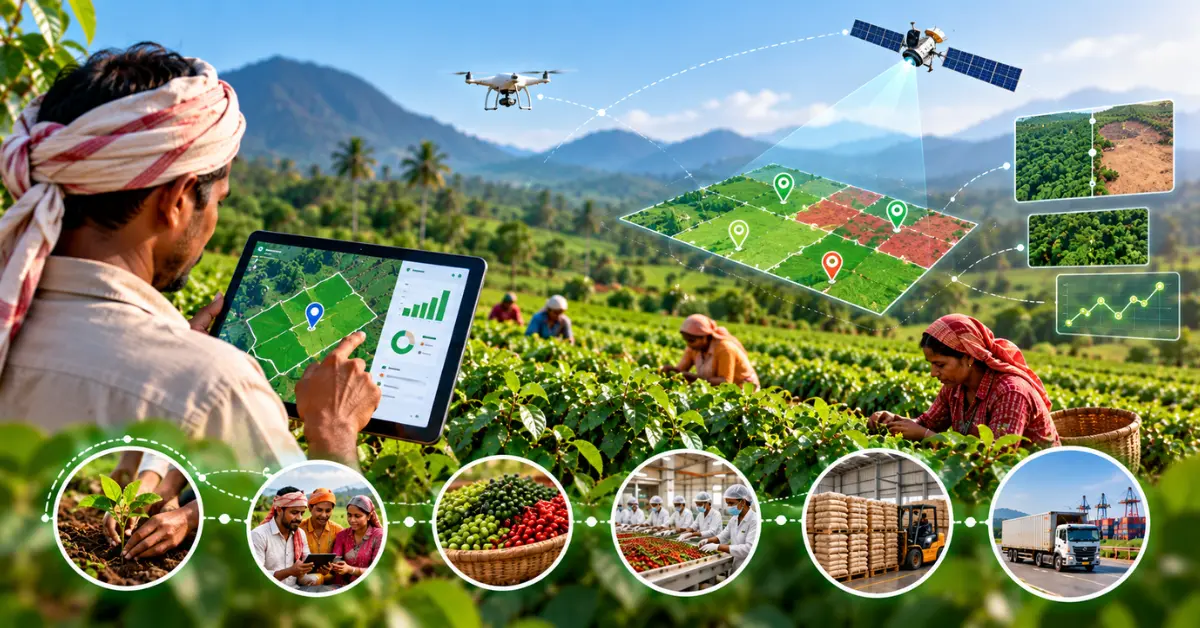
Farm digitization software for agribusinesses creates a structured digital layer for farm and field operations. Instead of treating farmer records, farm boundaries, crop activities and harvest information as separate files, the software connects them into a traceable operational record.
Agribusinesses are under increasing pressure to understand what happens beyond the factory gate. Farmers, plots, crops, inputs, harvests, collection centers, warehouses and buyers are all part of the same value chain, yet the information connecting them is often spread across spreadsheets, paper forms, mobile messages and disconnected enterprise systems.
Agribusinesses need reliable farm data to improve procurement planning, estimate yields, manage contract farming, verify sustainability claims, support traceability programs and respond to customer or regulatory requirements. A modern farm digitization platform can turn field-level information into actionable business intelligence.
For agribusiness leaders, the key question is therefore not simply whether farms should be digitized. It is how farm data can become a dependable business asset that connects field operations with procurement, processing, compliance and commercial decisions.
Key Takeaways: Farm Digitization Software for Agribusinesses
Digitize Farm Operations:
Improve Farm-Level Visibility:.
Strengthen Traceability:
Enable Data-Driven Decisions:
Streamline Farmer Management:
Monitor Sustainable Practices:
Improve Compliance Readiness:
Connect Field and Supply Chain Data:
Scale Agribusiness Operations:
Build a Transparent Agricultural Supply Chain:
Discover how TraceX Farm Management helps agribusinesses streamline farmer onboarding, manage farm data, improve field-level visibility, strengthen traceability, and make data-driven decisions.
What Is Farm Digitization Software for Agribusinesses?
Farm digitization software for agribusinesses is a technology platform that captures, organizes and connects information generated across farming operations and the agricultural supply chain.
Depending on the business model, this can include farmer registration, farm and plot mapping, crop details, planting and harvesting records, input applications, field activities, inspections, yield estimates, purchase transactions, collection records, traceability information and supporting documents.
The strongest systems do not operate as isolated farm-management applications. They connect farm data to downstream business objects such as suppliers, purchase orders, batches, processing activities, products and shipments.
This relationship is important because a business may need to answer questions such as: Which farmers contributed to this batch? Where was the crop produced? What was the production period? Which inputs were recorded? What quantity was purchased? Which finished products contain material from that source?
Farm digitization software creates the data relationships required to answer these questions quickly and consistently.
Discover how digital farm management helps agribusinesses streamline farmer onboarding, digitize field activities, improve farm-level visibility, strengthen traceability, and make data-driven decisions across the agricultural supply chain. Read the Full Blog →
Why Agribusinesses Struggle With Farm Data
Many agribusinesses already collect large amounts of farm information. The problem is that collection does not automatically create visibility.
A farmer database may contain names and contact details but not verified plot boundaries. A spreadsheet may contain acreage but not the relationship between a plot and a harvest lot. Procurement records may show quantities purchased without linking those quantities back to production areas. Sustainability teams may maintain separate evidence files that operations teams cannot easily connect to transactions.
Common challenges include:
Fragmented farmer and farm records
Manual data entry and duplicate records
Limited visibility into farm boundaries and production locations
Inconsistent crop and activity data
Difficult yield estimation
Weak links between farm records and procurement transactions
Slow preparation of audit and customer evidence
Limited visibility across multi-tier supply chains
Farm digitization software helps address these issues by creating one governed data structure instead of multiple disconnected records.
Key Capabilities to Look for in Farm Digitization Software
When evaluating farm digitization software for agribusinesses, decision-makers should look beyond basic farmer registration. A scalable platform should support the complete farm-to-market information flow.
1. Digital Farmer Registration
The platform should create structured farmer profiles with identifiers, farm associations, crops, production details and relevant documents. Digital registration reduces duplicate records and creates a consistent supplier or farmer master.
2. Farm and Plot Mapping
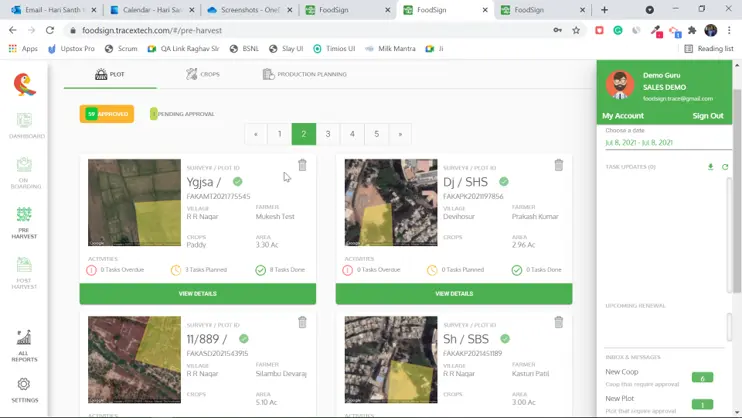
Geospatial capability is essential for agribusinesses that need location-level visibility. Users should be able to capture farm boundaries, polygons or location coordinates and associate them with farmers and crops.
3. Crop and Production Management
The system should capture crop type, acreage, planting period, expected production, production activities and harvest information. This creates a digital production history for each plot.
4. Input and Field Activity Records
Inputs such as fertilizers, crop-protection products, seeds and other farm activities can be recorded against the relevant farmer, plot and production cycle. This improves operational visibility and supports sustainability evidence.
5. Yield Estimation
Digital farm records can support more structured yield estimation by combining acreage, crop information, historical performance, field observations and harvest data. This helps procurement teams plan collection and purchasing.
6. Traceability
Traceability should connect farm-level origin with procurement, batches and finished products. This is especially valuable for exporters and businesses serving customers that require origin transparency.
7. Mobile Data Collection
Field teams need tools that work in real operating environments. Mobile workflows can allow users to capture farmer information, GPS coordinates, field observations, inspections and harvest data at the point of activity.
8. Dashboards and Analytics
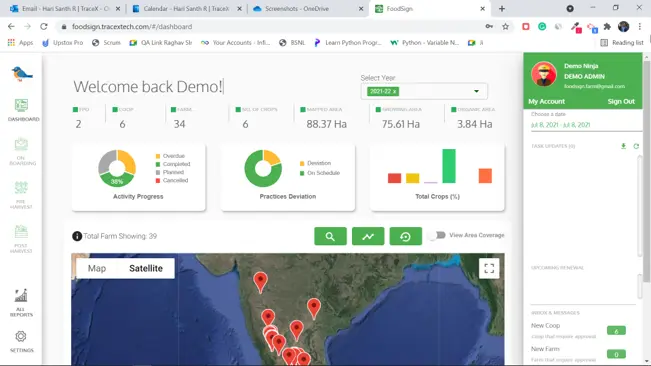
Management needs more than raw data. Dashboards should turn field records into insights such as farmer coverage, acreage, expected yield, actual procurement, geographic distribution and exception trends.
9. Integration
The platform should be able to connect with ERP, procurement, inventory, logistics and compliance systems. The objective is not necessarily to replace every existing system, but to create a connected data layer between field operations and enterprise processes.
How Farm Digitization Improves Agribusiness Operations
The business value of farm digitization becomes clearer when field data is connected to daily decisions.
Procurement teams can see where expected production is located and plan collection activities accordingly. Field managers can prioritize visits based on exceptions rather than relying entirely on manual schedules. Sustainability teams can retrieve structured evidence instead of searching through folders. Quality teams can connect inspections to farms and production cycles. Commercial teams can respond more confidently to customer questions about origin.
Digitization can also improve data consistency. When the same farmer, plot and crop identifiers are reused across workflows, the organization is less dependent on manually reconciling records.
For agribusinesses operating at scale, this creates a significant advantage: the business can move from asking “Where is the information?” to asking “What does the information tell us?”.
Discover how digital procurement helps agribusinesses streamline supplier management, simplify purchasing workflows, improve data accuracy, and strengthen traceability from farm to market. Read the Full Blog →
Farm Digitization and Traceability for Export Markets
Export-oriented agribusinesses increasingly need to demonstrate where agricultural products came from and how they moved through the supply chain.
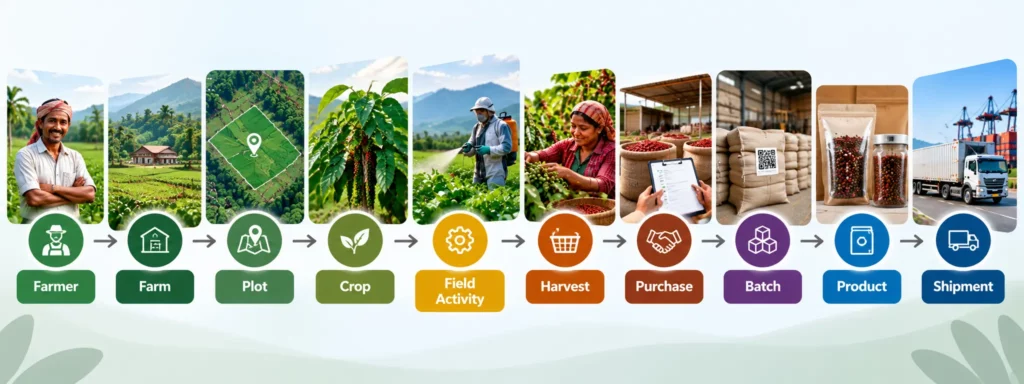
A digital farm record can become the starting point for a much broader traceability chain:
This structure is particularly useful when buyers request evidence about origin, sourcing practices, production areas or traceability controls.
For businesses dealing with commodities affected by sustainability and due-diligence requirements, farm digitization can also provide the foundation for more specialized compliance workflows. Geolocation, production information, supplier identity and transaction relationships can be maintained as structured data rather than reconstructed from historical documents.
The result is a more resilient operating model in which compliance becomes part of the supply-chain data architecture rather than a last-minute documentation exercise.
Discover how digital farm management helps exporters capture farm-level data, streamline farmer and plot management, strengthen traceability, and maintain the records needed for transparent and compliant agricultural exports. Read the Full Blog →
From Digitizing Farms to Building a Digital Supply Chain
The long-term opportunity is bigger than converting paper forms into mobile forms. Agribusinesses can build a connected digital supply chain.
Consider a company sourcing coffee from thousands of farmers. A basic system may store farmer names and acreage. A more advanced platform connects each farmer to plots, crop cycles, field activities, harvest quantities and purchase transactions. The procurement transaction can then connect to collection centers, batches, processing records and finished products.
This creates a digital thread that allows the organization to move both upstream and downstream.
From a finished batch, the company can trace back to the contributing farms. From a farm, it can trace forward to the quantities purchased and potentially the products or shipments supported by those purchases.
This two-way visibility is one of the most important outcomes of farm digitization for large agribusinesses.
Discover How McPatel Foods Achieved End-to-End Potato Traceability. Explore how McPatel Foods leveraged TraceX to track potatoes from seed input to harvest, processing, and distribution—strengthening supply chain transparency, efficiency, compliance, and customer trust. Read the Full Case Study →
What KPIs Can Farm Digitization Software Help Track?
A well-designed platform can support operational KPIs across the agricultural value chain, including:
Number of registered and active farmers
Verified farms and mapped plots
Total cultivated acreage
Crop distribution by region
Expected versus actual yield
Procurement volume by farmer or geography
Harvest volumes by production period
Field activity completion
Input usage
Inspection and verification status
Traceability coverage
Data completeness and exceptions
These metrics can be viewed at farmer, village, district, crop, supplier, procurement center or enterprise level.
The objective is not to create more dashboards. It is to give decision-makers a reliable operational picture that can support procurement, sustainability, quality and supply-chain planning.
How to Choose the Right Farm Digitization Software
Agribusinesses should evaluate software against the complexity of their operating model rather than selecting a platform based only on feature count.
Start with the data model. Can the platform connect farmer, farm, plot, crop, harvest and transaction records? Next, evaluate field usability. Can field teams collect data efficiently using mobile workflows? For geospatial programs, assess whether plot mapping and location validation are practical at scale.
Integration is another critical factor. If the business already uses ERP, procurement or warehouse systems, the farm platform should complement those systems rather than create another isolated database.
Scalability matters as well. A platform suitable for 500 farms may not be suitable for 50,000 farms. Look for role-based access, data governance, audit trails, APIs, bulk data handling and configurable workflows.
Finally, evaluate the platform against future requirements. Today the priority may be farmer registration and yield estimation. Tomorrow it may include traceability, sustainability verification, customer evidence or regulatory due diligence. The right architecture should support that evolution without requiring the business to rebuild its data foundation.
Phase 1: Build the farmer master. Establish unique farmer IDs and clean existing records.
Phase 2: Digitize farms and plots. Capture location information and associate each plot with the correct farmer and crop.
Phase 3: Digitize production activities. Record crop cycles, field activities, inputs, inspections and harvest information.
Phase 4: Connect procurement. Link harvested quantities and purchase transactions to the relevant farmers and plots.
Phase 5: Add traceability. Connect procurement lots to batches, processing, products and shipments.
Phase 6: Integrate enterprise systems. Connect the farm data layer with ERP, inventory, logistics and compliance workflows.
Phase 7: Operationalize analytics. Use dashboards and exception management to drive procurement, field operations and compliance decisions.
This approach allows organizations to create value early while building toward full supply-chain visibility.
Ready to move from fragmented farm records to connected supply-chain visibility?
Explore how TraceX can help agribusinesses digitize farmer and plot data, connect field operations with procurement and traceability, and build a scalable foundation for export and sustainability requirements.
Conclusion: Farm Data Should Become a Strategic Asset
Farm digitization software for agribusinesses is no longer simply a tool for replacing paper-based field records. It can become the foundation for a connected agricultural supply chain.
The most valuable platforms connect farmer identity, farm boundaries, production data, field activities, harvests and procurement with downstream traceability and business processes. That connection enables agribusinesses to improve operational visibility while becoming better prepared for customer, sustainability, audit and export requirements.
For companies evaluating farm digitization, the key consideration should be simple: can the platform turn field-level data into trusted, connected business information?
If the answer is yes, digitization can move beyond data collection and become a strategic capability helping agribusinesses understand their supply base, plan procurement, improve traceability, reduce manual reconciliation and build a stronger foundation for future compliance.
Frequently Asked Questions
What is farm digitization software for agribusinesses?
It is software that digitizes and connects farmer, farm, plot, crop, production, harvest and supply-chain information so agribusinesses can manage operations and trace agricultural products more effectively.
Why do agribusinesses need farm digitization?
Agribusinesses often manage large and geographically distributed supplier networks. Digitization creates structured, searchable data that can improve procurement, yield planning, traceability, sustainability evidence and operational control.
Can farm digitization software manage thousands of farmers?
Yes. Scalable platforms can use unique farmer IDs, digital plot mapping, mobile workflows, bulk data processing, role-based access and integrations to manage large farmer networks.
Does farm digitization support traceability?
It can. When farm and plot records are connected to harvest, purchase, batch, processing and shipment records, the platform can create an end-to-end traceability chain.
Can farm digitization software integrate with ERP systems?
A modern platform should support integration with ERP and other enterprise systems through APIs or structured data exchange. The goal is often to complement the ERP with specialized farm and traceability capabilities.
Is farm digitization useful for export compliance?
Yes. Structured information about farmers, production locations, geolocation, production periods and transactions can provide an important data foundation for export traceability and applicable due-diligence programs.
Start using TraceX
Transparency, Trust, & Success for your Climate Journey.
We use cookies on our website to give you the most relevant experience by remembering your preferences and repeat visits. By clicking “Accept All”, you consent to the use of ALL the cookies. However, you may visit "Cookie Settings" to provide a controlled consent.
This website uses cookies to improve your experience while you navigate through the website. Out of these, the cookies that are categorized as necessary are stored on your browser as they are essential for the working of basic functionalities of the website. We also use third-party cookies that help us analyze and understand how you use this website. These cookies will be stored in your browser only with your consent. You also have the option to opt-out of these cookies. But opting out of some of these cookies may affect your browsing experience.
Necessary cookies are absolutely essential for the website to function properly. These cookies ensure basic functionalities and security features of the website, anonymously.
Cookie
Duration
Description
cookielawinfo-checkbox-analytics
11 months
This cookie is set by GDPR Cookie Consent plugin. The cookie is used to store the user consent for the cookies in the category "Analytics".
cookielawinfo-checkbox-functional
11 months
The cookie is set by GDPR cookie consent to record the user consent for the cookies in the category "Functional".
cookielawinfo-checkbox-necessary
11 months
This cookie is set by GDPR Cookie Consent plugin. The cookies is used to store the user consent for the cookies in the category "Necessary".
cookielawinfo-checkbox-others
11 months
This cookie is set by GDPR Cookie Consent plugin. The cookie is used to store the user consent for the cookies in the category "Other.
cookielawinfo-checkbox-performance
11 months
This cookie is set by GDPR Cookie Consent plugin. The cookie is used to store the user consent for the cookies in the category "Performance".
viewed_cookie_policy
11 months
The cookie is set by the GDPR Cookie Consent plugin and is used to store whether or not user has consented to the use of cookies. It does not store any personal data.
Functional cookies help to perform certain functionalities like sharing the content of the website on social media platforms, collect feedbacks, and other third-party features.
Performance cookies are used to understand and analyze the key performance indexes of the website which helps in delivering a better user experience for the visitors.
Analytical cookies are used to understand how visitors interact with the website. These cookies help provide information on metrics the number of visitors, bounce rate, traffic source, etc.
Advertisement cookies are used to provide visitors with relevant ads and marketing campaigns. These cookies track visitors across websites and collect information to provide customized ads.
Download the 2026 Traceability Scorecard and Benchmark Your Supply Chain Across 10 Critical Capabilities.
Download our eBook
Don’t Wait for an Audit to Find Your EUDR Gaps
The 2026 Simplification Package changes how HS codes, DDS pass-through and geolocation rules apply to you. Get the free guide and 20-point readiness checklist before enforcement catches you unprepared.