EUDR Wood Species: An Underrated Traceability Challenge for the Paper Industry
Published
, 10 minute read
Share this article
Quick summary: Understand EUDR wood species requirements for paper manufacturers. Learn how pulp blending, supplier data and species traceability affect compliance.
When businesses discuss EUDR compliance for paper and packaging, the conversation usually focuses on country of origin, supplier information, geolocation and deforestation risk. EUDR Wood Species is another important data requirement that paper manufacturers should not overlook.
Under Article 9 of the EU Deforestation Regulation (EUDR), operators must collect information about the common name and full scientific name of the wood species contained in, or used to make, relevant wood products.
The European Commission’s updated guidance also addresses highly processed products such as paper, particleboard and fibreboard. Where the wood species used may vary, businesses must provide a list of the species that may have been used.
For paper manufacturers sourcing pulp from multiple suppliers, this requirement can create a significant information-management challenge.
Key Takeaways
Wood species identification is a core EUDR information requirement. Article 9 requires operators to collect the common name and full scientific name of the wood species relevant to products in scope.
Paper products present a unique traceability challenge. Highly processed products such as paper, particleboard and fibreboard may contain wood from multiple species, making species-level information difficult to obtain and maintain.
Supplier declarations alone may not be enough. Paper manufacturers and importers need reliable upstream information, supporting records and processes to validate species data across their supply chains.
Mixed wood inputs increase data complexity. Changes in sourcing, pulp composition and production batches can make it difficult to maintain consistent species information throughout the supply chain.
Product scope and species data must work together. Businesses should first identify which products fall under EUDR Annex I and then establish the applicable species information requirements.
Digital traceability helps close information gaps. Structured supplier data, material mapping, batch-level traceability and centralised evidence management can help businesses maintain reliable records and respond to due diligence requirements.
Download our eBook
Assess your EUDR readiness, uncover data gaps, and take proactive steps towards stronger compliance.
EUDR traceability goes beyond identifying the country from which a wood-based product originates.
For relevant products listed under the wood category in Annex I, Article 9 requires operators to collect the common name and full scientific name of the wood species.
This information forms part of the product description and must be supported by the relevant due diligence information.
For example, a paper manufacturer may need to identify whether the wood fibre used in its products comes from species such as eucalyptus, pine, spruce or birch, using the appropriate scientific names.
The challenge is that paper production often involves multiple wood species, suppliers and processing stages. By the time the fibre becomes finished paper, identifying its original species composition may not be straightforward.
Why species identification becomes complicated in pulp and paper manufacturing
Unlike a sawmill processing identifiable logs, a pulp and paper mill often works with wood that has already been chipped, pulped, processed and blended.
Several factors make species identification difficult:
Mixed-species pulp: Market pulp may contain fibre from multiple wood species. The mill may receive species information at the supplier or product level rather than for every individual fibre input.
Changing fibre recipes: Manufacturers may change the proportion of hardwood and softwood depending on paper grade, quality requirements, availability and production conditions.
Multiple sourcing regions: Different suppliers may source wood from different forests, countries and production regions.
Blending during production: Pulp from multiple suppliers or batches may be combined before entering the paper-making process. This makes it important to preserve the relationship between incoming material records and production batches.
Limited downstream visibility: A converter purchasing paper from several mills may receive product specifications and supplier documentation without having direct access to the original forestry and species information.
These challenges make species data difficult to maintain through conventional purchasing and production records alone.
What if the exact species used in a paper product can vary?
The European Commission’s updated EUDR guidance recognises that identifying every species in highly processed products such as paper and particleboard can be complex.
Where the species used to produce a relevant wood product varies, the operator must provide a list of the species that may have been used.
The species should be identified using internationally accepted timber nomenclature.
This is an important clarification for paper manufacturers.
It means businesses should not rely only on a generic description such as ‘hardwood pulp’, ‘softwood pulp’ or ‘mixed wood fibre’ where the applicable requirements call for species names.
Instead, they need a structured way to collect and maintain species information from pulp suppliers and other upstream partners.
For example, a paper manufacturer producing printing paper may use eucalyptus and acacia pulp in one production run and a combination of pine and spruce pulp in another. If the exact blend varies, simply recording the input as “mixed hardwood and softwood pulp” may not provide the species-level information required under EUDR. The manufacturer needs to obtain and maintain the common and scientific names of the species that may have been used, supported by information from its pulp suppliers. This makes supplier data collection and material traceability essential parts of EUDR readiness.
How species information travels through the paper supply chain
Consider a paper manufacturer sourcing hardwood and softwood pulp from multiple suppliers.
The supply chain may involve:
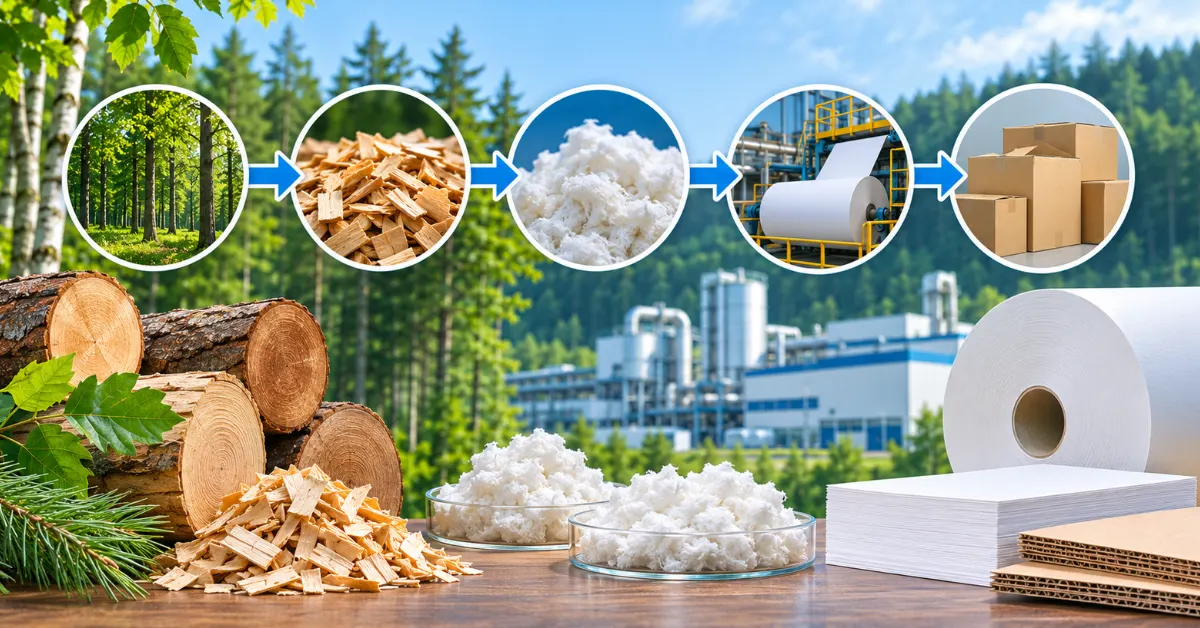
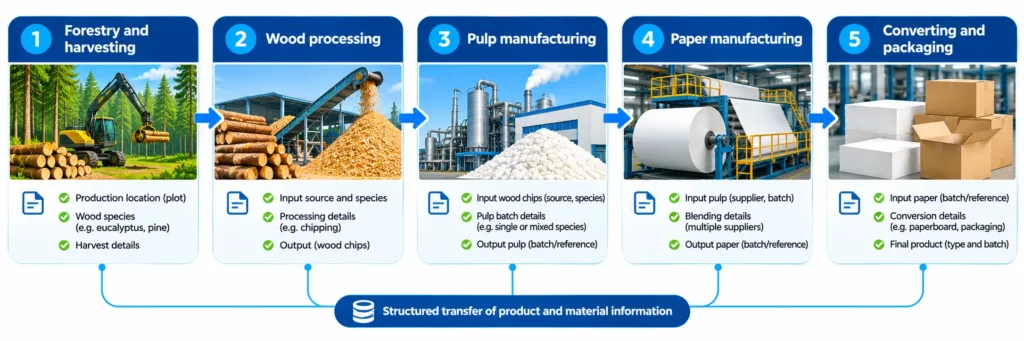
Stage 1 – Forestry and harvesting: Wood is sourced from forest plots, where the relevant production location and species information originate.
Stage 2 – Wood processing: Logs are converted into chips and supplied to pulp mills. Species information needs to remain associated with the relevant source materials.
Stage 3 – Pulp manufacturing: Different wood species may be processed into pulp and supplied in separate or mixed batches.
Stage 4 – Paper manufacturing: Pulp from multiple suppliers may be blended to achieve the required paper properties.
Stage 5 – Converting and packaging: Finished paper is converted into paperboard, packaging or other downstream products.
At each stage, product and material information needs to be transferred in a structured way.
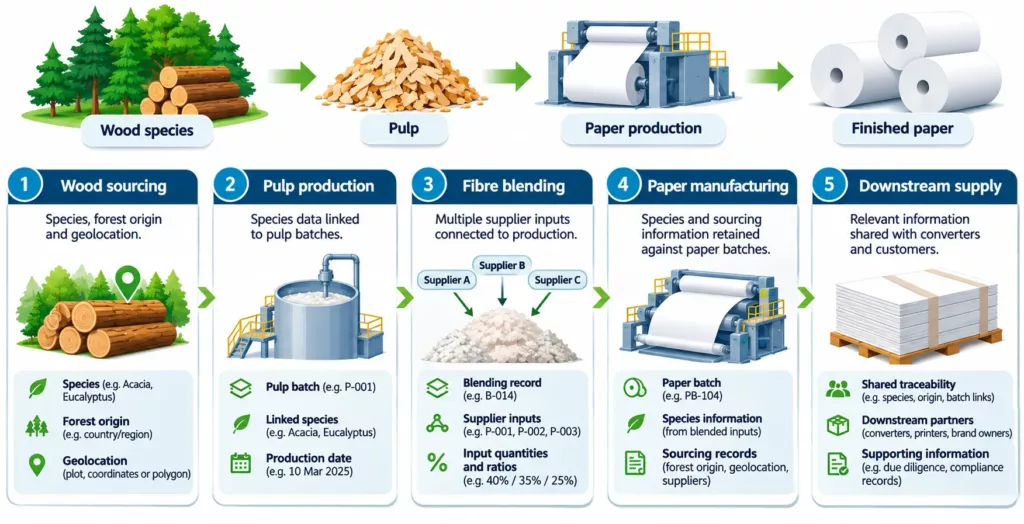
For example, a paper mill should be able to connect its incoming pulp batches with supplier information, species declarations and relevant sourcing records. Where materials are blended, the mill needs a reliable record of which inputs contributed to the resulting production batch.
The finished product should not become disconnected from the information associated with its relevant wood inputs.
Why this creates a challenge for paper converters
Paper converters and packaging manufacturers often operate further downstream than pulp producers.
They may purchase paper rolls or paperboard from multiple mills, each with different sourcing practices, fibre compositions and documentation formats.
A converter may know the mill, product grade, quantity and delivery date but have limited visibility into:
The wood species used in the pulp.
Whether the product contains multiple species.
The upstream sourcing locations associated with relevant wood inputs.
Whether the species information changes between suppliers or batches.
How the information connects to the finished paper or packaging product.
This creates a dependency on upstream suppliers.
Without a structured process for exchanging species and sourcing information, downstream businesses may struggle to assemble the information required for their own due diligence.
Discover the key requirements, common compliance gaps and practical steps to strengthen your pulp and paper supply chain.
Paper manufacturers can strengthen their EUDR data management by incorporating species information into their existing supplier and material traceability workflows.
A practical approach includes:
1. Supplier onboarding Collect supplier details, pulp product specifications, sourcing information and supporting documentation.
2. Species master data Maintain a standardised list of common and scientific wood species, aligned with recognised timber nomenclature.
3. Incoming material identification Record species information against relevant pulp, wood-chip and fibre input batches.
4. Production and blending records Connect incoming material batches to production orders and record which inputs contribute to each paper batch.
5. Origin and geolocation linkage Maintain the relevant sourcing locations and supporting information associated with wood inputs subject to EUDR requirements.
6. Finished-product traceability Connect finished paper rolls, paperboard and packaging batches to their production inputs and supporting compliance records.
7. Supplier data exchange Establish a consistent process for receiving updated species, sourcing and product information whenever suppliers or material compositions change.
The objective is to ensure that species information remains connected to the material as it moves through the supply chain.
How digital traceability can help paper manufacturers
Managing species information across suppliers, pulp batches, production orders and finished products can become difficult when records are maintained in disconnected spreadsheets and systems.
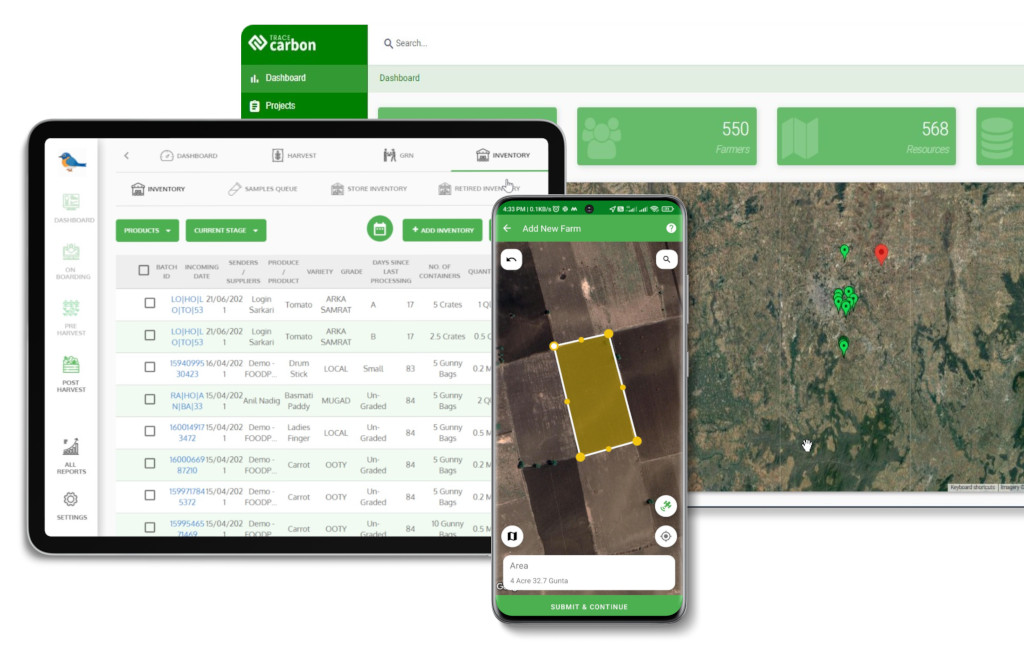
Discover how a large paper manufacturer integrated its existing application with TraceX to connect farm-level sourcing locations,GeoJSONdata, automated deforestation risk assessment, manufacturing batches and finished-goods shipments.
Digital traceability platforms can help businesses:
Maintain structured supplier and wood-species information.
Standardise common and scientific species names.
Connect incoming pulp batches with production records.
Track material blending and consumption.
Link relevant sourcing locations with material records.
Maintain supporting documents and compliance evidence.
Share structured traceability information with downstream partners.
TraceX EUDR Solutions helps businesses connect supplier onboarding, sourcing, procurement, inventory, manufacturing and batch-level traceability through digital workflows.
For paper and packaging manufacturers, this can support better visibility into wood-based material inputs and help organise the information needed for EUDR due diligence.
Conclusion: EUDR traceability must go beyond the finished product
For the paper industry, one of the less visible EUDR challenges may be identifying the wood species used in highly processed products.
A finished paper roll can contain fibre from multiple species, suppliers and sourcing regions. Its appearance or product specification alone cannot provide the complete information needed to establish material origin.
The responsibility therefore extends across the supply chain—from forestry and pulp production to paper manufacturing and converting.
Businesses need to ensure that species information, sourcing records and production data remain connected as materials move between organisations.
EUDR readiness for the paper industry is not just about knowing where the wood came from. It is also about knowing which wood species were used and being able to connect that information to the products being placed on the EU market.
Frequently Asked Questions
1. We manufacture paper products, not timber. Do we still need to collect wood species information under EUDR?
Yes, where the paper product falls within EUDR Annex I and your business has an applicable operator or trader obligation. The fact that wood has been converted into pulp or paper does not automatically remove the species information requirement. Businesses need to assess the exact product classification and applicable obligations.
2. Our paper products contain pulp from multiple wood species. Do we need to identify every species?
The information required depends on the product and applicable guidance. For highly processed products such as paper, particleboard and fibreboard, the European Commission’s guidance recognises that species may vary and indicates that operators should provide a list of species that may have been used, using accepted nomenclature. This makes structured upstream species data particularly important.
3. Our suppliers are unable to provide scientific names for every wood species. Can we rely on generic descriptions such as hardwood or softwood?
Generic descriptions such as hardwood and softwood do not replace the required common and full scientific names. Businesses should work with suppliers to establish a standardised species data collection process, supported by appropriate documentation and consistent nomenclature.
4. We already have FSC or PEFC certification. Does that mean we meet the EUDR wood species requirements?
Not automatically. FSC and PEFC certification can support responsible sourcing and supply-chain documentation, but certification alone does not replace the information, geolocation, risk assessment and due diligence requirements applicable under EUDR. Businesses must assess whether their existing records provide the specific information required by the Regulation.
5. If we source paper or pulp from a low-risk country, can we skip wood species data collection?
No. Low-risk country classification does not exempt an in-scope product from EUDR. Eligible operators may benefit from simplified due diligence under Article 13, provided the applicable conditions are met. However, the relevant Article 9 information requirements, including wood species information, still apply.
Start using TraceX
Transparency, Trust, & Success for your Climate Journey.
We use cookies on our website to give you the most relevant experience by remembering your preferences and repeat visits. By clicking “Accept All”, you consent to the use of ALL the cookies. However, you may visit "Cookie Settings" to provide a controlled consent.
This website uses cookies to improve your experience while you navigate through the website. Out of these, the cookies that are categorized as necessary are stored on your browser as they are essential for the working of basic functionalities of the website. We also use third-party cookies that help us analyze and understand how you use this website. These cookies will be stored in your browser only with your consent. You also have the option to opt-out of these cookies. But opting out of some of these cookies may affect your browsing experience.
Necessary cookies are absolutely essential for the website to function properly. These cookies ensure basic functionalities and security features of the website, anonymously.
Cookie
Duration
Description
cookielawinfo-checkbox-analytics
11 months
This cookie is set by GDPR Cookie Consent plugin. The cookie is used to store the user consent for the cookies in the category "Analytics".
cookielawinfo-checkbox-functional
11 months
The cookie is set by GDPR cookie consent to record the user consent for the cookies in the category "Functional".
cookielawinfo-checkbox-necessary
11 months
This cookie is set by GDPR Cookie Consent plugin. The cookies is used to store the user consent for the cookies in the category "Necessary".
cookielawinfo-checkbox-others
11 months
This cookie is set by GDPR Cookie Consent plugin. The cookie is used to store the user consent for the cookies in the category "Other.
cookielawinfo-checkbox-performance
11 months
This cookie is set by GDPR Cookie Consent plugin. The cookie is used to store the user consent for the cookies in the category "Performance".
viewed_cookie_policy
11 months
The cookie is set by the GDPR Cookie Consent plugin and is used to store whether or not user has consented to the use of cookies. It does not store any personal data.
Functional cookies help to perform certain functionalities like sharing the content of the website on social media platforms, collect feedbacks, and other third-party features.
Performance cookies are used to understand and analyze the key performance indexes of the website which helps in delivering a better user experience for the visitors.
Analytical cookies are used to understand how visitors interact with the website. These cookies help provide information on metrics the number of visitors, bounce rate, traffic source, etc.
Advertisement cookies are used to provide visitors with relevant ads and marketing campaigns. These cookies track visitors across websites and collect information to provide customized ads.