Adulteration in the Spice Value Chain: Risks, Prevention and the Role of Traceability
Published
, 9 minute read
Share this article
Quick summary: Explore common spice adulteration risks, where they occur, how testing and traceability help, and how exporters can strengthen food safety and accountability.
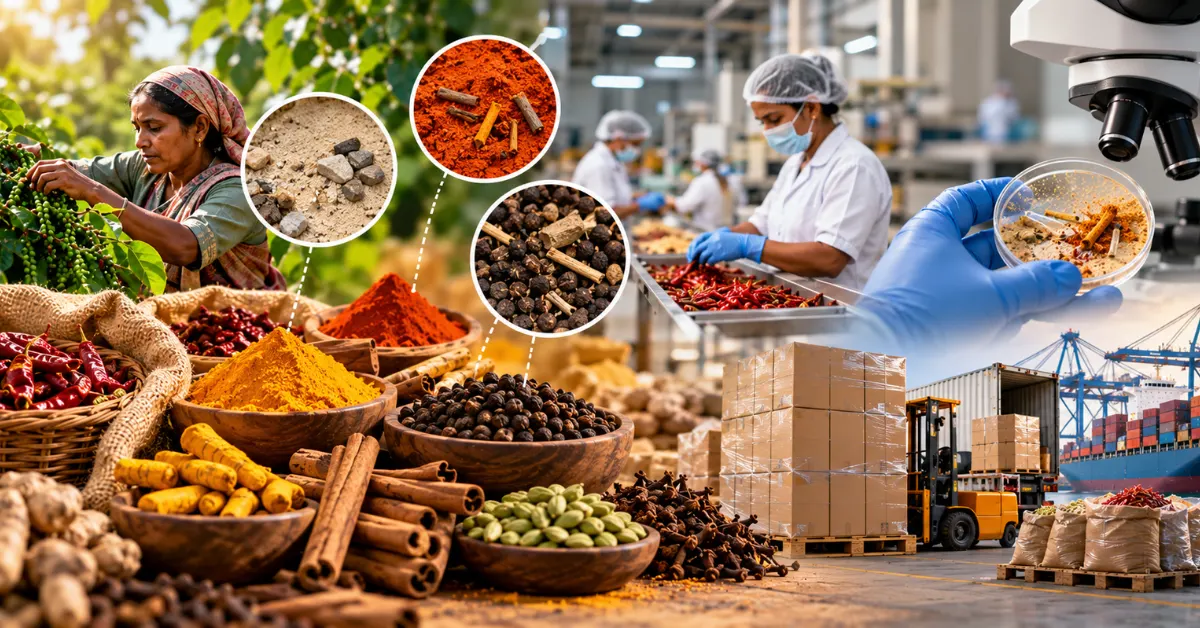
Adulteration in the spice value chain is a serious concern for spice exporters and processors in India, spice brands, food manufacturers, and importers. It can affect food safety, product authenticity, consumer confidence, and access to export markets. As spices move from farms through traders, aggregators, processors, warehouses, and exporters, the number of handoffs can make it difficult to maintain a clear picture of where a product came from and how it was handled.
Adulteration is not limited to one type of fraud or one stage of the journey. It may involve mixing cheaper materials into a spice, adding unauthorised colours, substituting a genuine spice with a lower-value ingredient, or misrepresenting origin and quality. Chemical hazards such as pesticide residues or heavy metals are also important food-safety concerns, although they are not necessarily deliberate adulteration. They require appropriate testing and risk controls.
The central lesson is simple: every batch should be linked to reliable source, processing, and quality records. Traceability does not replace laboratory testing or food-safety controls, but it helps businesses investigate problems, narrow the scope of affected products, and demonstrate accountability to buyers and regulators.
Key Takeaways
Spice adulteration is a supply chain risk
Complex supply chains increase vulnerability
Quality testing alone is not enough
Traceability strengthens accountability
Batch-level tracking enables faster response
Supplier verification is critical
Technology supports preventive risk management
Transparency builds market confidence
What is Spice adulteration?
Spice adulteration is the intentional or accidental alteration of a spice’s identity, purity, composition, or safety. It can occur when lower-cost materials are mixed into a product, a spice is substituted with another ingredient, unauthorised colours are used to improve appearance, or information about origin and quality is misrepresented.
It is useful to distinguish deliberate fraud from contamination. Adulteration often involves deception or unauthorised additions; contamination can arise through environmental exposure, poor handling, processing, storage, or other routes. The two can overlap in practice, but businesses should investigate them using the right combination of supplier checks, process controls, sampling, and laboratory analysis.
Five common risks across the spice value chain
1. Physical adulteration: Cheaper ingredients, foreign matter, or other materials may be mixed into a spice to increase volume or reduce costs.
2. Colour adulteration: Unauthorised synthetic dyes may be added to make a spice look brighter or more uniform. Visual inspection alone cannot reliably identify every colourant; suitable laboratory methods may be needed.
3. Substitution: A genuine spice may be partly or wholly replaced with a cheaper material or a different botanical ingredient. Identity checks and risk-based testing can help detect suspected substitution.
4. Chemical contamination: Pesticide residues, heavy metals, and other contaminants can create food-safety risks. These are not always evidence of intentional adulteration, so testing and investigation should establish the likely source and cause.
5. Origin and authenticity fraud: A product may be labelled with an inaccurate geographic origin, variety, grade, or quality claim. Source records and batch-level traceability help businesses compare claims with the documented chain of custody.
Where can adulteration risks enter the chain?
Risks can emerge at multiple points, which is why final-product inspection alone may not provide enough visibility.
Harvesting and post-harvest handling: Poor drying, inadequate segregation, foreign matter, or weak handling controls can affect quality and safety.
Aggregation and trading: Spices from different farms or suppliers may be combined, and source details can be lost if lots are not identified and recorded.
Grinding and processing: Grinding, cleaning, blending, and repacking create opportunities for substitution, unauthorised additions, cross-contact, or loss of lot identity.
Packaging and labelling: Incorrect labels can misrepresent ingredients, origin, grade, or other product attributes.
Storage and transportation: Poor conditions can compromise product quality, while weak lot separation and incomplete movement records can make later investigations difficult.
Export and distribution: Documentation gaps or mismatches between a shipment and its supporting records can delay verification and complicate buyer or regulatory checks.
The risk is not identical at every stage. Businesses should map their own processes, identify vulnerable handoffs, and apply controls proportionate to the spice, supplier, process, destination market, and known hazards.
Why adulteration is difficult to detect and investigate
Fragmented supplier networks can make it hard to verify who produced a spice and where it was grown. Inconsistent sampling and laboratory testing can leave gaps in the evidence. When batches are mixed during aggregation or processing, businesses may struggle to identify which incoming lots contributed to a finished product. Inaccurate origin declarations or incomplete supplier records can further weaken confidence in product claims.
Manual registers, spreadsheets, emails, and disconnected systems also make it harder to link purchase records, processing steps, laboratory results, and export documents. When a test result raises concern, the team may need to search multiple systems to work out which batches are affected, where they were sent, and which suppliers need to be contacted.
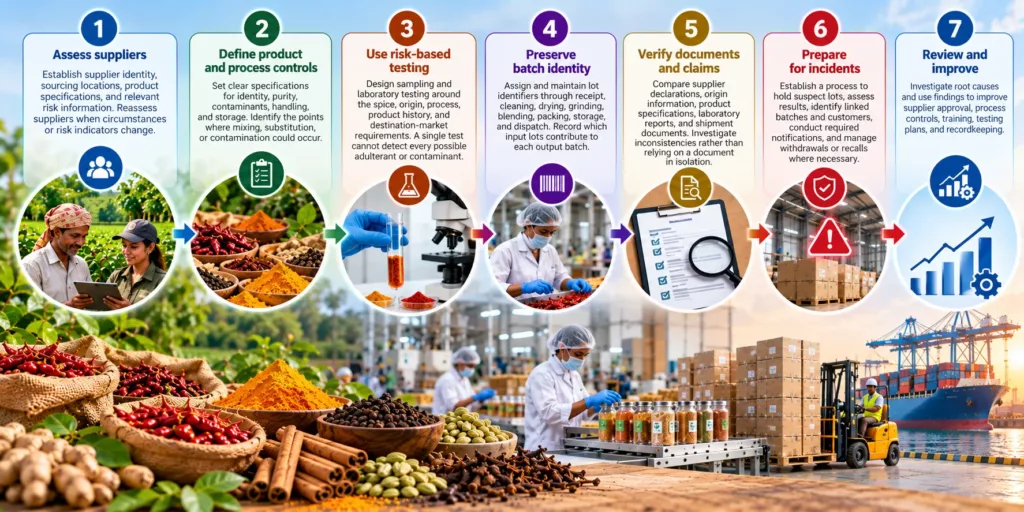
These challenges make traceability and clear recordkeeping important, but traceability should be combined with preventive controls, risk-based sampling, competent laboratory testing, supplier verification, and a documented incident-response process.
Regulations and export-market requirements
Spice businesses need to understand the rules that apply to their product and destination. In India, FSSAI requirements are relevant to food safety and applicable product standards. For exports to the European Union, pesticide Maximum Residue Limits (MRLs) and relevant contaminant and food-safety rules must be considered. Codex Alimentarius provides internationally recognised food standards and guidance, while importing countries including the United States and countries in the Middle East may apply their own requirements.
Buyers can also impose specifications that go beyond legal minimums, such as additional tests, supplier approval processes, origin documentation, or particular quality parameters. Businesses should distinguish binding legal requirements from Codex standards, voluntary schemes, and contractual buyer expectations. The exact requirements depend on the spice, product form, intended use, destination, and current law; exporters should verify them before shipment rather than rely on a generic checklist.
Explore how technology can bring greater transparency and accountability to every stage of the spice supply chain.
Hypothetical example: Investigating a turmeric batch
Consider a hypothetical Indian turmeric exporter preparing a consignment for an overseas buyer. During quality review, the colour-test results for one packed lot are inconsistent with the product specification. The batch records are incomplete, and the team cannot immediately determine which incoming turmeric lots were used.
If the exporter has maintained lot-level records, it can link the packed lot to the relevant processing run, incoming supplier lots, quality checks, and laboratory reports. The team can place the suspect lot on hold, arrange appropriate confirmatory testing, review supplier and processing records, and identify other batches that may share the same inputs. It can then make an evidence-based decision about release, further investigation, notification, or recall.
If the records are fragmented or batch identity was lost during blending, the investigation becomes slower and the company may need to hold a broader quantity of product while it establishes the facts.
How digital traceability supports accountability
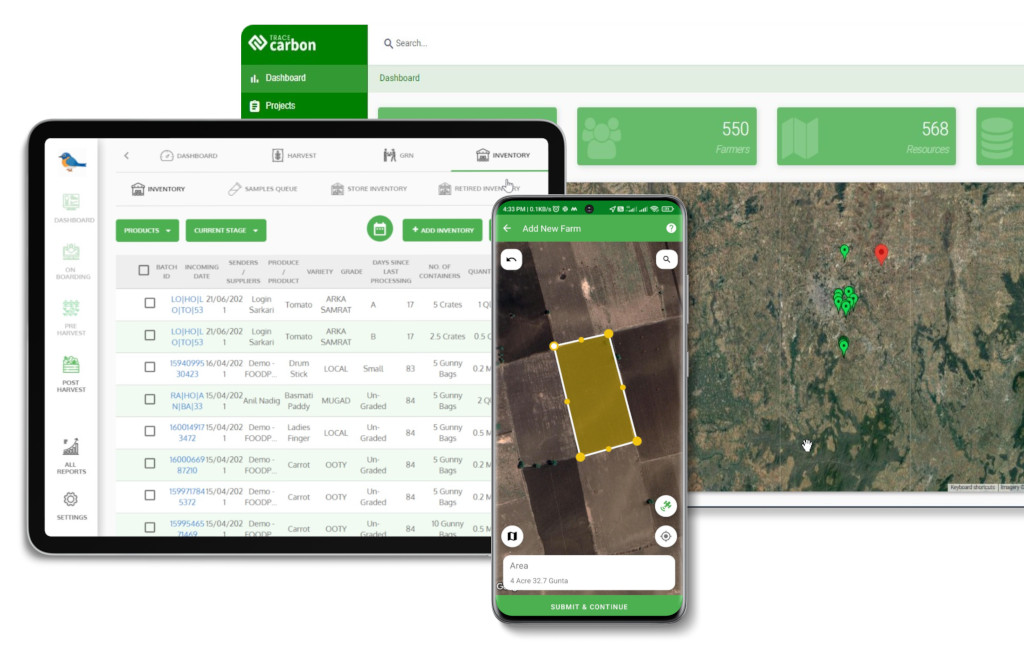
A digital traceability system can connect supplier and farmer records with sourcing events, incoming lots, processing activities, quality checks, and outgoing shipments. Instead of relying on disconnected spreadsheets and email threads, teams can retrieve relevant records in a structured workflow and follow a batch across the supply chain.
Useful capabilities include:
Farm-to-export visibility across sourcing, processing, storage, and dispatch.
Digital supplier and farmer records to support source verification and communication.
Batch-level traceability that records incoming lots and links them to processed or blended outputs.
Centralised quality and compliance documentation, including relevant test results and supporting records.
Faster identification of potentially affected batches and more focused investigations when a concern arises.
Digital records improve visibility and can support faster decisions, but they do not independently prove that a product is free from adulterants. Businesses still need strong controls, representative sampling, competent laboratory analysis, accurate data entry, and clear accountability for decisions.
How TraceX can help spice businesses
TraceX Farm to Fork Traceability Solutions helps businesses organise traceability information across their supply chains. For spice exporters, processors, brands, and food manufacturers, its capabilities can support farm-to-export visibility, digital supplier and farmer records, batch-level tracking across sourcing and processing, and centralised quality and compliance documentation.
When a concern is raised about a particular lot, connected records can help teams identify relevant suppliers, trace linked batches, retrieve supporting documents, and investigate the issue more efficiently. This supports accountability and evidence-based decision-making; it does not replace laboratory testing, food-safety management, or the business’s legal responsibilities.
The objective is to give teams a clearer view of where products came from, how lots moved through the chain, and which records support their quality and sourcing claims.
Ready to strengthen visibility across your spice supply chain?
Explore digital supplier records, batch-level traceability, and centralised quality and compliance documentation.
Adulteration in the spice value chain can undermine food safety, authenticity, export reliability, and consumer trust. Because risks can arise during sourcing, aggregation, processing, packaging, storage, and distribution, businesses need more than a final-product check. They need risk-based controls, suitable testing, verified supplier information, clear batch identity, and reliable records.
Traceability connects the evidence across these steps. It helps businesses understand where a batch came from, how it was handled, and which suppliers, processes, and customers may be connected to a concern. Combined with testing and food-safety controls, it can improve accountability and support faster, more focused investigations.
Frequently asked questions
What is adulteration in the spice value chain?
It is the alteration or misrepresentation of a spice’s identity, composition, purity, origin, or quality. It may involve cheaper materials, unauthorised colours, substitution, or false authenticity claims. Contaminants such as pesticide residues and heavy metals are related food-safety concerns but are not necessarily deliberate adulteration.
Can traceability detect adulteration?
Traceability does not itself detect every adulterant. It links batches to source and process records, helping businesses investigate concerns and identify potentially affected lots. Appropriate laboratory testing and preventive controls remain essential.
Why is batch-level traceability important for spice exporters?
It helps connect incoming raw materials to processing runs and finished products, supports documentation for buyers, and can make investigations or recalls more targeted when a problem is found.
Which regulations should spice exporters check?
Businesses should verify applicable FSSAI requirements, destination-market rules such as EU pesticide MRLs and food-safety requirements, relevant Codex standards, and buyer-specific specifications. The exact rules depend on the product and market.
What should a business do when it suspects a batch is adulterated?
Follow its incident-response procedure: hold the suspect lot where appropriate, arrange suitable testing, trace linked batches and customers, investigate the cause, make required notifications, and determine whether withdrawal or recall is necessary.
Start using TraceX
Transparency, Trust, & Success for your Climate Journey.
We use cookies on our website to give you the most relevant experience by remembering your preferences and repeat visits. By clicking “Accept All”, you consent to the use of ALL the cookies. However, you may visit "Cookie Settings" to provide a controlled consent.
This website uses cookies to improve your experience while you navigate through the website. Out of these, the cookies that are categorized as necessary are stored on your browser as they are essential for the working of basic functionalities of the website. We also use third-party cookies that help us analyze and understand how you use this website. These cookies will be stored in your browser only with your consent. You also have the option to opt-out of these cookies. But opting out of some of these cookies may affect your browsing experience.
Necessary cookies are absolutely essential for the website to function properly. These cookies ensure basic functionalities and security features of the website, anonymously.
Cookie
Duration
Description
cookielawinfo-checkbox-analytics
11 months
This cookie is set by GDPR Cookie Consent plugin. The cookie is used to store the user consent for the cookies in the category "Analytics".
cookielawinfo-checkbox-functional
11 months
The cookie is set by GDPR cookie consent to record the user consent for the cookies in the category "Functional".
cookielawinfo-checkbox-necessary
11 months
This cookie is set by GDPR Cookie Consent plugin. The cookies is used to store the user consent for the cookies in the category "Necessary".
cookielawinfo-checkbox-others
11 months
This cookie is set by GDPR Cookie Consent plugin. The cookie is used to store the user consent for the cookies in the category "Other.
cookielawinfo-checkbox-performance
11 months
This cookie is set by GDPR Cookie Consent plugin. The cookie is used to store the user consent for the cookies in the category "Performance".
viewed_cookie_policy
11 months
The cookie is set by the GDPR Cookie Consent plugin and is used to store whether or not user has consented to the use of cookies. It does not store any personal data.
Functional cookies help to perform certain functionalities like sharing the content of the website on social media platforms, collect feedbacks, and other third-party features.
Performance cookies are used to understand and analyze the key performance indexes of the website which helps in delivering a better user experience for the visitors.
Analytical cookies are used to understand how visitors interact with the website. These cookies help provide information on metrics the number of visitors, bounce rate, traffic source, etc.
Advertisement cookies are used to provide visitors with relevant ads and marketing campaigns. These cookies track visitors across websites and collect information to provide customized ads.
Download the 2026 Traceability Scorecard and Benchmark Your Supply Chain Across 10 Critical Capabilities.
Download our eBook
Don’t Wait for an Audit to Find Your EUDR Gaps
The 2026 Simplification Package changes how HS codes, DDS pass-through and geolocation rules apply to you. Get the free guide and 20-point readiness checklist before enforcement catches you unprepared.