Battery Raw Material Traceability: How to Be Audit-Ready Before August 2027
Published
, 8 minute read
Share this article
Quick summary: Battery raw material traceability for cobalt, lithium, nickel and graphite: meet EU Battery Regulation due diligence and passport rules before 2027.
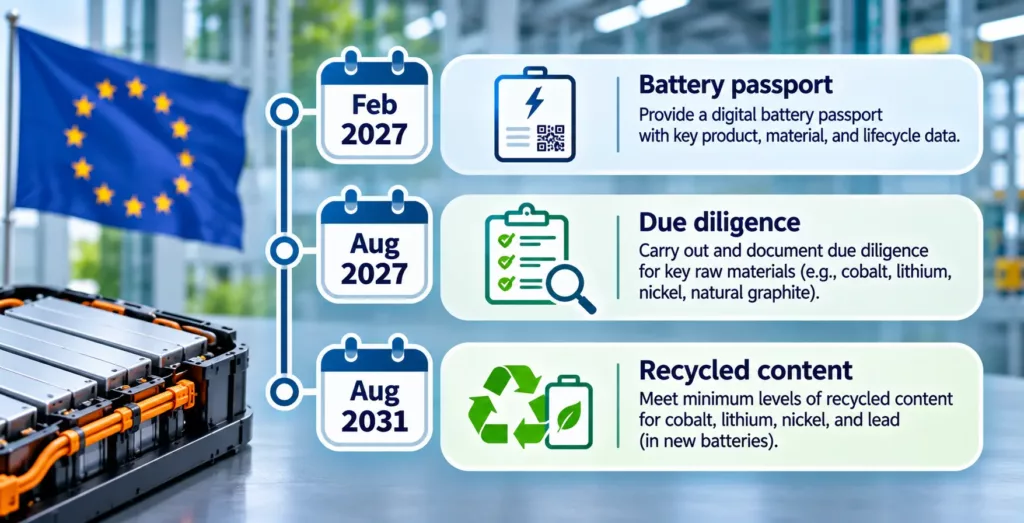
Battery raw material traceability is the ability to follow cobalt, lithium, nickel and natural graphite from the mine or recycler, through refining and cell production, to the finished battery, with verifiable evidence at every step. Under EU Battery Regulation (EU) 2023/1542, in-scope companies must run third-party verified due diligence on these materials from 18 August 2027, and EV, LMT and large industrial batteries need a digital battery passport from 18 February 2027.
KEY TAKEAWAYS
Due diligence on cobalt, natural graphite, lithium and nickel applies from 18 August 2027, after Regulation (EU) 2025/1561 moved it from August 2025.
Battery passports for EV, LMT and industrial batteries above 2 kWh start on 18 February 2027.
The current scope threshold is €40 million net turnover; a pending Omnibus IV amendment would raise it to €150 million.
Supplier declarations and spreadsheets cannot produce the chain-of-custody evidence a notified body will audit.
Verification must be complete by the deadline, not started, so supplier mapping should begin now.
Download our eBook
Explore the key steps, challenges and considerations for building a reliable Battery Passport strategy.
Battery raw material traceability links every battery to the mines, refiners and recyclers behind it.
What is traced: the four Annex X raw materials and their chemical compounds.
How it is traced: a documented chain of custody at every handover.
Why it matters: regulators expect evidence, not supplier claims.
In practice, battery raw material traceability means holding a documented chain of custody for each critical input. That chain runs from extraction or recycling, through concentration and refining into battery-grade chemicals, to cathode and anode production, cell manufacturing and pack assembly. Each handover needs a record of who supplied the material, where it came from, how much moved and which audits or certifications apply.
It differs from general supply chain visibility in one important way. A supplier questionnaire tells you what a supplier claims. Battery raw material traceability tells you what the documents, shipments and audit reports actually show, and that is the standard regulators now apply.
Battery Raw Material Traceability Rules Under the EU Battery Regulation
Recycled content documentation and minimum shares.
Battery Due Diligence Obligations (Articles 47 to 52)
From 18 August 2027, economic operators placing batteries on the EU market must adopt and implement a due diligence policy covering cobalt, natural graphite, lithium, nickel and the related compounds listed in Annex X. The policy must follow internationally recognised frameworks such as the OECD due diligence guidance, be verified by a notified body and be audited periodically. Supporting documentation must be kept for ten years after the last battery made under the policy is placed on the market. Battery raw material traceability is the evidence base for every one of those steps.
Scope currently covers operators with net turnover of €40 million or more, unless they belong to a larger group. In June 2026, EU negotiators provisionally agreed the Omnibus IV package, which would raise that threshold to €150 million. Check its final status before scoping your programme.
Understand the scope of the EU Battery Regulation and its Digital Product Passport requirements. Explore which battery categories are covered, key capacity and application thresholds, applicable timelines, and the obligations for manufacturers, importers and other economic operators placing batteries on the EU market. Learn what your business needs to prepare for Battery DPP compliance.
Battery Passport Requirements From February 2027
From 18 February 2027, LMT batteries, industrial batteries above 2 kWh and EV batteries need a digital battery passport accessed by QR code. The passport carries material composition, carbon footprint, recycled content and due diligence information, so any gap in battery raw material traceability surfaces in a record that customers and market surveillance authorities can check.
Explore the key requirements of the EU Battery Regulation and its Digital Product Passport framework. Understand the data, traceability, transparency and documentation obligations across the battery value chain, including what manufacturers and other economic operators need to prepare.
Recycled Content Documentation
Minimum recycled content shares are set to apply from August 2031: 16% for cobalt, 85% for lead, 6% for lithium and 6% for nickel. Proving those shares requires the same chain-of-custody data, extended to recyclers and secondary material.
Obligation
Applies from
Raw material data needed
Battery passport
18 February 2027
Material composition, recycled content, due diligence information
Chain of custody for recycled cobalt, lithium, nickel and lead
Battery Raw Material Traceability Challenges for Compliance Teams
Most battery supply chains still run on questionnaires and spreadsheets, which break down at the refining stage.
Little visibility beyond Tier 1 suppliers.
Mixed feedstock at refineries blurs origin.
Evidence scattered across inboxes and shared drives.
Battery Supply Chain Opacity Beyond Tier 1
A cell manufacturer may know its cathode supplier well but have little line of sight to the refiner, trader or mine three or four tiers upstream. Due diligence requires risk identification across the whole chain, not just direct suppliers, and that is where battery raw material traceability usually breaks down.
Battery Material Mixing at Refineries
Refiners blend feedstock from many sources. Without batch-level or mass-balance records, battery raw material traceability stops at the refinery gate, origin claims become estimates, and estimates are hard to defend in a notified body audit.
Battery Compliance Evidence in Too Many Places
Certificates, audit reports, smelter lists and shipping documents often sit in separate systems. Assembling them for verification takes weeks, and nobody is sure which version is current.
“If you cannot show where your cobalt was refined, you cannot show it was responsibly sourced.”
Discover how end-to-end supply chain traceability helps improve visibility across the battery value chain. Explore how businesses can track critical raw materials, map suppliers, monitor material flows and connect sourcing information with manufacturing processes
Battery Raw Material Traceability: Manual Process vs Platform
A traceability platform replaces document chasing with structured, audit-ready records.
Compared across five criteria auditors and passport systems care about.
Shows where manual methods fail under 2027 rules.
Criterion
Manual (spreadsheets, email)
Traceability platform
Supplier mapping
Tier 1 only, refreshed yearly
Multi-tier map, updated as suppliers onboard
Chain of custody
Declarations with no batch link
Batch or mass-balance records per shipment
Risk assessment
Desk research per supplier
Consistent risk flags against Annex X risk categories
Audit evidence
Collected by hand before each audit
Centralised, timestamped and exportable
Battery passport data
Re-keyed manually
Structured data ready for passport fields
The manual route can work for a pilot with a handful of suppliers. It does not scale to the verified, multi-tier battery raw material traceability programme the regulation expects, and every re-keyed figure is a potential audit finding.
HOW THE TRACEX PLATFORM SUPPORTS BATTERY RAW MATERIAL TRACEABILITY
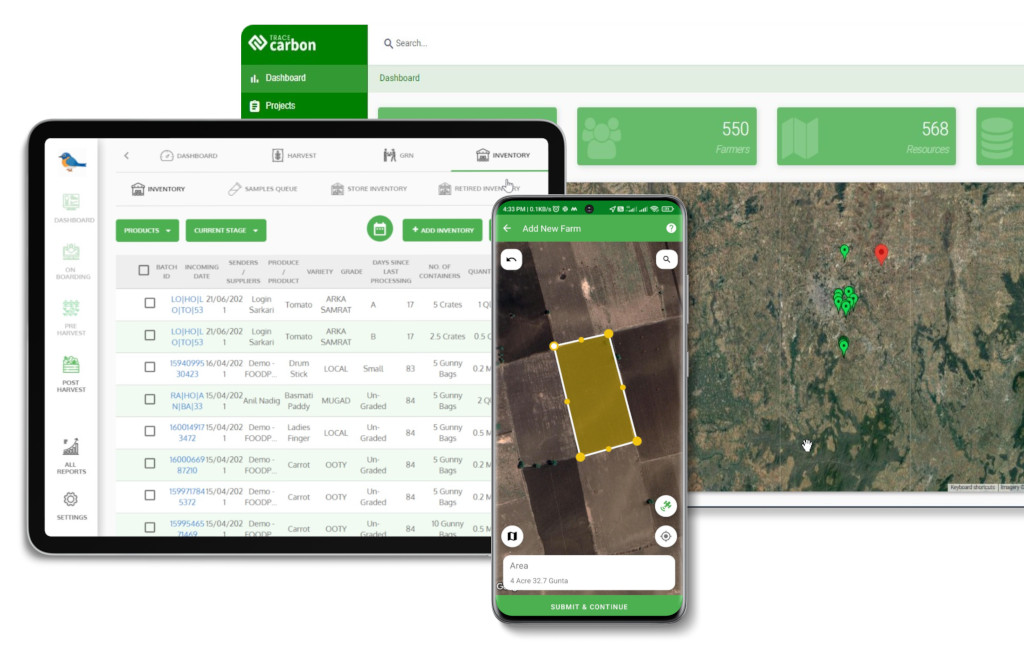
The TraceX Battery DPP platform helps battery manufacturers and importers map suppliers across tiers, capture chain-of-custody records from mine or recycler to cell, run risk assessments aligned with OECD-based due diligence and keep audit-ready evidence in one place. Upstream suppliers can submit data through a mobile app that works offline and supports 15 languages. TraceX Technologies is GDPR, ISO 27001, SOC 1 and SOC 2 compliant.
See battery raw material traceability in action
Walk through supplier mapping, chain-of-custody records and audit evidence with a TraceX specialist.
Battery Raw Material Traceability Software: Buyer Checklist
Use these questions to shortlist battery raw material traceability tools before August 2027.
Seven criteria tied directly to the regulation’s evidence needs.
Does it map suppliers beyond Tier 1, down to mine, refiner and recycler?
Does it support batch-level and mass-balance chain-of-custody models?
Can it assess risk against the Annex X categories, including human rights, labour and environment?
Does it store evidence in a form a notified body can audit?
Can it supply structured data to the battery passport?
Can suppliers in producing countries submit data on mobile, offline, in their language?
Does it meet enterprise security standards such as ISO 27001 and SOC 2?
Frequently Asked Questions
What is battery raw material traceability?
Battery raw material traceability is the documented chain of custody for cobalt, lithium, nickel and natural graphite from extraction or recycling to the finished battery, backed by verifiable records at each step.
Which raw materials does EU battery due diligence cover?
EU battery due diligence covers raw materials like Cobalt, natural graphite, lithium and nickel, plus the chemical compounds derived from them listed in Annex X of Regulation (EU) 2023/1542.
When do battery due diligence obligations apply?
Battery due diligence obligations apply from 18 August 2027. Regulation (EU) 2025/1561 postponed the original August 2025 date by two years.
Do supplier certifications replace due diligence?
No. Certifications and industry schemes support risk mitigation, but they do not replace battery raw material traceability or your own due diligence policy, which still needs verification by a notified body.
How does battery raw material traceability connect to the battery passport?
The passport, required from 18 February 2027 for EV, LMT and industrial batteries above 2 kWh, discloses composition, recycled content and due diligence information that depends on traceable supply chain data.
Which companies are exempt?
Operators below €40 million net turnover that are not part of a larger group. A pending Omnibus IV amendment would raise this threshold to €150 million.
Start using TraceX
Transparency, Trust, & Success for your Climate Journey.
We use cookies on our website to give you the most relevant experience by remembering your preferences and repeat visits. By clicking “Accept All”, you consent to the use of ALL the cookies. However, you may visit "Cookie Settings" to provide a controlled consent.
This website uses cookies to improve your experience while you navigate through the website. Out of these, the cookies that are categorized as necessary are stored on your browser as they are essential for the working of basic functionalities of the website. We also use third-party cookies that help us analyze and understand how you use this website. These cookies will be stored in your browser only with your consent. You also have the option to opt-out of these cookies. But opting out of some of these cookies may affect your browsing experience.
Necessary cookies are absolutely essential for the website to function properly. These cookies ensure basic functionalities and security features of the website, anonymously.
Cookie
Duration
Description
cookielawinfo-checkbox-analytics
11 months
This cookie is set by GDPR Cookie Consent plugin. The cookie is used to store the user consent for the cookies in the category "Analytics".
cookielawinfo-checkbox-functional
11 months
The cookie is set by GDPR cookie consent to record the user consent for the cookies in the category "Functional".
cookielawinfo-checkbox-necessary
11 months
This cookie is set by GDPR Cookie Consent plugin. The cookies is used to store the user consent for the cookies in the category "Necessary".
cookielawinfo-checkbox-others
11 months
This cookie is set by GDPR Cookie Consent plugin. The cookie is used to store the user consent for the cookies in the category "Other.
cookielawinfo-checkbox-performance
11 months
This cookie is set by GDPR Cookie Consent plugin. The cookie is used to store the user consent for the cookies in the category "Performance".
viewed_cookie_policy
11 months
The cookie is set by the GDPR Cookie Consent plugin and is used to store whether or not user has consented to the use of cookies. It does not store any personal data.
Functional cookies help to perform certain functionalities like sharing the content of the website on social media platforms, collect feedbacks, and other third-party features.
Performance cookies are used to understand and analyze the key performance indexes of the website which helps in delivering a better user experience for the visitors.
Analytical cookies are used to understand how visitors interact with the website. These cookies help provide information on metrics the number of visitors, bounce rate, traffic source, etc.
Advertisement cookies are used to provide visitors with relevant ads and marketing campaigns. These cookies track visitors across websites and collect information to provide customized ads.