Smallholder-Inclusive Risk Mitigation Under the EUDR
Published
, 7 minute read
Share this article
Quick summary: Learn how businesses can manage EUDR risk across smallholder supply chains through better data, geolocation, capacity building, monitoring and documented mitigation.
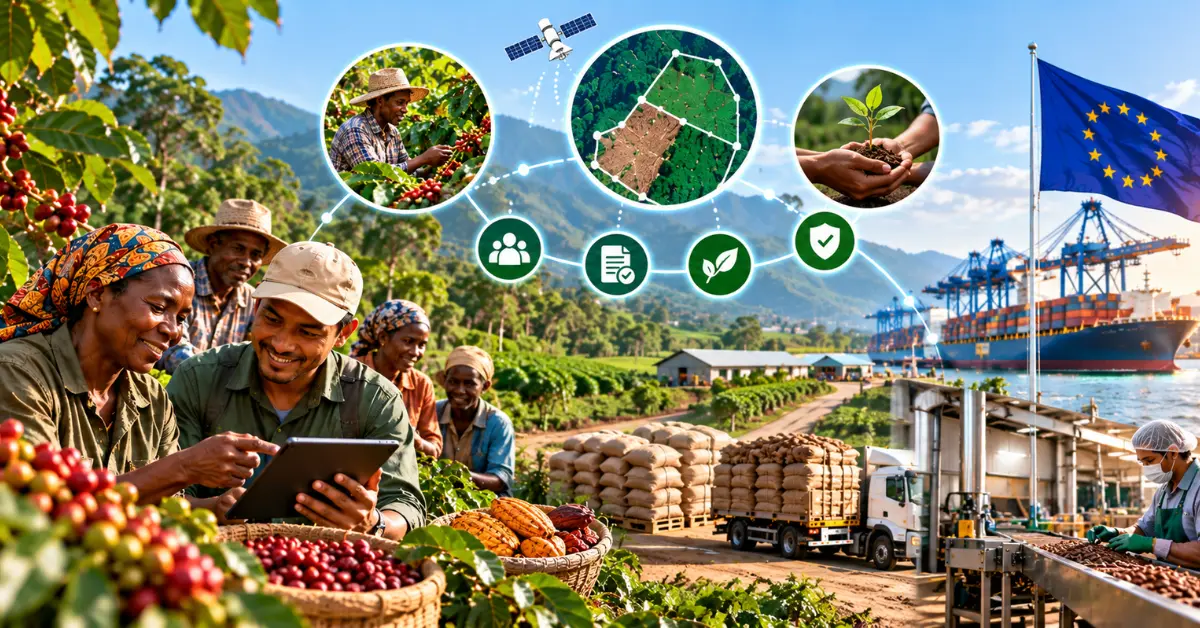
Smallholder-Inclusive Risk Mitigation Under the EUDR helps businesses support smallholder farmers, address supply chain risks, and strengthen compliance through better geolocation, traceability, and targeted risk mitigation. Smallholder supply chains are central to commodities such as coffee, cocoa, rubber and palm oil. Under the EUDR, they create a practical compliance challenge: companies need reliable production, geolocation, legality and deforestation-risk information while working with producers who may have limited digital access or fragmented records.
The answer is not to exclude smallholders. It is to build a risk mitigation process that improves data quality, addresses identified risks and creates a documented path to negligible risk. Article 11 specifically recognises supporting suppliers, particularly smallholders, through capacity building and investments as a possible mitigation measure.
Key Takeaways: Smallholder-Inclusive Risk Mitigation Under the EUDR
Smallholder inclusion matters
Prioritise plot-level geolocation
Identify and assess risks
Invest in capacity building
Combine digital and field verification
Strengthen end-to-end traceability
Document mitigation actions.
Leverage technology for scalable compliance
Key Takeaways: Smallholder-Inclusive Risk Mitigation Under the EUDR
Adopt an inclusive approach to compliance
Strengthen smallholder onboarding
Address data gaps early
Provide targeted capacity building
Use risk-based mitigation measures
Promote collaboration across the supply chain
Leverage digital tools for transparency
Monitor and document mitigation efforts
Avoid treating smallholder status as a substitute for risk assessment
What Does Smallholder-Inclusive Risk Mitigation Mean Under the EUDR?
Smallholder-inclusive risk mitigation means designing EUDR due diligence so that smallholders can participate in a compliant supply chain while the operator actively addresses gaps identified during risk assessment. The EUDR requires operators to collect relevant information, assess the risk of non-compliance and, where risk is more than negligible, adopt adequate and proportionate mitigation measures before placing relevant products on the EU market or exporting them.
For smallholder networks, mitigation can include collecting additional documents or data, independent surveys or audits, and measures that improve supplier capability. The European Commission also makes clear that due diligence is not a fixed tick-box exercise; the approach can vary according to the supply chain, provided the required due diligence steps are covered and the operator reaches no or negligible risk.
Can Smallholders Meet EUDR Requirements? Discover how better farm-level geolocation, supplier onboarding, and traceability can help smallholder supply chains prepare for EUDR compliance.Read the Guide →
Why Smallholder Supply Chains Create EUDR Risk
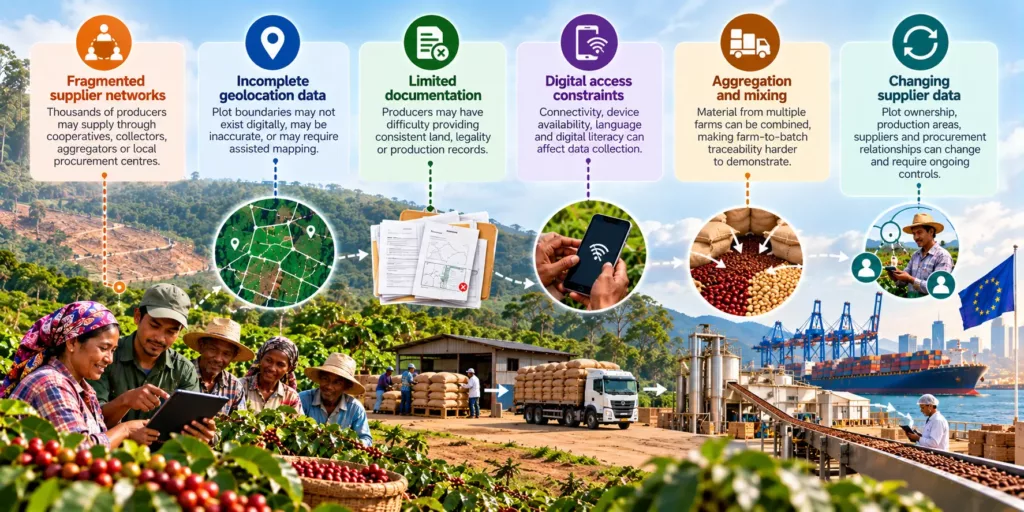
Fragmented supplier networks: Thousands of producers may supply through cooperatives, collectors, aggregators or local procurement centres.
Incomplete geolocation data: Plot boundaries may not exist digitally, may be inaccurate, or may require assisted mapping.
Limited documentation: Producers may have difficulty providing consistent land, legality or production records.
Digital access constraints: Connectivity, device availability, language and digital literacy can affect data collection.
Aggregation and mixing: Material from multiple farms can be combined, making farm-to-batch traceability harder to demonstrate.
Changing supplier data: Plot ownership, production areas, suppliers and procurement relationships can change and require ongoing controls.
5 Practical Steps for Smallholder-Inclusive Risk Mitigation
1. Start with supplier and plot-level visibility
Build a structured supplier profile that connects the producer, farm or plot, commodity, procurement relationship and relevant supporting evidence. For EUDR purposes, operators need information demonstrating that relevant products comply with the Regulation, including information on production and geolocation required under Article 9. A digital supplier registry can reduce duplicate data collection and make missing information visible before it becomes a shipment-level problem.
2. Make geolocation accessible—not optional
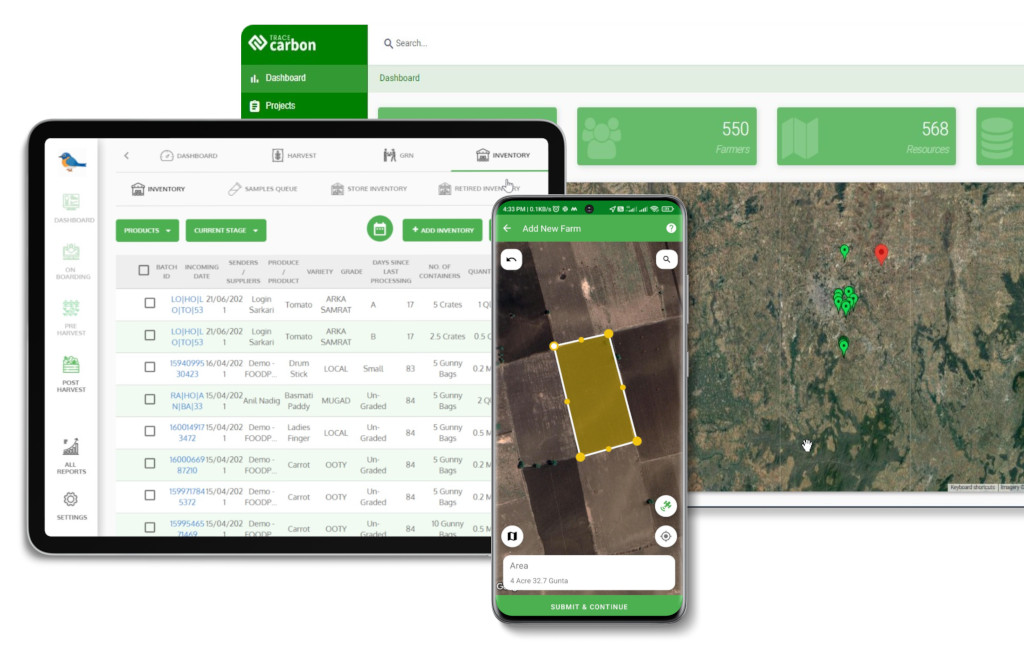
For smallholders, geolocation is often the most operationally difficult requirement. A practical approach is assisted onboarding: field teams or procurement agents can capture coordinates or map polygons, validate the geometry and link the result to the producer and sourcing transaction. Offline-first workflows can be particularly useful where connectivity is limited. The objective is not simply to collect a coordinate once, but to create a reliable link between the plot and the material entering the supply chain.
How Can GeoJSON Mapping Simplify EUDR Compliance in the Tyre Industry?
Discover how a leading tyre manufacturer usesGeoJSONmapping to address geolocation challenges, improve plot-level traceability, and support EUDR compliance in its natural rubber supply chain.
Not every smallholder needs the same intervention. Use the risk assessment to prioritise suppliers that require additional support. For example, a supplier with missing plot information may need assisted mapping; a supplier with weak legality evidence may need documentation support; a sourcing area with higher deforestation concerns may require additional verification or field assessment.
4. Combine field evidence with independent and satellite checks
Supplier declarations should not automatically be treated as sufficient evidence when risk remains. Depending on the identified risk, businesses can combine field verification, independent surveys or audits with geospatial and Earth-observation data. The EUDR permits appropriate technical and scientific means, including Earth observation, to support compliance checks.
5. Connect mitigation to procurement and traceability
Risk mitigation should not sit in a separate compliance spreadsheet. It should influence procurement decisions and remain connected to the material purchased. A compliant workflow should allow the business to identify which suppliers and plots contributed to a batch, what risk was identified, what mitigation was performed and whether the evidence supports the final due diligence decision.
This is particularly important in aggregated smallholder supply chains. If the business cannot connect farm-level evidence to the relevant product flow, strong individual farmer records may still fail to provide a defensible supply-chain picture.
A Practical Smallholder EUDR Workflow
Step
Stage
What to do
1
Supplier onboarding
Capture producer identity, sourcing relationship and required documentation.
2
Plot mapping
Collect and validate coordinates or polygons and link them to the producer.
3
Risk assessment
Assess country, sourcing area, supply-chain complexity, data quality and other applicable EUDR criteria.
4
Targeted mitigation
Request evidence, conduct verification, provide training or invest in supplier capability where needed.
5
Traceability
Connect approved plots and suppliers to procurement, batches and shipments.
6
Document decisions
Record mitigation actions, outcomes and supporting evidence for the due diligence system.
7
DDS readiness
Use the verified data and documented risk decision in the applicable due diligence workflow.
How Technology Can Support Smallholder-Inclusive EUDR Compliance
Technology can turn a fragmented smallholder programme into a repeatable compliance workflow by centralising supplier profiles, geolocation, plot validation, geospatial risk checks, evidence, mitigation actions and procurement records.
Ready to make your smallholder supply chain EUDR-ready?
TraceX helps businesses digitise supplier onboarding, map plots, assess deforestation risk, manage mitigation and connect farm-level evidence with traceability and EUDR workflows.
Smallholder-inclusive risk mitigation under the EUDR is ultimately about making compliance workable at the source. Businesses need more than a list of supplier names or a one-time collection of coordinates. They need a repeatable process that identifies risk, supports suppliers, verifies evidence, links production to traceability and records how identified risks were addressed.
When smallholder engagement is designed as part of the due diligence system not treated as a separate field exercise companies can strengthen both compliance and supply-chain resilience. The most effective programmes combine practical supplier support with data controls, geospatial verification, targeted mitigation and clear documentation.
Frequently Asked Questions
Does the EUDR require companies to exclude smallholders?
No. The EUDR does not require businesses to exclude smallholders. Where risk is more than negligible, Article 11 allows risk mitigation measures that can include supporting suppliers, particularly smallholders, through capacity building and investments.
What are common EUDR risks in smallholder supply chains?
Common operational risks include incomplete geolocation, inconsistent supplier information, missing legality evidence, complex or aggregated supply chains, weak traceability and difficulty validating information at plot level. The applicable risk assessment must consider the criteria set out in Article 10.
Can capacity building count as EUDR risk mitigation?
Yes. Article 11 expressly states that risk mitigation may include supporting compliance by suppliers, in particular smallholders, through capacity building and investments. The mitigation should be proportionate to the identified risk and documented.
How can companies manage geolocation for thousands of smallholders?
Businesses can use assisted field mapping, mobile data collection, offline-capable workflows, geometry validation and centralised supplier records. The key is to link the geolocation to the correct producer and relevant product flow.
How does TraceX support smallholder-inclusive EUDR compliance?
TraceX can support supplier onboarding, plot-level geolocation, geospatial risk assessment, evidence management, mitigation workflows and traceability. The goal is to help organisations move from fragmented supplier data to a documented, auditable compliance workflow.
Start using TraceX
Transparency, Trust, & Success for your Climate Journey.
We use cookies on our website to give you the most relevant experience by remembering your preferences and repeat visits. By clicking “Accept All”, you consent to the use of ALL the cookies. However, you may visit "Cookie Settings" to provide a controlled consent.
This website uses cookies to improve your experience while you navigate through the website. Out of these, the cookies that are categorized as necessary are stored on your browser as they are essential for the working of basic functionalities of the website. We also use third-party cookies that help us analyze and understand how you use this website. These cookies will be stored in your browser only with your consent. You also have the option to opt-out of these cookies. But opting out of some of these cookies may affect your browsing experience.
Necessary cookies are absolutely essential for the website to function properly. These cookies ensure basic functionalities and security features of the website, anonymously.
Cookie
Duration
Description
cookielawinfo-checkbox-analytics
11 months
This cookie is set by GDPR Cookie Consent plugin. The cookie is used to store the user consent for the cookies in the category "Analytics".
cookielawinfo-checkbox-functional
11 months
The cookie is set by GDPR cookie consent to record the user consent for the cookies in the category "Functional".
cookielawinfo-checkbox-necessary
11 months
This cookie is set by GDPR Cookie Consent plugin. The cookies is used to store the user consent for the cookies in the category "Necessary".
cookielawinfo-checkbox-others
11 months
This cookie is set by GDPR Cookie Consent plugin. The cookie is used to store the user consent for the cookies in the category "Other.
cookielawinfo-checkbox-performance
11 months
This cookie is set by GDPR Cookie Consent plugin. The cookie is used to store the user consent for the cookies in the category "Performance".
viewed_cookie_policy
11 months
The cookie is set by the GDPR Cookie Consent plugin and is used to store whether or not user has consented to the use of cookies. It does not store any personal data.
Functional cookies help to perform certain functionalities like sharing the content of the website on social media platforms, collect feedbacks, and other third-party features.
Performance cookies are used to understand and analyze the key performance indexes of the website which helps in delivering a better user experience for the visitors.
Analytical cookies are used to understand how visitors interact with the website. These cookies help provide information on metrics the number of visitors, bounce rate, traffic source, etc.
Advertisement cookies are used to provide visitors with relevant ads and marketing campaigns. These cookies track visitors across websites and collect information to provide customized ads.
Download the 2026 Traceability Scorecard and Benchmark Your Supply Chain Across 10 Critical Capabilities.
Download our eBook
Don’t Wait for an Audit to Find Your EUDR Gaps
The 2026 Simplification Package changes how HS codes, DDS pass-through and geolocation rules apply to you. Get the free guide and 20-point readiness checklist before enforcement catches you unprepared.