EUDR Downstream Operator: Definition, Examples, and Compliance Checklist
Published
, 8 minute read
Share this article
Quick summary: Understand who qualifies as an EUDR downstream operator, practical examples, record-keeping duties, DDS references, and how to prepare for compliance.
An EUDR downstream operator is a business that places on the EU market or exports relevant products made using relevant products already covered by an upstream Due Diligence Statement (DDS) or simplified declaration. It generally does not submit a new DDS or repeat full due diligence for every transaction. Instead, it must collect and retain required supplier and customer information, keep relevant declaration references, retain records for at least five years, and respond when credible information indicates possible non-compliance. Exact duties depend on the company’s role, size, and transaction.
Download our eBook to assess your EUDR readiness, uncover data gaps, and take proactive steps towards stronger compliance.
The EU Deforestation Regulation (EUDR) assigns responsibilities according to where a business sits in the supply chain. A downstream operator handles relevant products that are already covered by an upstream DDS or simplified declaration. An upstream operator generally places a relevant product on the EU market for the first time or exports it, and is responsible for applicable due diligence and declaration requirements.
Relevant commodity groups include cattle, cocoa, coffee, oil palm, rubber, soya, and wood, alongside products listed in Annex I. A company’s industry label alone does not determine its role. The product’s CN code, how it entered the EU market, and the activity the company performs all matter.
Coffee roaster: Buys coffee beans already placed on the EU market under an upstream DDS and processes them into roasted coffee.
Chocolate manufacturer: Uses cocoa products covered by upstream due diligence to manufacture chocolate. It needs traceable supplier and customer records and relevant declaration information.
Rubber product manufacturer: Buys regulated natural-rubber inputs already covered by a DDS and manufactures relevant rubber products. Incoming materials should be linked to batches and supply records.
Wood-products or furniture business: Further processes or markets relevant wood products already covered upstream. The exact role depends on the product’s Annex I status and the transaction.
Distributor or retailer: Makes relevant products available further along the EU supply chain. Depending on its activity, it may be a downstream operator or trader.
Cocoa processor with multiple suppliers: May not need to recreate every upstream assessment routinely, but it must keep the records required for its role and have a process for escalating credible red flags.
Important: A company importing a relevant product from outside the EU and placing it on the EU market for the first time may be an upstream operator, not a downstream operator. Classify the transaction before applying a checklist.
Downstream Operator vs. Upstream Operator vs. Trader
Upstream operator: Generally conducts the required due diligence and submits a DDS or, where eligible, the applicable simplified declaration.
Downstream operator: Handles relevant products already covered by an upstream DDS or simplified declaration. Its core duties focus on traceability, records, and responding to relevant risk information.
Trader: Makes relevant products available on the market without being an operator or downstream operator. Traders also have collect-and-keep obligations.
Company size matters. Under the amended framework, SME downstream operators and traders generally have lighter obligations, including no Information System registration requirement. Non-SME downstream operators and traders must register in the EU Information System before the relevant activity. Additional verification duties may apply when credible information indicates possible non-compliance, particularly for non-SMEs. Confirm the current rules against official EU guidance for your role and size.
Missed Our Webinar on EUDR Beyond DDS? Catch the Recording!
Watch the webinar recording to understand what lies beyond DDS filing and how to strengthen your EUDR compliance workflow.
1. Collect supplier and customer information. Keep the required identity and contact details for businesses supplying the products and those receiving them. Records should identify the product and transaction clearly.
2. Capture declaration references. Collect the applicable DDS reference number or simplified declaration identifier where required. The first downstream buyer from an upstream operator or eligible micro or small primary operator has a specific role in collecting the reference or identifier. Link it to the product, batch, supplier, and shipment.
3. Retain records for at least five years. The amended rules require the information specified for downstream operators and traders to be retained for at least five years. Records must be retrievable and provided to competent authorities upon request.
4. Register where required. Non-SME downstream operators and non-SME traders must register in the EU Information System before the relevant activity. Confirm the company’s size classification and registration requirements.
5. Respond to credible concerns. Missing references, inconsistent shipment information, credible deforestation alerts, or information from authorities may signal potential non-compliance. Document the concern and investigate promptly. When the relevant legal trigger is met, non-SMEs may have to verify that upstream due diligence was carried out and that the risk is no more than negligible before proceeding.
6. Cooperate with competent authorities. Provide required assistance, documentation, records, and access for checks in accordance with the regulation.
Read our blog on EUDR Competent Authoritiesto understand their responsibilities, what to expect during inspections, and how to prepare your supply chain for compliance checks with TraceX.
Practical Compliance Checklist
Confirm whether products fall within Annex I and verify the relevant CN codes.
Classify each activity as upstream operator, downstream operator, or trader.
Confirm SME or non-SME status under the applicable criteria.
Identify who is responsible for collecting DDS references or declaration identifiers.
Link references to products, batches, suppliers, and shipments.
Keep required supplier and customer information in a searchable system.
Apply a five-year retention process and test record retrieval.
Define a workflow for missing information, inconsistencies, and substantiated concerns.
Assign investigation owners and retain evidence of decisions and corrective actions.
Review the latest EU Regulation and Commission guidance before changing processes.
Spreadsheets may work for a small, simple supply chain. When supplier numbers, products, batches, and markets multiply, disconnected files and email trails make it harder to match references to shipments and identify inconsistencies promptly.
Common Mistakes to Avoid
Assuming every EU buyer is a downstream operator. A business importing and placing a relevant product on the EU market for the first time may be an upstream operator.
Treating a DDS reference as proof that all records are correct. The reference must match the product and transaction. Investigate discrepancies rather than ignoring them.
Repeating upstream due diligence by default. Focus on obligations that apply to your role and escalate when the legal trigger is met.
Assuming SMEs are fully exempt. Lighter obligations do not remove applicable record-keeping and traceability responsibilities.
Keeping disconnected records. Supplier details, declaration identifiers, purchase orders, batches, invoices, and customer records are more useful when they can be linked and retrieved together.
How Digital Traceability Helps
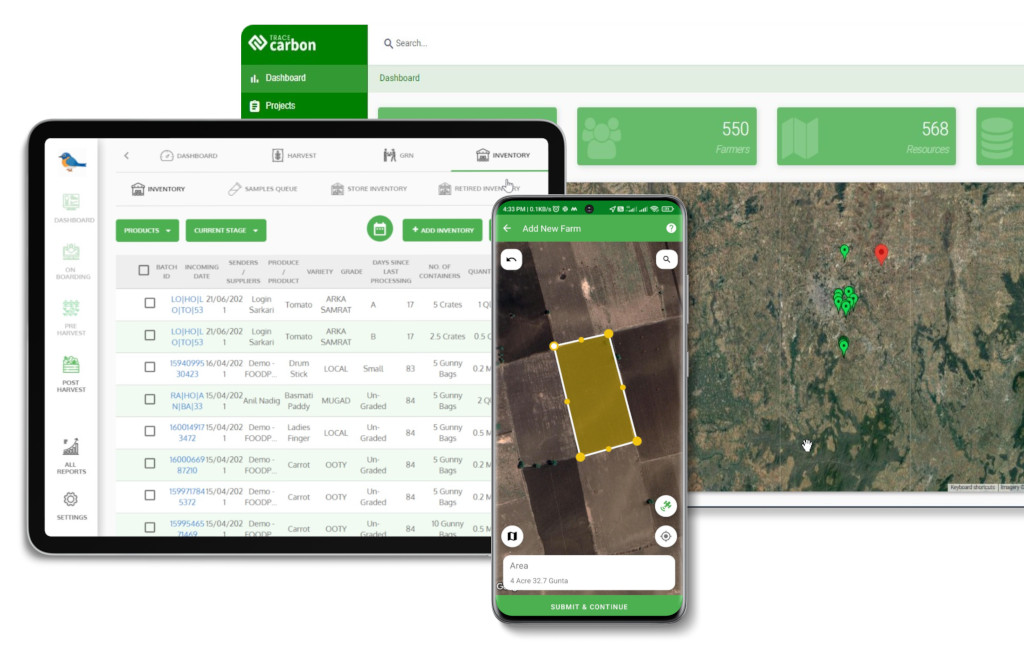
As supply chains grow, digital traceability can connect supplier profiles, product and batch data, DDS references, invoices, and shipment records. Alerts and task workflows help teams identify missing information, assign investigations, document decisions, and retrieve evidence for reviews or competent-authority checks.
TraceX helps supply-chain teams centralise supplier and traceability data, manage compliance evidence, and improve visibility across products and business partners. The goal is not to duplicate upstream due diligence unnecessarily; it is to manage the requirements that apply to your role consistently and at scale.
Knowing your category is only the first step. You also need a dependable way to connect suppliers, products, declaration references, and shipment records and to act when information is missing or inconsistent.
TraceX helps businesses strengthen supply-chain traceability, centralise compliance evidence, and build audit-ready workflows across suppliers and products.
Explore how digital traceability can support your EUDR downstream-operator processes without adding unnecessary manual work.
Does an EUDR downstream operator need to submit a DDS?
Generally, no. The upstream operator submits the DDS, or an eligible micro or small primary operator submits the applicable simplified declaration. Downstream operators have separate traceability and record-keeping duties.
How long must records be retained?
The amended framework requires the information specified for downstream operators and traders to be kept for at least five years. Confirm the applicable start date and record category.
Does every downstream operator need to register in TRACES?
No, not every downstream operator. Non-SME downstream operators and non-SME traders must register in the EU Information System under the amended rules. SMEs generally do not have this registration requirement.
What if a business discovers a possible compliance issue?
If a business discovers a compliance issue, document and investigate it promptly, then follow the duties applicable to the business’s role and size. Specific verification duties can arise when relevant information indicates possible non-compliance.
Are all manufacturers downstream operators?
No. Classification depends on the product, whether it is already covered by an upstream DDS or simplified declaration, the company’s position in the chain, and the activity performed.
Start using TraceX
Transparency, Trust, & Success for your Climate Journey.
We use cookies on our website to give you the most relevant experience by remembering your preferences and repeat visits. By clicking “Accept All”, you consent to the use of ALL the cookies. However, you may visit "Cookie Settings" to provide a controlled consent.
This website uses cookies to improve your experience while you navigate through the website. Out of these, the cookies that are categorized as necessary are stored on your browser as they are essential for the working of basic functionalities of the website. We also use third-party cookies that help us analyze and understand how you use this website. These cookies will be stored in your browser only with your consent. You also have the option to opt-out of these cookies. But opting out of some of these cookies may affect your browsing experience.
Necessary cookies are absolutely essential for the website to function properly. These cookies ensure basic functionalities and security features of the website, anonymously.
Cookie
Duration
Description
cookielawinfo-checkbox-analytics
11 months
This cookie is set by GDPR Cookie Consent plugin. The cookie is used to store the user consent for the cookies in the category "Analytics".
cookielawinfo-checkbox-functional
11 months
The cookie is set by GDPR cookie consent to record the user consent for the cookies in the category "Functional".
cookielawinfo-checkbox-necessary
11 months
This cookie is set by GDPR Cookie Consent plugin. The cookies is used to store the user consent for the cookies in the category "Necessary".
cookielawinfo-checkbox-others
11 months
This cookie is set by GDPR Cookie Consent plugin. The cookie is used to store the user consent for the cookies in the category "Other.
cookielawinfo-checkbox-performance
11 months
This cookie is set by GDPR Cookie Consent plugin. The cookie is used to store the user consent for the cookies in the category "Performance".
viewed_cookie_policy
11 months
The cookie is set by the GDPR Cookie Consent plugin and is used to store whether or not user has consented to the use of cookies. It does not store any personal data.
Functional cookies help to perform certain functionalities like sharing the content of the website on social media platforms, collect feedbacks, and other third-party features.
Performance cookies are used to understand and analyze the key performance indexes of the website which helps in delivering a better user experience for the visitors.
Analytical cookies are used to understand how visitors interact with the website. These cookies help provide information on metrics the number of visitors, bounce rate, traffic source, etc.
Advertisement cookies are used to provide visitors with relevant ads and marketing campaigns. These cookies track visitors across websites and collect information to provide customized ads.
Download the 2026 Traceability Scorecard and Benchmark Your Supply Chain Across 10 Critical Capabilities.
Download our eBook
Don’t Wait for an Audit to Find Your EUDR Gaps
The 2026 Simplification Package changes how HS codes, DDS pass-through and geolocation rules apply to you. Get the free guide and 20-point readiness checklist before enforcement catches you unprepared.