Quick summary: TraceX helps palm oil companies in Belgium meet EUDR requirements with automated Due Diligence Statement (DDS) generation, farm-level traceability, and deforestation risk verification.
The EUDR DDS for Palm Oil Supply Chain in Belgium mandates that all palm oil and palm-derived products imported, processed, or placed on the EU market through Belgium must be deforestation-free, legally sourced, and traceable to plantation level. Belgian operators are required to collect geolocation data, verify compliance with origin-country laws, and submit a Due Diligence Statement (DDS) before market entry. The regulation applies to products such as crude and refined palm oil, palm kernel oil, and biodiesel. Compliance deadlines are 30 December 2025 for large and medium enterprises and 30 Dec 2026 for SMEs.
Stay ahead of the 2025 regulation with our expert guide on Due Diligence Statements, traceability workflows, and category-specific obligations for operators, traders, and downstream entities.
The EU Deforestation Regulation (EUDR) is fundamentally reshaping how Belgium’s palm-oil sector including importers, refiners, food- and bio-based manufacturers, and traders operates within the European market. As a key member state of the EU, Belgium’s palm-oil trade flows are directly under the scope of the regulation: all palm oil and palm-derived products entering, processed or placed on the EU market via Belgium must satisfy deforestation-free, legal-sourcing and full traceability requirements.
Belgium functions as a major transit, refining and distribution hub for palm oil into the EU, importing significant volumes (for instance ~US$78.98 million and ~77.14 million kg of crude palm oil in 2021). These imports typically originate from producers in Indonesia, Malaysia and beyond. Under the EUDR, Belgian operators importing or placing palm oil (crude, refined, palm kernel oil, olein, stearin, biodiesel) must:
Collect farm- or plantation-level geolocation data and trace material back to origin.
Verify legal compliance with production laws in the country of origin.
Confirm that no deforestation occurred after the cut-off date of 31 December 2020.
Maintain a transparent chain of custody and submit a Due Diligence Statement (DDS) before placing goods on the EU market.
Key HS codes in scope include: HS 1511 (palm oil and fractions), HS 1513 (palm kernel and babassu oils), HS 3826 (palm-based biodiesel and derivatives). For Belgian operators, this means building compliance systems that cover upstream sourcing, documentation and traceability prior to entry into the EU supply chain.
Implementation timelines under the EUDR demand full readiness: • By 30 December 2025 for large and medium-sized enterprises, • By 30 June 2026 for small and micro enterprises. Because Belgium is an EU member, Belgian companies must meet these deadlines to continue uninterrupted access to EU markets and participation in global trade flows. For the Belgian palm-oil sector, EUDR compliance is both a regulatory necessity and a strategic differentiator. Companies that adopt digital traceability, geospatial sourcing verification and transparent supply-chain documentation will not only avoid risk but position themselves as leaders in deforestation-free, responsible palm-oil trade across Europe.
What are the Key Challenges Belgian Palm Oil Companies Face Under the EU Deforestation Regulation (EUDR)
As the EU Deforestation Regulation (EUDR) comes into force, Belgian palm oil importers, refiners, and bio-based manufacturers face several strategic, operational, and data-related challenges to meet the regulation’s strict traceability and due diligence requirements. While Belgium’s well-developed logistics and processing infrastructure especially through the Port of Antwerp-Bruges gives it an advantage, compliance still demands a complete transformation of sourcing, monitoring, and reporting systems.
1. Full Supply Chain Traceability and Geolocation Data Collection
Under the EUDR, Belgian companies must trace every drop of palm oil back to the exact farm or plantation plot where it was produced, providing geolocation coordinates and verifying that the land has not been deforested after 31 December 2020.
This is a major challenge because Belgium sources palm oil from multiple high-risk producing regions (Indonesia, Malaysia, Nigeria, and West Africa), where farm mapping and digital record-keeping are often incomplete or inconsistent.
Many smallholder producers supplying through intermediaries lack GPS data or legal documentation, making it difficult for Belgian importers to compile complete traceability datasets.
Integrating farm-level data into digital Due Diligence Statements (DDS) systems is complex, requiring cooperation across multiple countries and data standards.
2. Verification of Legal Compliance and Deforestation-Free Status
Belgian operators must ensure that all palm oil they import or process is legally produced in compliance with the origin country’s environmental, land-use, and labor laws.
Legal frameworks vary widely across producing countries, creating inconsistencies in what constitutes “legally sourced” palm oil.
Verifying deforestation-free status depends heavily on accurate satellite monitoring, land-use records, and third-party certification, which may not always align with EUDR requirements.
Even certified palm oil (e.g., RSPO or ISCC) does not automatically qualify as EUDR-compliant, forcing Belgian companies to go beyond existing certification systems.
3. Complex and Fragmented Supply Chains
Belgium’s palm oil imports often pass through intermediaries, traders, and multinational refiners, making it difficult to maintain end-to-end visibility.
Many supply chains are multi-tiered, with mixed-origin shipments aggregated at mill or refinery level before entering Belgium.
Under EUDR, mixed or untraceable lots are considered non-compliant, forcing operators to separate and document compliant batches an expensive and logistically demanding process.
Belgian refiners, such as those serving the food, cosmetics, and biofuel industries, must redesign sourcing networks to ensure compliant segregation and documentation.
4. Administrative and Technological Burden of DDS Compliance
The EUDR requires operators to establish a Due Diligence System (DDS) capable of collecting, assessing, and storing all relevant data including supplier information, geolocation coordinates, risk assessments, and mitigation actions for at least five years.
Belgian companies must invest in new digital infrastructure or integrate existing ERP systems with the EU’s forthcoming Deforestation Information System.
For SMEs, this represents a significant administrative and financial burden, as manual reporting and fragmented documentation will no longer suffice.
Staff training, supplier onboarding, and ongoing compliance monitoring will add further complexity.
5. Risk Assessment and Mitigation for High-Risk Origins
Operators must assess and mitigate deforestation and legality risks linked to each sourcing origin.
Palm oil imports from high-risk countries such as Indonesia, Malaysia, and Papua New Guinea will likely require enhanced due diligence, field verification, and satellite-based monitoring.
This risk-based approach introduces higher costs and longer lead times for Belgian traders and refiners.
Failure to adequately assess risk could result in penalties or shipment rejections by customs authorities once enforcement begins.
6. Alignment Between EUDR and Existing Certification Frameworks
While Belgium has a long-standing commitment to sustainable sourcing through RSPO and IDH Sustainable Trade Initiative, these frameworks were designed for voluntary sustainability not mandatory EUDR compliance.
Belgian companies must now integrate certification data into digital DDS workflows, verifying each shipment’s traceability beyond certification boundaries.
This dual-system challenge balancing RSPO/ISCC compliance with EUDR verification requires data harmonization and closer coordination with certification bodies and suppliers.
7. Increased Costs and Competitive Pressure
EUDR implementation will raise operational costs across Belgium’s palm oil sector due to new investments in technology, traceability infrastructure, audits, and supplier verification.
Smaller refiners and importers may struggle to absorb these costs, especially in competitive markets like food processing and biofuels.
Belgian operators risk losing price competitiveness against suppliers in non-EU markets not bound by EUDR standards.
8. Coordination with EU Authorities and Partners
As enforcement approaches, Belgian companies must coordinate closely with national authorities (such as FPS Health, Food Chain Safety and Environment) and EU customs systems for data submission and verification.
The evolving regulatory landscape, technical documentation standards, and reporting portal design add uncertainty for Belgian operators preparing their compliance workflows.
Businesses will need agile systems capable of adapting as the EU updates its EUDR guidelines.
Belgian palm oil companies face a multifaceted compliance challenge under the EUDR balancing traceability, legality, technology, and cost pressures while maintaining supply chain resilience. However, firms that act early by investing in digital traceability platforms, AI-driven risk analytics, and blockchain verification tools can turn compliance into a competitive advantage, ensuring continued access to EU markets and reinforcing Belgium’s status as a sustainability-driven leader in the global palm oil trade.
How Digital Platforms from TraceX Simplify EUDR DDS for Palm Oil in Belgium
As Belgium one of Europe’s largest palm oil import, refining, and distribution hubs prepares for full enforcement of the EU Deforestation Regulation (EUDR), palm oil companies face mounting pressure to demonstrate that every shipment is deforestation-free, legally sourced, and traceable to the plantation of origin. The TraceX EUDR Compliance Platform empowers Belgian importers, refiners, biofuel producers, and traders to automate Due Diligence Statement (DDS) creation, unify supplier documentation, and maintain transparent, audit-ready supply chains aligned with EU regulations.
Automated DDS Creation
TraceX automates the preparation, validation, and submission of EUDR-compliant DDS reports, seamlessly integrated with the EU’s official reporting system. The platform consolidates plantation geolocation data, legality certificates, supplier declarations, and RSPO/ISCC verification into standardized, audit-ready documentation. For Belgian operators, this ensures error-free, time-efficient, and regulator-approved compliance eliminating manual data processing and streamlining EU customs clearance.
Blockchain-Backed Traceability
Each shipment of crude or refined palm oil entering through Antwerp-Bruges or Ghent, or processed in Belgium’s major refineries, is assigned a unique blockchain identity. This immutable digital record captures every step of the supply chain from plantation to refinery to export guaranteeing a tamper-proof chain of custody. It provides Belgian palm oil companies with verifiable, traceable proof of EUDR compliance, reinforcing buyer confidence and regulatory trust across the EU.
Supplier & Plantation Onboarding
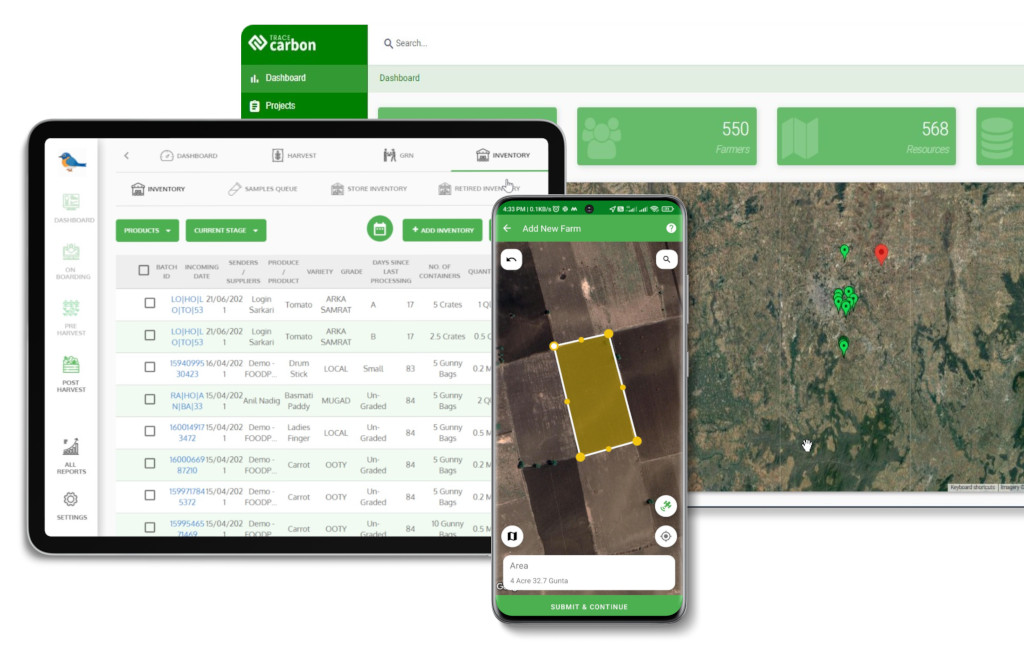
TraceX simplifies the onboarding of plantations, mills, and traders in sourcing regions such as Indonesia, Malaysia, and West Africa through GPS-enabled digital registration. Producers can upload land ownership documents, capture precise geolocation data, and verify compliance with origin-country legal and environmental standards. This ensures that Belgian importers can demonstrate farm-level traceability and legality verification across every link of their global supply chain.
AI-Powered Risk Dashboards
Powered by AI and satellite analytics, TraceX delivers real-time visibility into deforestation exposure, supplier risk, and legality compliance. Interactive dashboards allow Belgian refiners and traders to pinpoint high-risk sourcing areas, evaluate supplier performance, and take proactive mitigation measures before compliance issues emerge. This continuous monitoring supports audit readiness, strengthens ESG reporting, and ensures ongoing EUDR alignment.
Use Case Example
A Belgian food manufacturer importing palm oil from Malaysia for production of baked goods can leverage TraceX to capture farm-level GPS data, verify legality documentation, and auto-generate compliant DDS records for each shipment entering the EU. Within weeks, the company can achieve full traceability, cut manual compliance time by over 70%, and secure EUDR certification across its entire palm oil supply network ensuring seamless EU market access.
Turning Compliance into Competitive Advantage
By uniting plantations, traders, refiners, and exporters on a single secure digital platform, TraceX transforms EUDR compliance from an administrative task into a strategic advantage. Belgian palm oil operators can enhance transparency, strengthen buyer confidence, and position themselves as leaders in deforestation-free, legally verified, and digitally traceable supply chains.
Stay Ahead of EUDR Compliance
Discover how TraceX can digitize your palm oil due diligence and future-proof your sustainability credentials.
Why It Matters: Impacts for the Belgian Palm Oil Sector
The implementation of the EU Deforestation Regulation (EUDR) marks a transformative moment for Belgium’s palm oil sector a cornerstone of Europe’s agri-processing and bioeconomy industries. As one of the EU’s largest importers, refiners, and re-exporters of palm oil, Belgium’s role in global trade means the regulation’s impact extends across its entire value chain, from port operations and refinery systems to food, feed, and biofuel manufacturing.
Strengthening Belgium’s Role as a Sustainable Trade Hub
Belgium’s Port of Antwerp-Bruges is one of Europe’s main gateways for palm oil imports, handling millions of tonnes annually from Indonesia, Malaysia, and West Africa. With EUDR enforcement, every shipment entering through these ports must now be fully traceable to its plantation of origin and proven deforestation-free. This elevates Belgium’s position as a compliance gateway where sustainability, legality, and traceability converge. The nation’s refining and logistics operators will become key enablers in ensuring that only verified, EUDR-compliant palm oil circulates within the European market.
Driving Digital Transformation Across the Supply Chain
EUDR compliance demands digital traceability systems, geolocation mapping, and data-driven due diligence at a level far beyond previous voluntary certification schemes like RSPO or ISCC. For Belgian importers and refiners, this means:
Adopting blockchain-based tracking and AI-powered risk analytics.
Integrating data collection from upstream producers in Southeast Asia and Africa.
Digitizing documentation for legality, origin, and sustainability. This shift accelerates Belgium’s broader transition toward Industry 4.0 in agri-trade, setting a new benchmark for environmental transparency.
Increasing Compliance Pressure but Enhancing Market Access
The EUDR introduces stringent Due Diligence Statement (DDS) obligations requiring operators to submit verified legality and deforestation-free records before placing goods on the EU market. While this adds cost and complexity, Belgian palm oil businesses that act early and invest in digital compliance systems will benefit from:
Uninterrupted access to EU and global markets.
Strengthened partnerships with sustainability-conscious buyers.
Reduced reputational and regulatory risks. In contrast, companies that fail to meet EUDR obligations risk shipment delays, financial penalties, or exclusion from EU trade.
Reinforcing ESG Leadership and Consumer Confidence
Belgium’s food, feed, cosmetics, and biofuel sectors are increasingly under pressure to demonstrate compliance with ESG (Environmental, Social, and Governance) standards. EUDR compliance provides a verifiable mechanism to prove that sourcing is legal, transparent, and deforestation-free enhancing brand value and consumer trust in Belgian exports. This also aligns with the Belgian government’s commitments under the Sustainable Palm Oil Initiative (BASP) and the IDH Sustainable Trade Initiative, further embedding ethical trade principles into the nation’s industrial strategy.
Creating Long-Term Economic and Environmental Value
While short-term compliance costs are unavoidable, EUDR alignment enables Belgium’s palm oil sector to:
Access premium sustainable markets.
Attract investment from ESG-focused funds.
Contribute to EU climate and biodiversity goals. The regulation catalyzes a paradigm shift turning sustainability from a compliance burden into a growth driver, positioning Belgium as a leader in the global transition to deforestation-free commodities.
The EUDR presents both a challenge and opportunity for Belgium’s palm oil industry. By embracing traceability, digital compliance, and sustainable sourcing, Belgian operators can secure long-term market resilience, uphold environmental responsibility, and solidify the country’s reputation as a European hub for ethical, transparent, and deforestation-free palm oil trade.
EUDR DDS for Palm Oil Supply Chain in Belgium
The EUDR DDS for Palm Oil Supply Chain in Belgium represents a defining shift toward transparent, traceable, and deforestation-free trade. As one of Europe’s leading import and refining hubs, Belgium’s palm oil ecosystem must now integrate farm-level data, digital due diligence, and verified sustainability to maintain EU market access.
By adopting advanced digital platforms and automated DDS systems, Belgian refiners, importers, and manufacturers can streamline compliance, reduce operational risks, and build resilient, trusted supply networks. The EUDR is not just a regulatory hurdle it’s an opportunity for Belgium to position itself as a European leader in responsible palm oil sourcing and sustainable trade transformation.
The EUDR is a regulation by the European Union aimed at preventing deforestation-linked commodities like palm oil from entering the EU market. It requires full supply chain traceability and submission of Due Diligence Statements (DDS) proving compliance.
What is a Due Diligence Statement (DDS) under EUDR?
A DDS is a formal declaration confirming that palm oil imported or sold in Belgium is deforestation-free and legally sourced. It must include farm-level geolocation data and risk assessment documentation.
Who needs to comply with the EUDR for palm oil in Switzerland?
All Swiss importers, traders, processors and retailers handling palm oil are required to comply. Both large corporations and small operators must provide DDS documentation for their supply chains.
What challenges do palm oil companies in Switzerland face with EUDR DDS generation?
Common difficulties include gathering farm-level data, verifying deforestation-free claims, managing multiple smallholders, and preparing DDS documents manually.
How does TraceX help automate EUDR DDS generation?
TraceX digitizes the entire process mapping palm oil plantations, verifying deforestation risks via satellite data, and auto-generating compliant DDS reports ready for submission.
Is TraceX suitable for smallholder-based palm oil supply chains?
Yes. TraceX is built for scalability and ease of use. It supports both large enterprises and smallholder networks, enabling simple data collection via mobile apps
Start using TraceX
Transparency, Trust, & Success for your Climate Journey.
We use cookies on our website to give you the most relevant experience by remembering your preferences and repeat visits. By clicking “Accept All”, you consent to the use of ALL the cookies. However, you may visit "Cookie Settings" to provide a controlled consent.
This website uses cookies to improve your experience while you navigate through the website. Out of these, the cookies that are categorized as necessary are stored on your browser as they are essential for the working of basic functionalities of the website. We also use third-party cookies that help us analyze and understand how you use this website. These cookies will be stored in your browser only with your consent. You also have the option to opt-out of these cookies. But opting out of some of these cookies may affect your browsing experience.
Necessary cookies are absolutely essential for the website to function properly. These cookies ensure basic functionalities and security features of the website, anonymously.
Cookie
Duration
Description
cookielawinfo-checkbox-analytics
11 months
This cookie is set by GDPR Cookie Consent plugin. The cookie is used to store the user consent for the cookies in the category "Analytics".
cookielawinfo-checkbox-functional
11 months
The cookie is set by GDPR cookie consent to record the user consent for the cookies in the category "Functional".
cookielawinfo-checkbox-necessary
11 months
This cookie is set by GDPR Cookie Consent plugin. The cookies is used to store the user consent for the cookies in the category "Necessary".
cookielawinfo-checkbox-others
11 months
This cookie is set by GDPR Cookie Consent plugin. The cookie is used to store the user consent for the cookies in the category "Other.
cookielawinfo-checkbox-performance
11 months
This cookie is set by GDPR Cookie Consent plugin. The cookie is used to store the user consent for the cookies in the category "Performance".
viewed_cookie_policy
11 months
The cookie is set by the GDPR Cookie Consent plugin and is used to store whether or not user has consented to the use of cookies. It does not store any personal data.
Functional cookies help to perform certain functionalities like sharing the content of the website on social media platforms, collect feedbacks, and other third-party features.
Performance cookies are used to understand and analyze the key performance indexes of the website which helps in delivering a better user experience for the visitors.
Analytical cookies are used to understand how visitors interact with the website. These cookies help provide information on metrics the number of visitors, bounce rate, traffic source, etc.
Advertisement cookies are used to provide visitors with relevant ads and marketing campaigns. These cookies track visitors across websites and collect information to provide customized ads.
Download the 2026 Traceability Scorecard and Benchmark Your Supply Chain Across 10 Critical Capabilities.
Download our eBook
Don’t Wait for an Audit to Find Your EUDR Gaps
The 2026 Simplification Package changes how HS codes, DDS pass-through and geolocation rules apply to you. Get the free guide and 20-point readiness checklist before enforcement catches you unprepared.