EmpCo Directive: What Businesses Need to Know About EU Green Claims and Sustainability Marketing
Published
, 9 minute read
Share this article
Quick summary: EmpCo Directive helps businesses prepare for EU green claims rules by linking sustainability marketing, labels, and product claims to reliable evidence.
The EmpCo Directive is changing how businesses communicate environmental and sustainability claims to consumers in the European Union. From 27 September 2026, companies selling to EU consumers need to pay closer attention to claims such as “eco-friendly,” sustainability labels, carbon-neutral messaging, and statements about product durability or repairability. The rules are designed to give consumers more reliable information and reduce misleading environmental marketing.
For businesses, the practical challenge is not simply understanding what the EmpCo Directive says. It is being able to identify every consumer-facing claim, understand the evidence behind it, review whether that evidence supports the wording used, and maintain a clear record of the review.
Key Takeaways
EmpCo applies from 27 September 2026, strengthening EU rules on consumer-facing sustainability claims.
Generic green claims such as “eco-friendly,” “green” or “climate-friendly” need recognised environmental performance to support them.
Sustainability labels must be based on a qualifying certification scheme or established by public authorities.
Claims must match the actual scope of the evidence and should not imply benefits for an entire product or business when they apply only to a specific aspect.
Offset-based carbon-neutral claims face specific restrictions, particularly where they imply that a product has a neutral or reduced climate impact based on external offsets.
Businesses should connect sustainability claims with reliable, verifiable evidence and maintain clear records to support their communications.
What Is the EmpCo Directive?
The EmpCo Directive is the common name for Directive (EU) 2024/825, formally the Directive on empowering consumers for the green transition through better protection against unfair practices and better information. It amends the Unfair Commercial Practices Directive (2005/29/EC) and the Consumer Rights Directive (2011/83/EU).
The Directive was adopted on 28 February 2024 and entered into force on 26 March 2024. EU Member States were required to transpose it by 27 March 2026, with the national measures applying from 27 September 2026.
The focus is consumer-facing communication. Businesses should therefore look beyond sustainability reports and examine the claims consumers actually see across product pages, packaging, advertising, labels, e-commerce listings and other commercial communications.
Why Does the EmpCo Directive Matter?
Sustainability has become a major part of product marketing. Words such as green, sustainable, climate-friendly, environmentally friendly and responsible can influence purchasing decisions. The EmpCo Directive raises the standard for how such messages can be presented.
For businesses, this creates a shift from simply having sustainability data to being able to connect that data with the specific claim made to consumers. A claim that sounds broad or positive may still create compliance risk if the business cannot clearly substantiate what the claim means.
Key EmpCo Directive Requirements
1. Generic Environmental Claims Need Strong Support
The Directive adds rules addressing generic environmental claims. Broad statements such as “green,” “eco-friendly” or similar environmental claims cannot simply be used as marketing language without meeting the applicable conditions. The amended rules connect generic claims with recognised excellent environmental performance.
For example, instead of treating “eco-friendly product” as a standalone marketing phrase, a business should be able to explain the specific environmental basis for any permitted claim and maintain evidence that supports the communication.
2. Sustainability Labels Must Meet Specific Conditions
The EmpCo Directive adds a prohibition on displaying a sustainability label that is not based on a certification scheme or established by public authorities. This is relevant for businesses using environmental badges, seals, icons or other sustainability marks in consumer-facing marketing.
Businesses should create an inventory of sustainability labels used across products and marketing channels and identify the scheme, criteria and verification mechanism supporting each label.
3. Environmental Claims Need to Be Defensible
The practical issue behind EmpCo compliance is evidence. When a company communicates an environmental benefit, it needs a defensible basis for that communication. This makes data quality, evidence management and internal review important parts of the marketing compliance process.
For example, a claim about recycled content, responsible sourcing, lower environmental impact or improved resource efficiency should be connected to relevant product, supplier, material or process data rather than existing only as a statement in marketing copy.
4. Carbon-Neutral and Offset-Based Claims Need Particular Attention
Businesses using claims such as carbon neutral, climate neutral or similar compensation-based language should review them carefully against the amended consumer protection rules and applicable national implementation. The key question is not simply whether a company has purchased offsets, but whether the specific consumer-facing claim is permitted and properly supported under the applicable rules.
5. Durability and Repairability Information Is Also Part of the Change
EmpCo is broader than green claims. It also strengthens consumer information around product durability and repairability. The Directive introduces information-related changes through the Consumer Rights Directive, while an EU implementing regulation establishes a harmonised notice and label relating to the legal guarantee of conformity and certain durability guarantees. The implementing regulation applies from 27 September 2026.
Learn how businesses can move beyond sustainability commitments and build transparent, traceable and responsible supply chains with better supplier data, risk management and sustainability evidence.
Who Needs to Pay Attention to the EmpCo Directive?
Businesses that market products or services to EU consumers should assess how the Directive and its national implementing measures affect their consumer-facing communications. This includes manufacturers, brands, retailers, e-commerce businesses and companies outside the EU that market to EU consumers.
The most relevant teams may include marketing, sustainability, legal, product, packaging, e-commerce and compliance. EmpCo should not be treated as a task owned only by the legal team, because environmental claims can appear in many parts of the customer journey.
EmpCo Directive Compliance Checklist
Identify all consumer-facing environmental and sustainability claims.
Review product pages, packaging, advertisements, social media, e-commerce listings and labels.
Map each claim to the evidence supporting it.
Check whether generic environmental wording is permitted and appropriately substantiated.
Review every sustainability label, badge, icon or certification mark used in consumer communication.
Review carbon-neutral, climate-neutral and offset-related claims.
Check durability and repairability information where applicable.
Assign ownership for claim approval and evidence management.
Maintain an audit trail showing the evidence, review and approval behind claims.
Review national implementation in each EU market where the business sells to consumers.
Why Traceability and Evidence Matter for EmpCo
EmpCo is primarily a consumer-protection and marketing rule, but compliance can depend on information generated much earlier in the supply chain. If a company makes a sustainability claim about sourcing, materials, production or environmental performance, the supporting evidence may sit with suppliers, farms, processors, factories, certification systems or internal operational teams.
This is where traceability and structured evidence management become valuable. A connected system can link a claim to the underlying product, supplier, material, location, transaction or supporting document. Instead of searching across spreadsheets, emails and disconnected repositories, teams can maintain a clearer evidence trail for the information used in consumer-facing sustainability communication.
Connect suppliers, sourcing, production, inventory, batches and shipments to create visibility across your entire supply chain. Learn how digital traceability can improve transparency, strengthen compliance, and support faster response when issues arise.
How TraceX Can Support Sustainability Data and Evidence Management
TraceX Sustainable Sourcing Solutions helps businesses digitize supply-chain data and connect suppliers, sourcing locations, products, materials, transactions and supporting evidence in one platform. For companies making sustainability-related claims, this can help create a more structured foundation for collecting and maintaining the data behind those claims.
For example, businesses can use TraceX to organize supplier information, map sourcing and production locations, capture sustainability-related data, maintain supporting documents, and connect information across the supply chain. This can make it easier for sustainability, compliance and commercial teams to retrieve the evidence needed during internal reviews.
Ready to Strengthen Your Sustainability Data and Evidence Management?
Connect suppliers, products, sourcing data and supporting evidence in one digital workflow. See how TraceX can help you build a stronger data foundation for sustainability and regulatory compliance.
The EmpCo Directive should not be confused with the proposed Green Claims Directive. EmpCo is adopted EU law and applies through amendments to existing consumer-protection legislation. The Green Claims Directive was a separate legislative proposal. Businesses should therefore distinguish between requirements that are already applicable under EmpCo and requirements from proposals that have not become law.
What Should Businesses Do Before 27 September 2026?
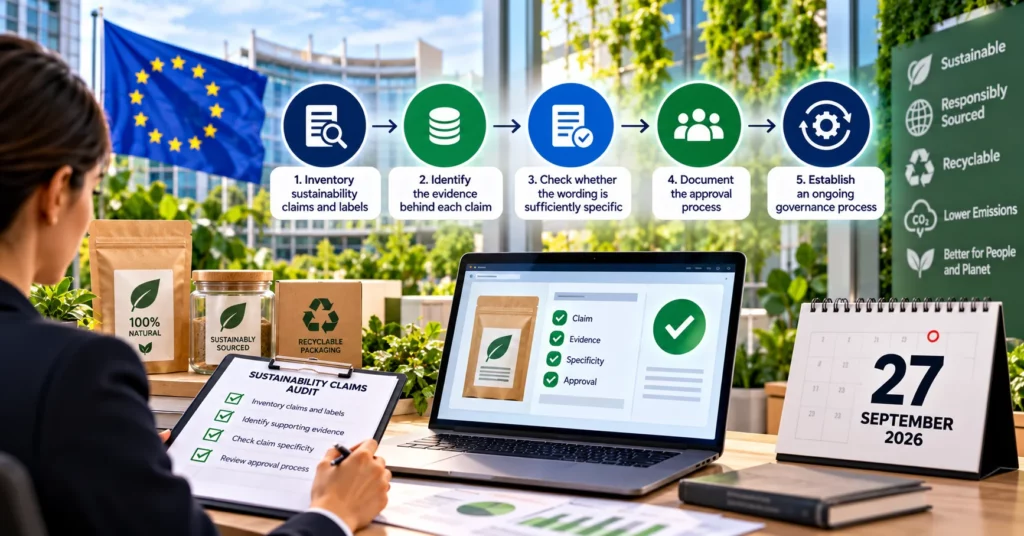
The immediate priority is a claim and evidence audit. Start by creating an inventory of sustainability claims and labels used across consumer-facing channels. Then identify the evidence behind each claim, check whether the wording is sufficiently specific, and document the approval process.
The most effective approach is to treat EmpCo as an ongoing governance process rather than a one-time marketing review. Claims change, products change, suppliers change and evidence can expire or become outdated. A repeatable workflow helps businesses keep claims aligned with the information supporting them.
Conclusion
The EmpCo Directive brings sustainability communication closer to the same evidence-driven approach businesses are already adopting for other EU regulatory requirements. From environmental claims and sustainability labels to durability and repairability information, companies need to understand what they communicate to consumers and why they can substantiate it.
For businesses selling into the EU, the key question is simple: can you connect every important sustainability claim to reliable, accessible evidence? Building that connection between claims, products, suppliers and supporting data can make compliance more structured and make sustainability communication more credible.
Frequently Asked Questions (FAQ’s)
What is the EmpCo Directive?
EmpCo is Directive (EU) 2024/825, which amends EU consumer-protection rules to strengthen consumer information and address unfair practices related to the green transition.
When does the EmpCo Directive apply?
The national measures transposing the Directive are to apply from 27 September 2026.
Does EmpCo apply to green claims?
Yes. It introduces and strengthens rules concerning environmental claims and sustainability labels in consumer-facing commercial practices.
Does EmpCo apply to sustainability labels?
The Directive prohibits displaying a sustainability label that is not based on a certification scheme or established by public authorities.
Why is traceability relevant to EmpCo?
When sustainability claims depend on sourcing, materials, production or environmental data, traceability can help connect the claim with the underlying evidence.
Start using TraceX
Transparency, Trust, & Success for your Climate Journey.
We use cookies on our website to give you the most relevant experience by remembering your preferences and repeat visits. By clicking “Accept All”, you consent to the use of ALL the cookies. However, you may visit "Cookie Settings" to provide a controlled consent.
This website uses cookies to improve your experience while you navigate through the website. Out of these, the cookies that are categorized as necessary are stored on your browser as they are essential for the working of basic functionalities of the website. We also use third-party cookies that help us analyze and understand how you use this website. These cookies will be stored in your browser only with your consent. You also have the option to opt-out of these cookies. But opting out of some of these cookies may affect your browsing experience.
Necessary cookies are absolutely essential for the website to function properly. These cookies ensure basic functionalities and security features of the website, anonymously.
Cookie
Duration
Description
cookielawinfo-checkbox-analytics
11 months
This cookie is set by GDPR Cookie Consent plugin. The cookie is used to store the user consent for the cookies in the category "Analytics".
cookielawinfo-checkbox-functional
11 months
The cookie is set by GDPR cookie consent to record the user consent for the cookies in the category "Functional".
cookielawinfo-checkbox-necessary
11 months
This cookie is set by GDPR Cookie Consent plugin. The cookies is used to store the user consent for the cookies in the category "Necessary".
cookielawinfo-checkbox-others
11 months
This cookie is set by GDPR Cookie Consent plugin. The cookie is used to store the user consent for the cookies in the category "Other.
cookielawinfo-checkbox-performance
11 months
This cookie is set by GDPR Cookie Consent plugin. The cookie is used to store the user consent for the cookies in the category "Performance".
viewed_cookie_policy
11 months
The cookie is set by the GDPR Cookie Consent plugin and is used to store whether or not user has consented to the use of cookies. It does not store any personal data.
Functional cookies help to perform certain functionalities like sharing the content of the website on social media platforms, collect feedbacks, and other third-party features.
Performance cookies are used to understand and analyze the key performance indexes of the website which helps in delivering a better user experience for the visitors.
Analytical cookies are used to understand how visitors interact with the website. These cookies help provide information on metrics the number of visitors, bounce rate, traffic source, etc.
Advertisement cookies are used to provide visitors with relevant ads and marketing campaigns. These cookies track visitors across websites and collect information to provide customized ads.
Download the 2026 Traceability Scorecard and Benchmark Your Supply Chain Across 10 Critical Capabilities.
Download our eBook
Don’t Wait for an Audit to Find Your EUDR Gaps
The 2026 Simplification Package changes how HS codes, DDS pass-through and geolocation rules apply to you. Get the free guide and 20-point readiness checklist before enforcement catches you unprepared.