
A leading spice processor sourcing turmeric, pepper, cumin, chili, oregano, sage, cassia, and black pepper across India, Turkey, and Vietnam embarked on a journey to align its sourcing operations with the Union for Ethical BioTrade (UEBT) Standard. As global customers increasingly demand evidence of responsible sourcing, biodiversity protection, and sustainable agricultural practices, the company sought to strengthen its preparedness for UEBT certification while demonstrating measurable impact across its supply chain.
To comply with UEBT Principle 1 (Conservation of Biodiversity) and Principle 2 (Sustainable Use of Biodiversity), the company needed to establish a structured framework for understanding biodiversity risks, protecting ecosystems, improving soil and water stewardship, promoting climate resilience, and adopting responsible agrochemical practices. The objective was not only to achieve certification readiness but also to build long-term resilience across sourcing landscapes and create a transparent, nature-positive spice supply chain aligned with international sustainability expectations.

The spice processing company manages a diversified portfolio of whole and ground spices including pepper, cumin, chili, garlic, and turmeric sold in both bulk and value-added forms.
The company is committed to end-to-end traceability, monitoring product authenticity from farmer onboarding through harvest and packaging. This includes ethical assessments, biodiversity evaluations, and adherence to sustainable practices across the entire production chain — ultimately working toward full UEBT compliance.
Spice Processor
India, Turkey, Vietnam
Farm to fork traceability of Spice value chain, Adherence to UEBT Compliance.
The company faced several challenges across sourcing landscapes:
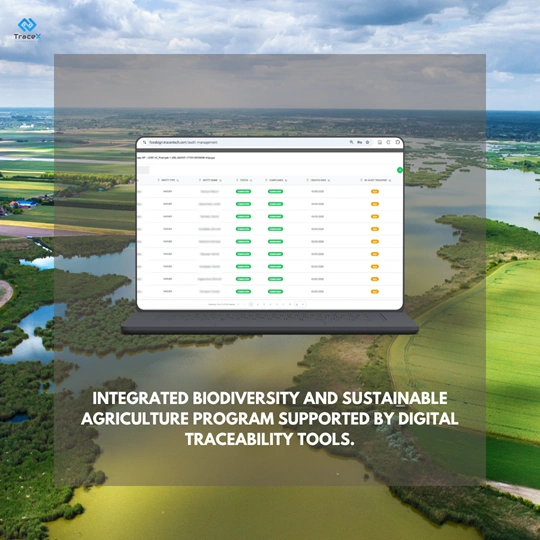
The company implemented an integrated biodiversity and sustainable agriculture program supported by digital traceability tools.
What is food traceability | Types of traceability in supply chains | Food traceability best practices | Traceability in the food industry | Digital traceability system | Blockchain food traceability solutions | QR code traceability for consumer trust | ERP integration for traceability | Conscious consumerism through traceability | Food system transformation with traceability | Coffee supply chain guide | Coffee traceability from bean to cup | Sustainable coffee supply chain | Regenerative agriculture for coffee | Agroforestry in the coffee value chain | Rainforest Alliance certified coffee | Single origin coffee explained | Cocoa supply chain traceability | Child labour in cocoa supply chains | Child labour monitoring and remediation systems | Fairtrade cocoa sourcing | Agroforestry in cocoa supply chains | Tea supply chain transformation | Sustainability in the tea value chain | Seed supply chain traceability | Seed supply chain basics | Forward traceability in seed industry | Seed supply chain challenges | Seed procurement process | Livestock traceability for meat safety | Blockchain traceability in livestock | Carbon traceability on blockchain | Maize value chain traceability | Farm to fork journey of millets | Millet value chain overview | Millets for a sustainable future | Pulse value chain traceability | Fruit and vegetable supply chain traceability | Banana supply chain traceability | Carbon footprint of banana production | Grape traceability for exports | Digital procurement for fruits and vegetables | Mango supply chain transparency | Tomato value chain challenges | Reducing post-harvest losses in potatoes | Sugarcane supply chain traceability | Sustainable sugarcane farming practices | Flower traceability from seed to scent | Orris root traceability in fragrance | Fair trade in fragrance oil supply chains | Hive to honey traceability | Cannabis supply chain traceability | Wine traceability grape to glass | Nutraceuticals and herbal supplements traceability | Rice supply chain traceability | Mill level rice traceability | Sustainable rice farming | Direct seeded rice cultivation | Sustainable rice platform standards | System of rice intensification | Alternate wetting and drying rice cultivation | Cotton supply chain traceability | Sustainability in the cotton industry | Organic cotton traceability | Fashion supply chain explained | Mapping the textile value chain | Traceability in the fashion industry | Traceability in waste management | Plastic value chain explained | Traceability for GI tagged products | Traceability for organic food brands | Spice supply chain traceability | Pepper traceability farm to table | Chilli value chain overview | Turmeric value chain | Batch level traceability for spice exports | Batch traceability in spice manufacturing | Sustainable spice sourcing technology | Sustainable farming practices for spices | Grocery supply chain challenges | Dairy supply chain guide | Real-time milk collection tracking | Dairy supply chain risk and issues | Batch level traceability in dairy | Ghee adulteration prevention | Sustainable dairy farming | Seafood supply chain ocean to plate | Sustainable fishing through supply chain transparency | Poultry value chain chicken to nugget | Tobacco supply chain overview | Digitizing tobacco farming | Tobacco traceability for compliance | Sustainable tobacco production | Sustainable tobacco programs | Digitizing the paper supply chain | Sustainable soy supply chains | RTRS certification in soy | Sustainable rubber from tree to tyre | FSC certified rubber solutions | Palm oil supply chain insights | RSPO certification with EUDR compliance | Seed oils traceability farm to refinery | Aggregation risk in oilseed supply chains | Digital traceability for cold pressed oils | Timber value chain from forest to product | Sustainable cashew production traceability | Arecanut value chain traceability | Essential guide to food supply chains | Factors influencing food supply chain management | Food supply chain in India | Blockchain for food supply chain | Agriculture and food supply chain factors | Traceability in food safety | Supply chain transparency for food safety | Understanding food recalls | Product recall in the food industry | Food waste in supply chains | Food waste recycling and composting | Food waste upcycling solutions | Supply chain traceability framework | Complete guide to supply chain traceability | Product traceability in supply chains | Material traceability in supply chains | Elements of supply chain provenance | Chain of custody in agriculture | Supplier mapping for traceability | Real-time supply chain visibility | Traceability for ESG compliance | Supply chain due diligence | Examples of food supply chain traceability | Supply chain traceability challenges | Multi-tier supply chain transparency | Traceability for supply chain managers | Mitigating supply chain risks for exporters | CTOs driving digital transformation with traceability | Digital transformation for licensed cocoa buyers | Bulk food product traceability | Automated farm input distribution | Supplier onboarding challenges | Digital process configuration in food production | Bulk GRN processing in procurement | Batch IDs in food traceability systems | Inventory management in the food industry
Supply chain compliance simplified | Food traceability regulations | Global traceability standards overview | FSMA and food traceability | FSMA compliance for dairy brands | ACO standards compliance | Export compliance for fruits and vegetables | OECD seed certification scheme | Food safety regulations explained | Global GAP certification guide | GS1 standards for traceability | GS1 standards traceability solutions | GS1 identifiers for traceability | GS1 EPCIS for end-to-end traceability | GTIN for product level traceability | Integrating GS1 with traceability | Streamlining compliance for food processing
Deforestation-free supply chains for EUDR | Causes of deforestation | Ways to fight deforestation | Cocoa deforestation impact | Coffee deforestation impact | Deforestation risk in beef supply chains | Towards deforestation-free palm oil | Rubber deforestation risk | Soy deforestation challenges | Illegal logging in the timber industry | Deforestation-free sourcing for EUDR | EUDR procurement challenges | EU Timber Regulation vs EUDR | EUDR explained | EUDR delay confirmed update | EUDR simplification package 2026 | EU information system for EUDR | Digital traceability for EUDR compliance | EUDR compliance guide | EUDR regulatory requirements | EUDR scope of products covered | EUDR relevant HSN codes | EUDR gap analysis | EUDR penalties and fines | Steps for EUDR compliance | EUDR reporting requirements | Competent authorities under EUDR | EU-based representative for EUDR | EUDR due diligence guide | How to file DDS for EUDR | Common DDS filing errors | EU importer DDS filing preparation | EUDR due diligence statement examples | DDS best practices for importers | EUDR DDS consolidation explained | EU TRACES system for DDS submission | Multiple farm plots in one DDS | EUDR risk assessment guide | EUDR risk assessment and mitigation | Country benchmarking under EUDR | EUDR country risk classifications | EU Deforestation Observatory role | Conducting deforestation risk assessment | Supplier assessment for EUDR | Supplier data management for EUDR | Onboarding smallholder suppliers for EUDR | EUDR data from smallholder producers | Supplier data gaps for EUDR compliance | Polygon mapping for traceability | EUDR geolocation requirements | Common GeoJSON file errors | GeoJSON data capture and validation | EUDR solutions for deforestation-free chains | EUDR interoperability and integration | Satellite monitoring for EUDR | Blockchain solution for EUDR | EUDR APIs and integration | EUDR compliance data management | EUDR legality requirements | Agentic AI for EUDR compliance | EUDR cocoa compliance | EUDR cocoa compliance for importers | EUDR compliance tools for cocoa exporters | Smallholder data for cocoa traceability | EUDR rubber regulations | EUDR rubber buyer’s guide | EUDR rubber supply chain examples | EUDR compliance for tire manufacturers | EUDR rubber compliance for importers | EUDR compliance tools for rubber exporters | EUDR coffee buyer’s guide | EUDR palm oil compliance | EUDR soy compliance | EUDR compliance for wood products | EUDR compliance tools for wood exporters | EUDR wood compliance tool for importers | Wood chip traceability for EUDR | EUDR sawmill compliance | EUDR compliance for pulp and paper | Segregation in EUDR pulp value chain | EUDR compliance for publishers | EUDR compliance for plywood | EUDR furniture compliance | EUDR leather compliance | EUDR packaging requirements | EUDR regulations for packaging companies | EUDR compliance for healthcare sector | Deforestation compliance in oleochemicals | EUDR compliance for charcoal supply chain | Forest compliance tools guide | Timber traceability for EUDR | EUDR compliance for timber | FSC certified wood for EUDR | Timber and wood EUDR challenges | EUDR coffee compliance | EUDR coffee compliance for importers | EUDR coffee compliance for exporters | Supply chain mapping for EUDR | Chain of custody for EUDR | Aggregated traceability under EUDR | Supply chain integrity under EUDR | EUDR compliance for composite products | EUDR impact on global supply chains | EUDR for food companies | Role of certifications in EUDR | Leveraging EUDR for positive impact | Strategies for EUDR compliance challenges | EUDR impact analysis | EUDR for supply chain stakeholders | EUDR for upstream operators | EUDR for producer companies | Downstream operators EUDR compliance | EUDR downstream operator examples | EUDR compliance for traders | Non-SME downstream operator requirements | MSPOs under EUDR explained | EUDR for consumer brands | EUDR importer compliance checklist | EUDR challenges for retailers | EUDR compliance for coffee roasters | Minimizing EUDR risk for producers | Why CSCOs need EUDR compliance software | EUDR compliance for SMEs | EUDR challenges in warehouse management | EUDR impact on India palm oil | EUDR impact on Indian rubber producers | EUDR challenges for Indian exporters | EUDR for India’s coffee exporters | EUDR for paper exporters in India | Debunking EUDR myths | EUDR compliance in agribusiness | Real-world EUDR examples | EUDR coffee supply chain examples | Real-world EUDR failures | EUDR-ready traceability solutions | Must-have features in EUDR software | Sustainable forest management | EUDR forest data misconceptions | Sustainable sourcing strategies for EUDR | Sustainable procurement practices for EUDR
Timber traceability systems | Global regulations on illegal logging | Timber legality verification | Chain of custody in timber | AILPA regulatory guide for timber importers | AILPA compliance for timber importers | AILPA information collection requirements | AILPA risk assessment | AILPA due diligence requirements | Timber exporter AILPA challenges | FSC for AILPA compliance | AILPA supply chain traceability requirements | DAFF infringement under illegal logging laws | Digital due diligence system for ILPA Australia | Documented import compliance program Australia | Illegal logging risk in furniture industry
EU PPWR regulation guide | Extended producer responsibility under PPWR | Why PPWR was introduced | Circular economy goals for packaging | Packaging waste in the European Union | Environmental cost of packaging waste | EU packaging sustainability regulations | Sustainable packaging in food supply chains | PPWR regulatory requirements | PPWR compliance requirements | PPWR packaging design requirements | Packaging traceability for PPWR
EU Green Deal guide | Circular economy explained | EU Green Deal regulations | ESPR regulation overview | Circular Economy Action Plan | Digital product passport explained | ESPR DPP regulation | DPP product scope | Digital product passport requirements | DPP data requirements | JTC24 DPP framework | Digital product passport implementation guide | DPP delegated acts | DPP data architecture and standards | DPP interoperability standards | DPP technology stack | DPP data carrier options | DPP integration with PLM systems | Data ownership in digital product passports | GS1 standards for DPP | Supply chain traceability for DPP | Source-level traceability for DPP | Batch-level traceability for DPP | DPP in product lifecycle | Lifecycle data in circular economy | Supplier engagement for DPP | Supplier data for digital product passports | Supplier collaboration for DPP | Onboarding suppliers for DPP | DPP use cases industry guide | DPP readiness for manufacturers | DPP readiness for importers | DPP readiness for brands | Cross-border DPP compliance strategy | DPP and EUDI eIDAS 2 compliance | DPP for circular economy | EU Battery Regulation 2023/1542 guide | Battery value chain mapping for DPP | Battery digital product passport | EU textile strategy and DPP | Digital product passports for textiles | Origin traceability for textile DPP
Climate change mitigation and adaptation | Ecosystem restoration for climate mitigation | Carbon footprint importance in climate change | Climate-smart agriculture | Carbon farming in agriculture | Carbon baselining in agriculture | Climate resilience in agriculture | Low carbon agriculture supply chains | Life cycle assessment in agriculture | Coffee carbon footprint | Food miles impact on carbon footprint | Reducing carbon footprints with data management | Supply chain decarbonization | Net zero supply chain strategies | Guide to carbon neutrality | Net zero supply chains decoded | CPG companies and environmental change | Scope 3 emissions guide | Best carbon accounting software | Carbon accounting guide | Measuring GHG emissions | Principles of GHG accounting | Carbon accounting standards | Best carbon accounting practices | Farm-level sustainability data for ESG | Digital MRV explained | Digital MRV for carbon and NBS | Digital MRV for carbon credits | DMRV in nature-based carbon offsets | Digital monitoring in carbon management | Carbon emissions reporting with digital MRV | TraceX DMRV for carbon projects | DMRV solutions for agroforestry | DMRV for carbon credit verification | Guide to nature-based solutions | Carbon sequestration in agroforestry | Benefits of reforestation | Ways to wetland restoration | Role of blue carbon in climate mitigation | Afforestation vs reforestation | Nature-based solution projects for offsets | Guide to ARR projects | Best practices for ecosystem restoration | Forest carbon projects for climate action | Biochar for soil health | Biochar for carbon removal | Understanding the GHG protocol | ISO 14044 guidelines explained | Carbon Disclosure Project reporting | SBTi net zero standard | GHG accounting in voluntary carbon markets | Setting science-based targets | Guide to SBTi | ICVCM shaping the voluntary carbon market | Carbon neutrality standards | GHG accounting methodologies and standards | Science-based targets network | Voluntary carbon markets guide | Verified carbon standard lifecycle | Carbon offset lifecycle | Navigating voluntary carbon market standards | Integrity in the voluntary carbon market | Role of carbon offset registries | Carbon offset verification | Understanding carbon offset markets | Carbon offset projects | Validation and verification bodies with DMRV | Role of carbon project developers | DMRV for carbon project developers | TraceX DMRV for sustainability managers | Digital MRV for environmental NGOs | High-quality carbon credits | Things to know about carbon credits | Cookstove carbon credits | Carbon credits and water conservation | Clean water carbon credits | Agroforestry carbon credits | Role of verified carbon credits | Carbon insetting for sustainable agriculture | Carbon insetting examples | Blockchain for voluntary carbon market | Technology for carbon farming in India | Agricultural GHG emissions foundations | Land-based emissions in agriculture | Methane emissions from agriculture | Environmental benefits of plant-based diets | Ethanol from maize as a sustainable fuel | Mapping supply chain emissions | GHG accounting in food and agriculture | Traceability for GHG accounting in agriculture | SBTi FLAG explained | SBTi FLAG guidance | Land use change emissions | Deforestation and conversion-free sourcing | Agroforestry solutions for carbon | Agroforestry for sustainable agriculture | Benefits of agroforestry | Digital nursery management in agroforestry | Farmer and plot digitization in agroforestry | Tree monitoring in agroforestry | Agroforestry in commodity supply chains | DMRV for carbon sequestration in agroforestry | Agroforestry in Africa for EU goals | Sustainable cocoa agroforestry in Ghana | Agroforestry in Kenya | Agroforestry in Indonesia | Promoting agroforestry in Nigeria | Agroforestry for sustainable livelihoods in India




We use cookies on our website to give you the most relevant experience by remembering your preferences and repeat visits. By clicking “Accept All”, you consent to the use of ALL the cookies. However, you may visit "Cookie Settings" to provide a controlled consent.
| Cookie | Duration | Description |
|---|---|---|
| cookielawinfo-checkbox-analytics | 11 months | This cookie is set by GDPR Cookie Consent plugin. The cookie is used to store the user consent for the cookies in the category "Analytics". |
| cookielawinfo-checkbox-functional | 11 months | The cookie is set by GDPR cookie consent to record the user consent for the cookies in the category "Functional". |
| cookielawinfo-checkbox-necessary | 11 months | This cookie is set by GDPR Cookie Consent plugin. The cookies is used to store the user consent for the cookies in the category "Necessary". |
| cookielawinfo-checkbox-others | 11 months | This cookie is set by GDPR Cookie Consent plugin. The cookie is used to store the user consent for the cookies in the category "Other. |
| cookielawinfo-checkbox-performance | 11 months | This cookie is set by GDPR Cookie Consent plugin. The cookie is used to store the user consent for the cookies in the category "Performance". |
| viewed_cookie_policy | 11 months | The cookie is set by the GDPR Cookie Consent plugin and is used to store whether or not user has consented to the use of cookies. It does not store any personal data. |
WhatsApp us

Download the 2026 Traceability Scorecard and Benchmark Your Supply Chain Across 10 Critical Capabilities.

Generate DDS, validate geolocations, and file to TRACES with AI doing the heavy lifting. No credit card. No setup hassle.

Your essential compliance guide

