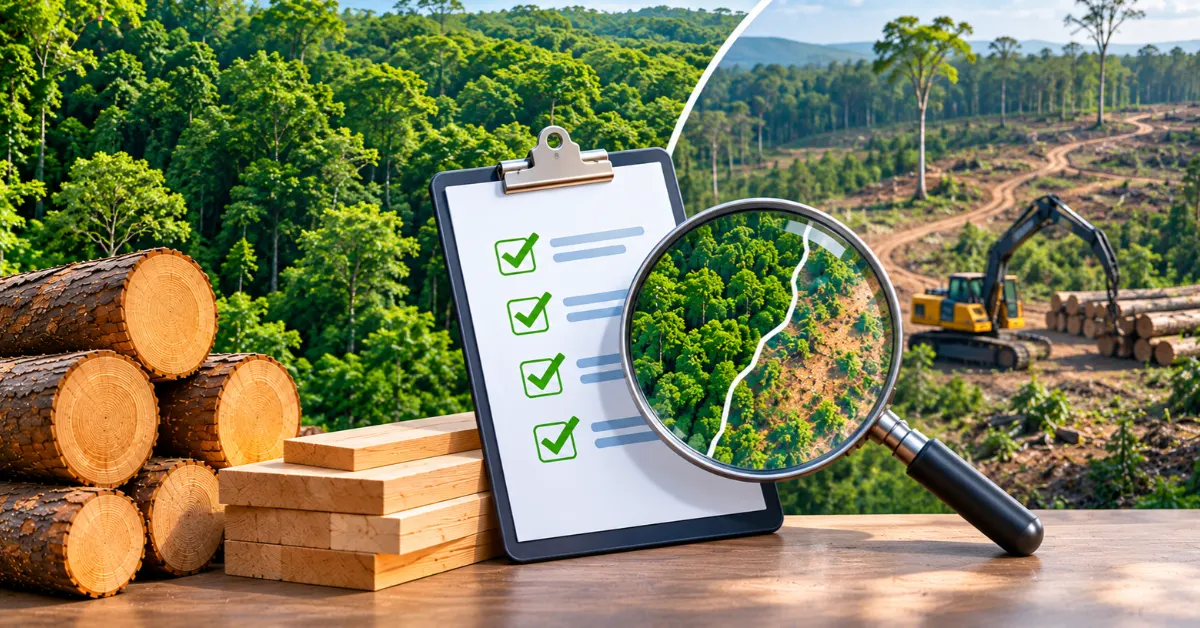
When businesses discuss EUDR compliance for timber, paper and wood-based products, the focus often falls on one question: Was the wood sourced from land that was deforested after 31 December 2020?
But for wood, the EU Deforestation Regulation introduces an additional condition that businesses must understand.
The wood must also have been harvested without inducing forest degradation after the same cutoff date.
This distinction matters because not every change in forest condition is caused by harvesting. Wildfires, storms, disease outbreaks and other natural disturbances can affect forests independently of forestry operations.
For timber companies, forest managers, pulp producers and wood-product manufacturers, understanding the difference between natural disturbances and harvesting-induced degradation is an important part of EUDR due diligence.
1. What is the EUDR forest degradation requirement?
The EUDR establishes a common deforestation-free requirement for relevant commodities, including wood.
Under Article 2(13), wood is considered deforestation-free only when it has been harvested from the forest without inducing forest degradation after 31 December 2020.
This is additional to the general requirement that relevant commodities must not originate from land that was subject to deforestation after the cutoff date.
Article 2(7) defines forest degradation as specific structural changes to forest cover, including:
- Conversion of primary forests into planted forests.
- Conversion of primary forests into plantation forests or other wooded land.
- Conversion of naturally regenerating forests into plantation forests or other wooded land.
The definition is specific. It does not mean that every reduction in tree cover, forest disturbance or loss of forest health automatically constitutes forest degradation under the EUDR.
The regulatory focus is on the specified changes in forest type and whether harvesting activities induced those changes.
2. Why the cause of forest degradation matters
Consider a forest that experiences significant damage after a wildfire in 2022.
Trees are burned, forest cover changes and the ecosystem is affected. Subsequently, a forestry company removes damaged trees for salvage timber.
Does this automatically make the harvested wood non-compliant?
Not necessarily.
The EUDR distinguishes between forest degradation caused by harvesting activities and changes caused by other processes.
The European Commission’s guidance recognises that forest changes resulting from events such as wildfires, storms, disease outbreaks and climate-related impacts are not automatically considered harvesting-induced forest degradation.
The important question is whether the harvesting activity itself caused the prohibited structural change.
This introduces a causal distinction:
- Natural disturbance: A wildfire, storm or disease outbreak damages the forest independently of harvesting.
- Harvesting-induced degradation: Forestry activities cause or contribute to a structural change that falls within the EUDR definition of forest degradation.
The distinction needs to be supported by evidence rather than assumptions.
3. What does this mean for salvage logging?
Salvage logging involves recovering usable timber from forests affected by natural disturbances such as storms, wildfires, pests or disease.
From a commercial perspective, salvage logging can help recover timber that might otherwise deteriorate or go unused.
From an EUDR perspective, however, the purpose and circumstances of harvesting matter.
The Commission’s guidance explains that harvesting damaged trees for forest protection—for example, removing trees after a storm or fire, or cutting infected trees to prevent the spread of pests and disease—should not be understood as having induced forest degradation merely because the forest has been disturbed.
However, businesses need sufficient information to demonstrate the actual purpose of the harvesting activity.
This may include:
- Records of the natural disturbance.
- Forest condition assessments before and after the event.
- Forestry or salvage-harvesting authorisations.
- Forest management and post-harvesting plans.
- Documentation explaining why damaged trees were removed.
- Evidence of restoration, regeneration or conservation activities.
Salvage logging should therefore not be treated as automatically compliant. The circumstances and supporting evidence must establish that the harvesting did not induce the prohibited forest degradation.
4. Why forestry documentation becomes important
A satellite image may show that forest cover changed between two dates. However, it may not establish why the change occurred.
For example, a forest area may show a significant loss of tree cover following a wildfire. Subsequent harvesting activity may appear in the same area.
Looking at satellite imagery alone may not establish whether the harvesting caused the structural change or whether the damage occurred before the harvesting operation.
This is why forestry documentation becomes an important part of the evidence.
Businesses should be able to connect:
- Forest condition: What was the forest’s condition before the disturbance?
- Disturbance event: Was there a wildfire, storm, disease outbreak or another natural event?
- Harvesting activity: When did harvesting take place, and what was its purpose?
- Forest management: What did the relevant forest management and post-harvesting plans specify?
- Evidence: What records support the conclusion that harvesting did not induce the prohibited degradation?
The objective is to establish a reliable explanation of what happened, when it happened and what caused the forest change.
5. Why satellite monitoring alone may not be sufficient
Satellite monitoring is valuable for identifying changes in forest cover and screening sourcing locations against historical forest conditions.
For EUDR assessments, businesses can use geospatial datasets and satellite imagery to identify potential deforestation or forest disturbance signals.
However, a detected change does not always explain its cause.
A satellite alert may indicate that forest cover has changed, but additional information may be needed to determine whether the change resulted from harvesting, wildfire, storms, disease or another activity.
This is particularly relevant for timber supply chains where harvesting and forest management activities may take place in areas already affected by natural disturbances.
A stronger assessment combines:
- Historical satellite imagery.
- Forest-cover and land-use information.
- Plot-level geolocation.
- Harvesting dates and operational records.
- Forest management documentation.
- Evidence of natural disturbance and restoration activities.
Satellite screening helps identify where further investigation may be needed. Supporting forestry records help explain the circumstances behind the detected change.
6. Practical EUDR checklist for timber businesses
Timber companies and wood-product manufacturers can strengthen their due diligence process by incorporating forest degradation checks into their sourcing workflows.
- 1. Verify the production location
Collect the required geolocation information for the forest plots from which wood was harvested.
- 2. Establish the forest baseline
Maintain relevant information about forest conditions around the 31 December 2020 cutoff.
- 3. Screen for forest changes
Use satellite monitoring and available forest datasets to identify potential changes after the cutoff date.
- 4. Investigate the cause
Determine whether identified changes are associated with harvesting activities or other processes such as fires, storms or disease.
- 5. Collect harvesting documentation
Obtain relevant harvesting permits, forest management plans, salvage-harvesting records and other supporting evidence.
- 6. Connect evidence to timber batches
Maintain a relationship between forest plots, harvesting records, incoming timber batches and downstream products.
- 7. Document the risk assessment
Record the findings, supporting information and conclusions used in the due diligence process.
7. How digital traceability supports forest degradation assessments
For businesses sourcing timber through multiple forest managers, suppliers, sawmills and processors, maintaining this information can become difficult.
Forest-related evidence may be stored separately from procurement, inventory and production records.
Digital traceability can help connect these information sources.
A structured workflow can support:
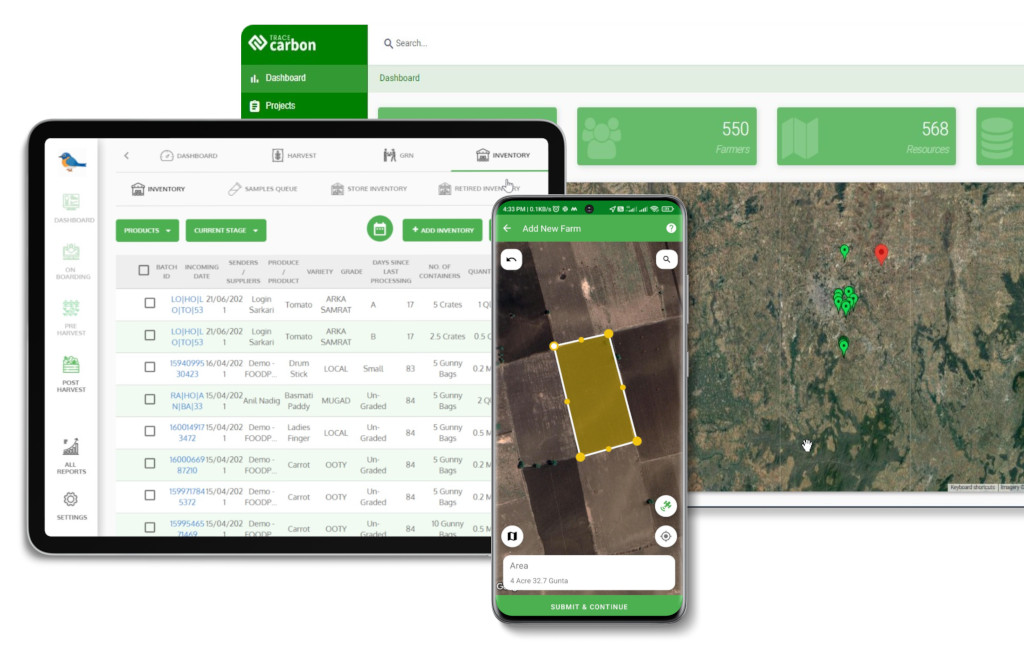
- Plot-level geolocation and supplier onboarding.
- Satellite-based forest change screening.
- Storage of forest management and harvesting documents.
- Recording of natural disturbance events and supporting evidence.
- Linking harvesting records with timber batches.
- Tracking timber through processing and manufacturing.
- Maintaining a centralised record of due diligence findings.
TraceX helps businesses connect geospatial information, supplier records, procurement, inventory and batch-level traceability through digital workflows.
This can help timber and wood-product businesses organise the information required for EUDR assessments and maintain a clearer audit trail from forest sourcing to finished products.
Conclusion: Forest change is not always harvesting-induced degradation
The EUDR’s forest degradation requirement introduces an important distinction for wood supply chains.
A forest may experience structural changes after 31 December 2020, but those changes do not automatically make all subsequently harvested wood non-compliant.
The critical question is whether harvesting activities induced the type of forest degradation defined by the Regulation.
For timber businesses, this means moving beyond a simple satellite-based forest-change check. They need to understand the sequence of events, establish the cause of forest changes and maintain supporting forestry documentation.
EUDR compliance for wood is not just about identifying where trees were harvested. It is also about demonstrating whether harvesting itself caused prohibited forest degradation.
Official references