EUDR Article 18: Checks on Operators and What Businesses Need to Be Ready For
Published
, 12 minute read
Share this article
Quick summary: Understand EUDR Article 18 checks on operators, including due diligence systems, risk assessment, risk mitigation, records, Earth observation, field audits and product-level compliance evidence.
EUDR Article 18 sets out the checks on operators. These checks can examine the operator’s due diligence system, including risk assessment and risk mitigation procedures, as well as the documentation and records that demonstrate how the system functions. Authorities can also examine records relating to specific products and, where appropriate, use on-the-ground, technical, scientific and field-audit methods.
EUDR compliance is not only about completing due diligence and submitting a Due Diligence Statement (DDS). Operators also need to be prepared to demonstrate that their due diligence system works and that the relevant products they place on the EU market or export comply with the Regulation.
For businesses, the practical message is clear: EUDR readiness should be built around evidence. A compliance decision needs to be supported by a traceable record that connects the product to its sourcing information, risk assessment, mitigation measures and due diligence documentation.
Key Takeaways: EUDR Article 18 — Checks on Operators
Competent authorities conduct checks to verify whether operators comply with EUDR requirements.
Risk-based inspections: Checks are prioritised based on risk criteria, including the risk of non-compliance and relevant supply-chain factors.
Document verification: Businesses should maintain accurate due diligence records, supplier information, geolocation data and supporting evidence.
Traceability matters: Companies should be able to connect relevant products with their source information and applicable Due Diligence Statements (DDS).
Cooperation is essential: Operators must cooperate with competent authorities and provide access to relevant information and records during checks.
Prepare for on-site inspections: Businesses should have clear internal procedures for responding to inspection requests and retrieving supporting documentation.
Address compliance gaps promptly: Inadequate due diligence or evidence gaps can lead to follow-up measures and potential enforcement action.
Is your supply chain actually ready?
Move from spreadsheets and fragmented supplier data to a traceable, audit-ready EUDR workflow with TraceX.
Article 18 establishes the framework for checks on operators. Under Article 18(1), checks include examination of the operator’s due diligence system and the documentation and records demonstrating its proper functioning.
Authorities may also examine documentation and records showing that a specific relevant product placed, intended to be placed, or intended to be exported complies with the Regulation, including through applicable risk mitigation measures. Relevant DDSs or the applicable simplified declaration or information for micro or small primary operators may also be examined.
Where the initial examination raises questions, Article 18(2) allows checks to extend further, including physical examination, corrective-measure review, technical and scientific analysis, Earth observation and field audits.
Are You Ready to Meet Your EUDR Obligations?
Understand your responsibilities as an EUDR operator, from due diligence and geolocation to risk assessment and DDS submission.Read the Guide →
What Does Article 18 Allow Competent Authorities to Check?
The operator’s due diligence system.
Risk assessment procedures.
Risk mitigation procedures.
Documentation and records demonstrating that the due diligence system functions properly.
Documentation and records demonstrating compliance of a specific relevant product.
Risk mitigation measures used for a specific product, where applicable.
Relevant due diligence statements or applicable simplified declarations/information.
Corrective measures taken under Article 24, where appropriate.
The correspondence between relevant commodities/products and the documentation used for due diligence.
Technical and scientific evidence concerning species or the exact production location, where appropriate.
Evidence and tools used to determine whether products are deforestation-free, including Earth observation data.
Field audits and spot checks, including in third countries where the required cooperation exists.
The First Level of an EUDR Check: Examine the Due Diligence System
The first level is the system itself. Article 18 allows authorities to examine the operator’s due diligence system, including risk assessment and risk mitigation procedures.
This means businesses should be able to explain how due diligence operates in practice not simply present a policy document. The record should demonstrate how information is collected, how risks are evaluated, how mitigation decisions are made, who is responsible, and how the process is applied to relevant products.
Documented due diligence procedures.
Defined responsibilities and approval workflows.
Supplier and production-location information.
Geolocation and product records.
Risk assessment methodology and results.
Risk mitigation procedures and evidence.
DDS and supporting records.
Evidence that the documented process is actually being followed.
EUDR Due Diligence Statement (DDS): Are You Ready to Submit?
Understand DDS requirements, avoid common submission errors, and prepare the supplier data and geolocation evidence needed for EUDR compliance.Read the Guide→
Risk Assessment and Risk Mitigation Are Central to Article 18
Article 18 specifically identifies risk assessment and risk mitigation procedures as part of the operator checks. This makes it important to preserve the reasoning and evidence behind a risk decision.
A system that only stores a final compliance status may be difficult to defend. Businesses should instead retain the inputs considered, the assessment result, the evidence supporting the conclusion, any risk identified, the mitigation performed and the final decision.
What information was assessed?
What risk factors were identified?
What evidence supported the assessment?
Was additional information required?
What mitigation measure was selected?
What evidence demonstrated the mitigation?
Who reviewed or approved the decision?
What was the final compliance conclusion?
Is Your Supply Chain EUDR-Compliant? Assess Your Risks.
Learn how to identify deforestation risks, evaluate supplier data, validate geolocation, and implement effective risk mitigation under the EUDR. Read the Guide →
Article 18 Checks Can Be Product-Specific
Article 18 is not limited to checking a company’s general system. Authorities may examine documentation and records demonstrating that a specific relevant product complies with the Regulation.
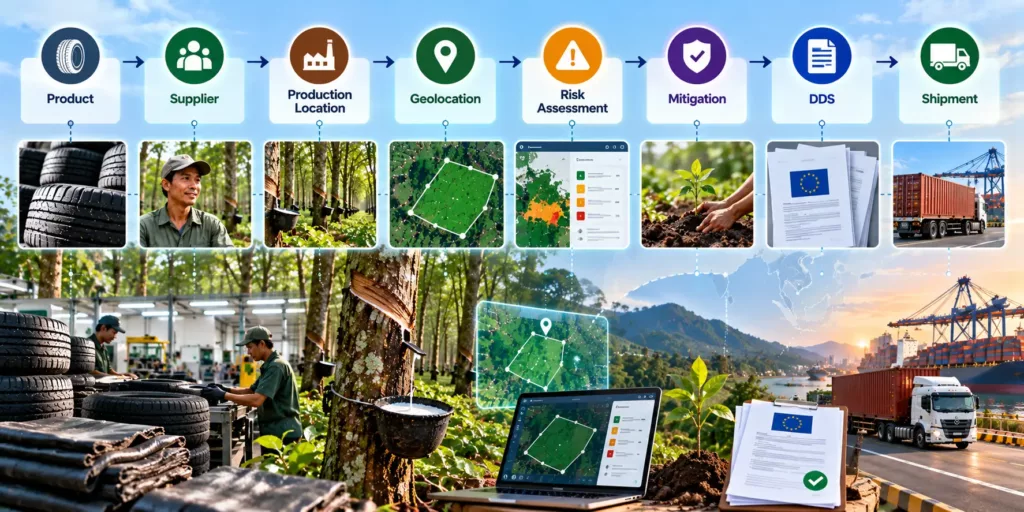
This creates an important operational requirement: businesses should be able to move from a finished product or shipment back through the relevant due diligence evidence. The record should make the relationship between product, supplier, origin, geolocation, quantity, risk assessment, mitigation and DDS understandable.
Article 18 directly refers to documentation and records demonstrating the proper functioning of the due diligence system. This means record keeping is not an administrative afterthought; it is part of demonstrating compliance.
Businesses should avoid fragmented records where supplier information sits in one spreadsheet, geolocation files in another folder, risk assessments in a separate application, and DDS information elsewhere. The stronger model is a connected record that allows an auditor or compliance team to understand the complete evidence chain.
EUDR Record-Keeping: Are You Ready for an Audit?
Learn what EUDR records your business needs to maintain, how to organise supplier and due diligence information, and how to prepare for compliance checks.Read the Guide →
What Happens If the Initial Examination Raises Questions?
Article 18(2) provides for additional checks where appropriate, particularly where the initial examinations raise questions. These can include on-the-ground examination of commodities or products to determine whether they correspond with the documentation used for due diligence.
Checks may also examine corrective measures taken under Article 24. This makes it important for businesses to preserve not only the original risk assessment but also the actions taken when issues were identified.
Original finding or concern.
Corrective or mitigation measure.
Supporting evidence.
Verification of the action.
Final outcome and decision.
Earth Observation and Deforestation Evidence
Article 18 specifically identifies technical and scientific means that may be used to determine whether relevant products are deforestation-free. It refers to Earth observation data, including data from the Copernicus programme and tools or other relevant publicly or privately available sources.
For businesses using satellite or Earth observation assessments, this reinforces the importance of retaining the evidence and assessment context. A defensible record should make it possible to understand which production location was assessed, what evidence was considered, what result was obtained and how that result contributed to the overall due diligence decision.
A satellite result should therefore be treated as part of a wider evidence chain rather than as an isolated compliance label.
Is Your Supply Chain at Risk of Deforestation?
Learn how to identify deforestation risks, assess supplier geolocation, verify forest-cover data, and implement effective EUDR risk mitigation measures.Read the Guide →
Technical and Scientific Checks May Go Beyond Satellite Data
Article 18 also allows technical and scientific means to determine the species or exact place where a relevant commodity or product was produced, including anatomical, chemical or DNA analysis.
The practical implication is that operators should avoid assuming that one type of evidence will always be sufficient. Depending on the circumstances of a check, authorities may examine whether the documentation accurately corresponds to the physical commodity or product and its stated origin.
Field Audits and On-the-Ground Checks
Article 18 allows spot checks, including field audits, where appropriate. These may occur in third countries where the relevant country agrees through cooperation with its administrative authorities.
For businesses sourcing from complex or geographically distributed supply chains, this reinforces the need for consistency between digital records and physical reality. Supplier records, production locations, geolocation, procurement data and supporting documentation should tell the same story.
Article 18 and the Need for an Audit-Ready EUDR Record
An audit-ready record should allow the operator to demonstrate both system-level compliance and product-level compliance. A useful structure connects:
Due diligence policy and procedures.
Supplier and producer records.
Production country and geolocation.
Product, commodity and quantity information.
Risk assessment inputs and conclusions.
Risk mitigation measures and evidence.
DDS reference and supporting documentation.
Shipment or batch information.
Corrective actions and verification records.
Earth observation or other technical evidence where used.
Common Gaps That Can Create Problems During Checks
A documented policy exists, but operational records do not demonstrate that it is followed.
Risk assessment results are stored without the evidence or rationale behind them.
Risk mitigation is recorded as a status without supporting documentation.
Product-level records cannot be connected to production locations.
Supplier and geolocation data are fragmented across systems.
Satellite assessment results cannot be traced to the relevant plot or product.
Corrective measures are not documented with evidence and closure history.
DDS references are disconnected from shipments, products or underlying evidence.
Digital records and physical supply-chain information do not clearly correspond.
How Digital EUDR Platforms Can Strengthen Article 18 Readiness
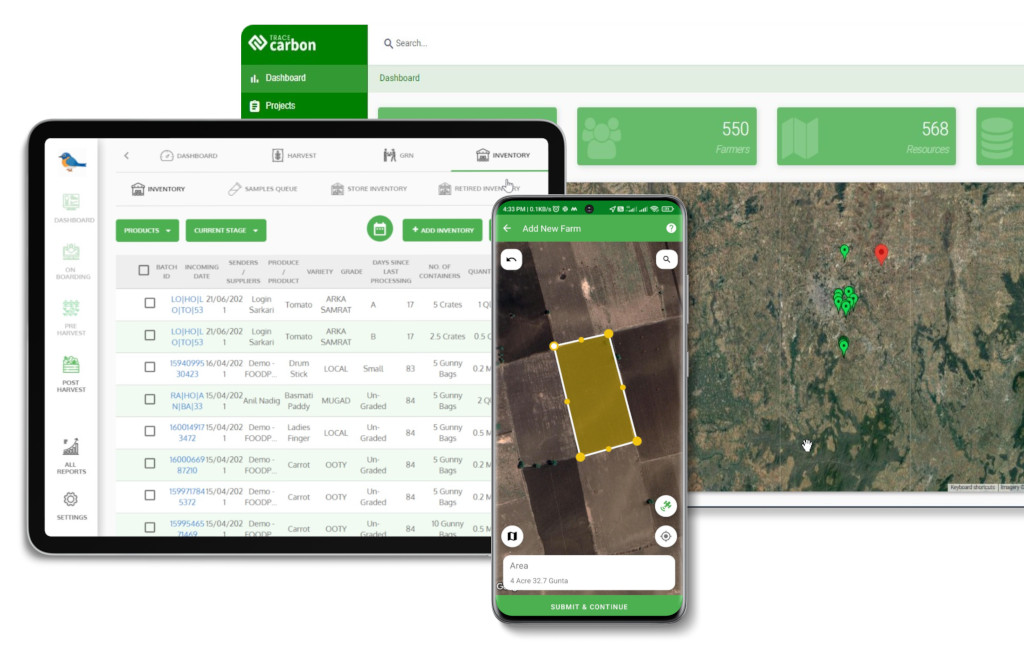
A connected digital EUDR platform can help businesses maintain the evidence chain needed to demonstrate how their due diligence system operates and how individual products were assessed.
Centralize supplier and production-location information.
Capture and validate geolocation data.
Run and document risk assessments.
Record risk mitigation workflows and supporting evidence.
Link products, quantities, batches and shipments to due diligence records.
Maintain DDS references and compliance documentation.
Preserve satellite and other assessment evidence.
Maintain corrective-action and review histories.
Provide a searchable audit trail for internal teams and regulatory checks.
Article 18 Readiness Checklist
Can we demonstrate how our due diligence system works in practice?
Can we produce our risk assessment procedures and records?
Can we show the evidence supporting individual risk decisions?
Can we demonstrate the risk mitigation measures taken?
Can we trace a specific product back to its relevant sourcing information?
Can we connect production locations and geolocation to the relevant product?
Can we retrieve the applicable DDS or simplified declaration information?
Can we produce Earth observation or other technical evidence where used?
Can we demonstrate corrective measures and their outcomes?
Can our digital records be reconciled with the physical supply chain?
Can we quickly retrieve complete records if requested by a competent authority?
How TraceX Can Help Prepare for EUDR Article 18 Checks
TraceX EUDR Solutions helps businesses build a connected EUDR compliance record across supplier onboarding, production locations, geolocation, risk assessment, risk mitigation, traceability and due diligence documentation.
By connecting the evidence behind a compliance decision with the relevant supplier, plot, product, batch and shipment, TraceX can help teams move from fragmented compliance files to a structured and searchable audit trail.
This enables businesses to better demonstrate how their due diligence system operates, how risks were assessed and mitigated, and how specific products are connected to the evidence supporting their compliance decision.
Conclusion: EUDR Compliance Must Stand Up to Examination
EUDR Article 18 shows why compliance should be designed around evidence rather than declarations alone. Competent-authority checks can examine the due diligence system, risk assessment and mitigation procedures, records supporting specific products, relevant DDSs and, where appropriate, physical, technical, scientific, Earth observation and field-audit evidence.
The strongest preparation is a connected record that allows a business to demonstrate the full chain from supplier and production location to risk assessment, mitigation, DDS and product-level evidence. When this information is structured and searchable, teams are better positioned to respond to checks and demonstrate how their EUDR due diligence works in practice.
Frequently Asked Questions
What does EUDR Article 18 cover?
Article 18 sets out checks on operators. These include examination of the due diligence system, risk assessment and risk mitigation procedures, documentation and records demonstrating proper functioning, and records showing that specific relevant products comply with the Regulation.
Can EUDR checks include satellite data?
Yes. Article 18(2)(d) identifies technical and scientific means for determining whether relevant products are deforestation-free, including Earth observation data such as from the Copernicus programme and other relevant publicly or privately available sources.
Can authorities conduct field audits?
Yes. Article 18(2)(e) provides for spot checks, including field audits, where appropriate, including in third countries where the required cooperation with their administrative authorities exists.
Why are risk assessment records important under Article 18?
Because Article 18 expressly includes examination of the operator’s risk assessment and risk mitigation procedures and the documentation and records demonstrating proper functioning of the due diligence system.
Can TraceX help businesses prepare for Article 18 checks?
TraceX can help connect supplier, production location, geolocation, risk assessment, mitigation, product, shipment and due diligence evidence into a structured digital compliance record.
Start using TraceX
Transparency, Trust, & Success for your Climate Journey.
We use cookies on our website to give you the most relevant experience by remembering your preferences and repeat visits. By clicking “Accept All”, you consent to the use of ALL the cookies. However, you may visit "Cookie Settings" to provide a controlled consent.
This website uses cookies to improve your experience while you navigate through the website. Out of these, the cookies that are categorized as necessary are stored on your browser as they are essential for the working of basic functionalities of the website. We also use third-party cookies that help us analyze and understand how you use this website. These cookies will be stored in your browser only with your consent. You also have the option to opt-out of these cookies. But opting out of some of these cookies may affect your browsing experience.
Necessary cookies are absolutely essential for the website to function properly. These cookies ensure basic functionalities and security features of the website, anonymously.
Cookie
Duration
Description
cookielawinfo-checkbox-analytics
11 months
This cookie is set by GDPR Cookie Consent plugin. The cookie is used to store the user consent for the cookies in the category "Analytics".
cookielawinfo-checkbox-functional
11 months
The cookie is set by GDPR cookie consent to record the user consent for the cookies in the category "Functional".
cookielawinfo-checkbox-necessary
11 months
This cookie is set by GDPR Cookie Consent plugin. The cookies is used to store the user consent for the cookies in the category "Necessary".
cookielawinfo-checkbox-others
11 months
This cookie is set by GDPR Cookie Consent plugin. The cookie is used to store the user consent for the cookies in the category "Other.
cookielawinfo-checkbox-performance
11 months
This cookie is set by GDPR Cookie Consent plugin. The cookie is used to store the user consent for the cookies in the category "Performance".
viewed_cookie_policy
11 months
The cookie is set by the GDPR Cookie Consent plugin and is used to store whether or not user has consented to the use of cookies. It does not store any personal data.
Functional cookies help to perform certain functionalities like sharing the content of the website on social media platforms, collect feedbacks, and other third-party features.
Performance cookies are used to understand and analyze the key performance indexes of the website which helps in delivering a better user experience for the visitors.
Analytical cookies are used to understand how visitors interact with the website. These cookies help provide information on metrics the number of visitors, bounce rate, traffic source, etc.
Advertisement cookies are used to provide visitors with relevant ads and marketing campaigns. These cookies track visitors across websites and collect information to provide customized ads.
Download the 2026 Traceability Scorecard and Benchmark Your Supply Chain Across 10 Critical Capabilities.
Download our eBook
Don’t Wait for an Audit to Find Your EUDR Gaps
The 2026 Simplification Package changes how HS codes, DDS pass-through and geolocation rules apply to you. Get the free guide and 20-point readiness checklist before enforcement catches you unprepared.