Digital Public Infrastructure for Agriculture: Building the Future of Food Traceability
Published
, 8 minute read
Share this article
Quick summary: Discover how Digital Public Infrastructure for Agriculture can transform food traceability by connecting farmers, land, crop, procurement, and supply-chain data.
India’s agricultural ecosystem is becoming increasingly digital, but farmer data, land information, crop records, procurement transactions, traceability systems, and compliance information often remain fragmented across platforms. Digital Public Infrastructure for Agriculture could change that.
India is building a new digital foundation for agriculture. The Digital Agriculture Mission, approved in 2024 with an outlay of ₹2,817 crore, includes Digital Public Infrastructure for Agriculture such as AgriStack, the Krishi Decision Support System and soil-profile mapping. AgriStack is built around foundational registries covering farmers, geo-referenced village maps and crops sown.
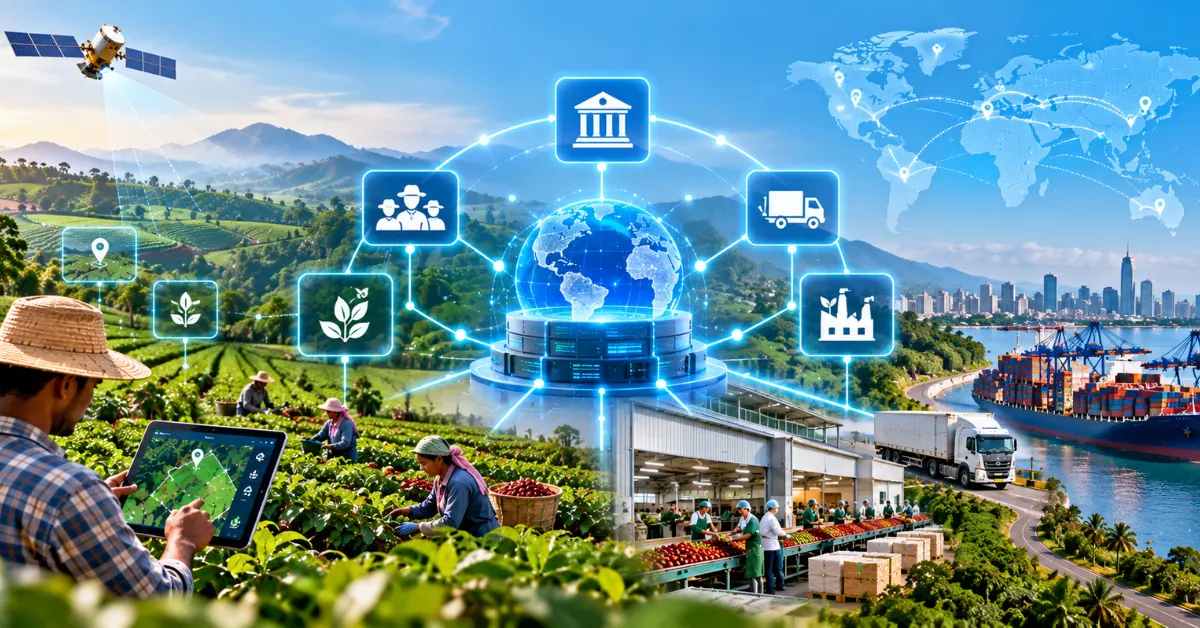
But the bigger opportunity goes beyond government service delivery. If trusted farmer, land and crop data can move securely across authorised systems, Digital Public Infrastructure for Agriculture could become an important foundation for the next generation of food traceability, responsible sourcing, export compliance and supply-chain innovation.
Key Takeaways
DPI is infrastructure, not just an application: Its value comes from reusable digital building blocks that multiple services can use.
AgriStackis an important foundation: Its farmer, geo-referenced village and crop registries are central components of India’s Digital Agriculture Mission.
Food traceability needs trusted origin data: Farmer, location, crop, quantity and event information must connect across the supply chain.
Interoperability matters: Open standards and APIs can reduce fragmented systems and repeated data collection.
Private platforms still have a critical role: Enterprise applications can turn foundational data into procurement, traceability, compliance and sustainability workflows.
Provenance is the bigger opportunity: India can move from fragmented traceability records toward connected digital provenance across agricultural value chains.
Turn Your Supply Chain Challenges into Action with TraceX.
Get expert guidance on traceability, EUDR compliance, sustainability, digital procurement, and supply-chain data to identify gaps and build the right digital strategy for your business
What Is Digital Public Infrastructure for Agriculture?
Digital Public Infrastructure for Agriculture refers to shared digital building blocks that enable different public and private services to work with trusted agricultural data. India’s AgriStack provides a useful example: its foundational registries are designed to establish information about who the farmer is, where the land is and what crop is being grown.
The important idea is that DPI is not simply another application. It is infrastructure that other applications and services can build on. India’s stated vision also emphasises open standards, interoperability and reusable digital building blocks, creating opportunities for public and private innovation.
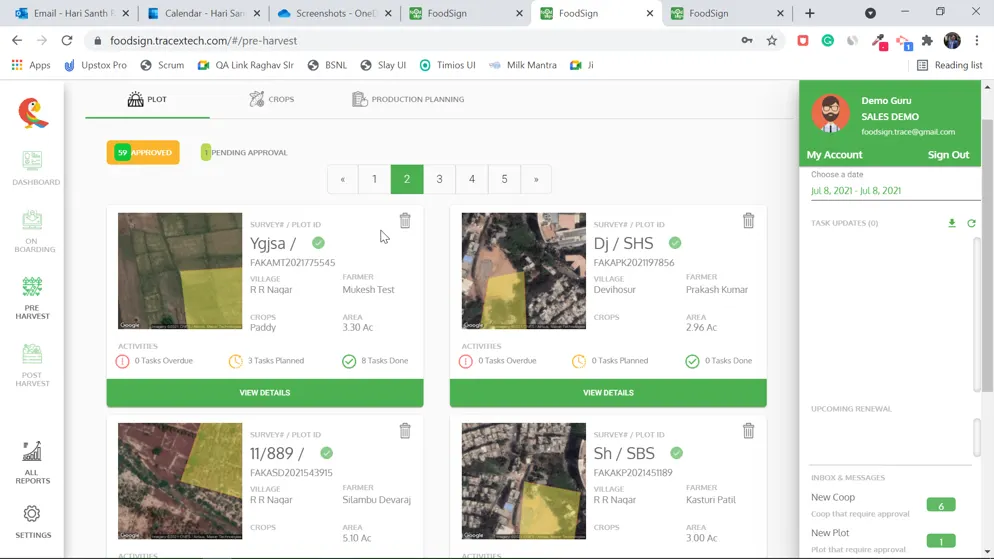
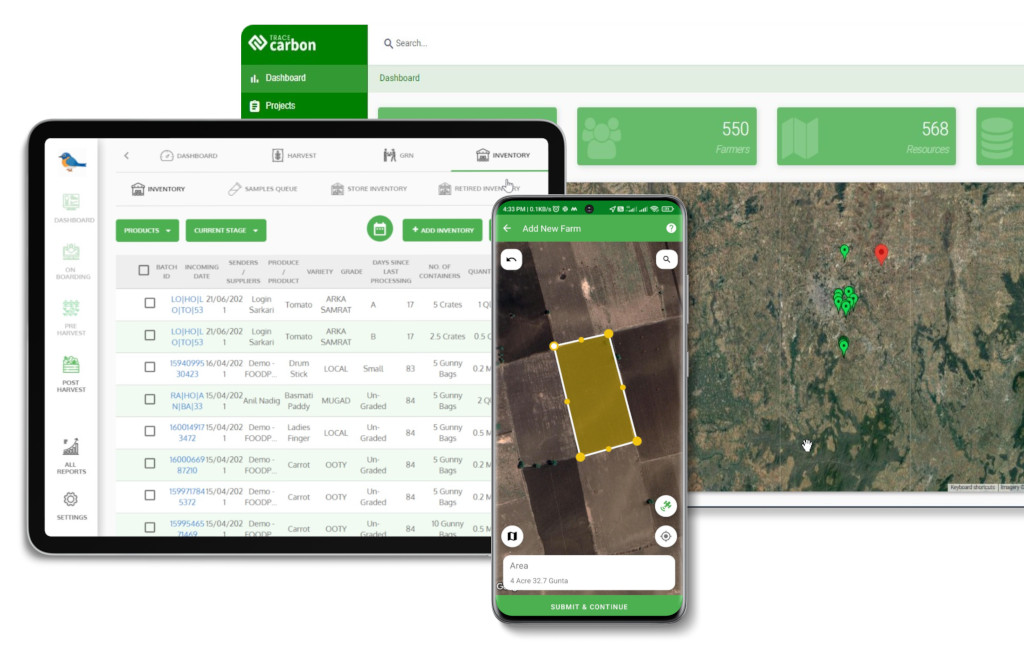
Discover how digital farm management helps agribusinesses capturefarmerand plot data, monitor farm activities, connect production with procurement, and build reliable end-to-end traceability across the supply chain.Read the Full Blog →
Why Agriculture Needs Digital Infrastructure
Agricultural supply chains are fragmented by design. A single commodity can move from a farmer to an FPO or cooperative, aggregator, trader, processor, exporter, brand and retailer. Each participant may maintain its own farmer records, farm information, procurement transactions and compliance documentation.
The result is repeated data collection, inconsistent records and limited visibility beyond direct suppliers. A farmer may be asked to provide similar information to several buyers, while downstream businesses struggle to establish a reliable connection between a finished product and its origin.
DPI can change this model by creating reusable digital foundations. Instead of every organisation rebuilding identity, land and crop data independently, authorised services can potentially use common digital building blocks and exchange information through interoperable interfaces.
Discover how digital traceability systems help businesses connect suppliers, farms, sourcing, procurement, production, batches, and shipments to improve visibility, strengthen compliance, manage risks, and build transparent supply chains.Read the Full Blog →
From Farmer Identity to Food Provenance
The first step toward better food traceability is knowing what is being traced. A reliable provenance chain needs to connect the farmer, production location and crop with subsequent supply-chain events.
Who? A trusted farmer or producer identity.
Where? A verified or appropriately referenced production location or plot.
What? The crop or commodity being produced.
When? Relevant production, harvest and procurement events.
How much? Quantities moving through procurement, processing and trade.
Where next? Collection, processing, storage, manufacturing and shipment events.
When these elements are connected, traceability becomes more than a record of transactions. It becomes a digital provenance chain that can support food safety, sustainability, responsible sourcing and market-access requirements.
Discover how supply chain provenance helps businesses connect products to their origin, verify sourcing information, strengthen traceability, manage risks, and build greater transparency and trust across the value chain.Read the Full Blog →
India Should Treat Food Provenance as a Digital Infrastructure Problem
India does not need every buyer to build another standalone farmer database. It needs interoperable digital foundations that allow trusted agricultural information to be reused, with consent and appropriate governance, across the value chain.
That does not mean a single national platform should run every food supply chain. Agriculture is too diverse for a monolithic system. The more scalable model is shared infrastructure plus specialised applications: public registries and interfaces provide foundational capabilities, while private platforms solve operational problems such as procurement, traceability, sustainability, compliance and supplier management.
In this model, DPI becomes the digital plumbing and industry platforms become the operational layer. This is consistent with the broader vision that agriculture DPI should enable a range of interoperable services rather than replace every existing system.
How Digital Public Infrastructure Can Strengthen Food Traceability
Better farmer and supplier onboarding
Authorised businesses can reduce repetitive data collection by using verified foundational information where available and permitted. This can make onboarding faster while improving consistency.
Stronger plot-level traceability
Geo-referenced land information can provide an important starting point for connecting production to physical locations. Businesses can then enrich this with their own plot, crop, harvest and sourcing records.
More reliable procurement data
Procurement systems can connect farmer, crop, location, quantity and transaction information, creating a stronger bridge between farm production and commercial movement.
Interoperable supply-chain systems
APIs and common standards can reduce point-to-point integrations and make it easier for different digital systems to exchange structured information.
Better compliance evidence
Regulations and buyer requirements increasingly demand evidence about origin, production practices, traceability and risk. A connected data foundation can make evidence easier to collect and maintain.
Discover how digital farm management helps agribusinesses capture accurate farmer and plot data, monitor farming practices, maintain traceability records, manage compliance documentation, and build audit-ready evidence to meet regulatory, certification, and buyer requirements.Read the Full Blog →
New services for farmers
The same infrastructure can support credit, insurance, advisory, market access and other services. India’s Digital Agriculture Mission explicitly aims to enable farmer-centric digital solutions and reliable crop-related information.
Where TraceX Fits into the DPI Ecosystem
Digital Public Infrastructure does not eliminate the need for enterprise technology. It can make enterprise technology more powerful by providing reusable digital foundations like TraceX Traceability Solutions.
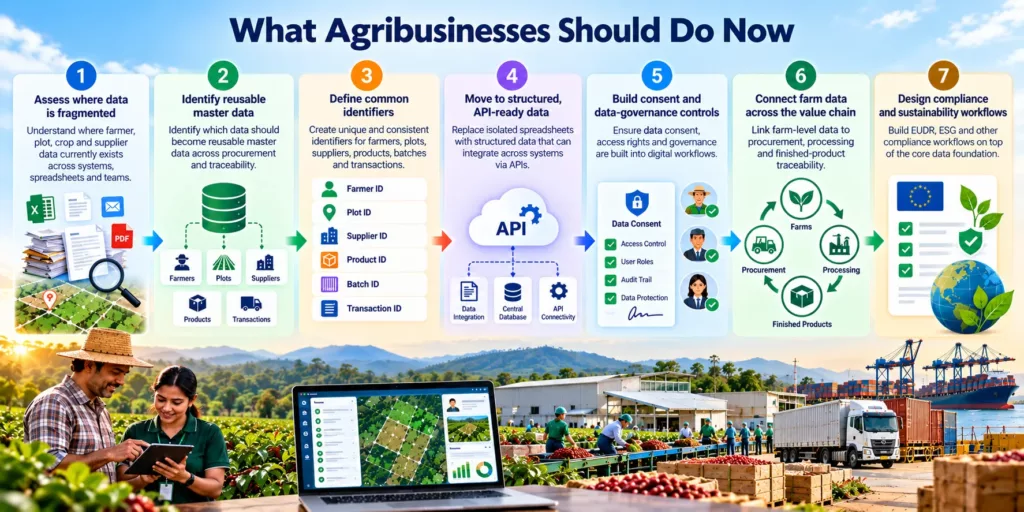
Connect farmer and supplier information with procurement workflows.
Map farm and plot information to commodities and sourcing transactions.
Capture crop, harvest, quantity and batch-level traceability data.
Connect upstream origin information to processing and finished products.
Support EUDR, sustainability and responsible-sourcing workflows with relevant evidence.
Provide operational dashboards and exception management for supply-chain teams.
Integrate with ERP and existing enterprise systems rather than forcing organisations to replace them.
The opportunity is therefore not public infrastructure versus private software. It is public digital infrastructure plus specialised private-sector applications working together through interoperable standards and governed data exchange.
Data quality: A digital registry is only valuable when underlying information is accurate, current and appropriately verified.
Interoperability: Different systems need common standards, identifiers and interfaces so information can move without losing meaning.
Consent and privacy: Farmer data must be shared according to applicable privacy requirements and appropriate consent mechanisms.
Last-mile adoption: Smallholders, FPOs and local supply-chain actors need practical tools that work in real procurement environments.
Commercial integration: Traceability must connect with procurement, ERP, quality, processing and logistics systems to become operational rather than another reporting layer.
Governance: Clear rules are needed around data ownership, access, correction, accountability and permitted uses.
The Future: From Digital Records to Digital Provenance
The next stage of agricultural digitisation is not simply putting more records online. It is creating trusted connections between records. A farmer identity should connect to a production location. The location should connect to a crop and production event. That event should connect to procurement, processing, batch and shipment records. The resulting chain can then support multiple downstream use cases.
This is where Digital Public Infrastructure for Agriculture can become strategically important. A shared foundation can reduce duplication while allowing different sectors and businesses to build specialised services on top.
Build the Next Generation of Agricultural Traceability with TraceX
Digital Public Infrastructure for Agriculture can provide the foundation. Agribusinesses still need operational systems that connect farmers, suppliers, plots, procurement, production, products and shipments into a usable traceability chain.
TraceX helps businesses build this operational layer by connecting farm-level data, supplier management, procurement, traceability, sustainability and compliance workflows in one digital environment.
Frequently Asked Questions
What is Digital Public Infrastructure for Agriculture?
It is a set of shared digital foundations, registries, standards and interfaces designed to enable interoperable agricultural services. In India, AgriStack is a major component of the Digital Agriculture Mission.
How can DPI improve food traceability?
It can provide reusable and trusted foundational information about farmers, land and crops, which can then be connected to procurement, processing and shipment events.
What is AgriStack?
AgriStack is a farmer-centric Digital Public Infrastructure initiative comprising foundational registries including the Farmers’ Registry, Geo-referenced Village Maps and Crop Sown Registry.
Will DPI replace private traceability platforms?
Not necessarily. DPI can provide shared foundations, while private platforms can deliver specialised operational applications for procurement, traceability, sustainability and compliance.
Why is interoperability important in agricultural traceability?
Because agricultural data is distributed across farmers, FPOs, suppliers, processors, exporters, governments and technology systems. Interoperability allows relevant information to move between authorised systems without recreating it at every step.
Start using TraceX
Transparency, Trust, & Success for your Climate Journey.
We use cookies on our website to give you the most relevant experience by remembering your preferences and repeat visits. By clicking “Accept All”, you consent to the use of ALL the cookies. However, you may visit "Cookie Settings" to provide a controlled consent.
This website uses cookies to improve your experience while you navigate through the website. Out of these, the cookies that are categorized as necessary are stored on your browser as they are essential for the working of basic functionalities of the website. We also use third-party cookies that help us analyze and understand how you use this website. These cookies will be stored in your browser only with your consent. You also have the option to opt-out of these cookies. But opting out of some of these cookies may affect your browsing experience.
Necessary cookies are absolutely essential for the website to function properly. These cookies ensure basic functionalities and security features of the website, anonymously.
Cookie
Duration
Description
cookielawinfo-checkbox-analytics
11 months
This cookie is set by GDPR Cookie Consent plugin. The cookie is used to store the user consent for the cookies in the category "Analytics".
cookielawinfo-checkbox-functional
11 months
The cookie is set by GDPR cookie consent to record the user consent for the cookies in the category "Functional".
cookielawinfo-checkbox-necessary
11 months
This cookie is set by GDPR Cookie Consent plugin. The cookies is used to store the user consent for the cookies in the category "Necessary".
cookielawinfo-checkbox-others
11 months
This cookie is set by GDPR Cookie Consent plugin. The cookie is used to store the user consent for the cookies in the category "Other.
cookielawinfo-checkbox-performance
11 months
This cookie is set by GDPR Cookie Consent plugin. The cookie is used to store the user consent for the cookies in the category "Performance".
viewed_cookie_policy
11 months
The cookie is set by the GDPR Cookie Consent plugin and is used to store whether or not user has consented to the use of cookies. It does not store any personal data.
Functional cookies help to perform certain functionalities like sharing the content of the website on social media platforms, collect feedbacks, and other third-party features.
Performance cookies are used to understand and analyze the key performance indexes of the website which helps in delivering a better user experience for the visitors.
Analytical cookies are used to understand how visitors interact with the website. These cookies help provide information on metrics the number of visitors, bounce rate, traffic source, etc.
Advertisement cookies are used to provide visitors with relevant ads and marketing campaigns. These cookies track visitors across websites and collect information to provide customized ads.
Download the 2026 Traceability Scorecard and Benchmark Your Supply Chain Across 10 Critical Capabilities.
Download our eBook
Don’t Wait for an Audit to Find Your EUDR Gaps
The 2026 Simplification Package changes how HS codes, DDS pass-through and geolocation rules apply to you. Get the free guide and 20-point readiness checklist before enforcement catches you unprepared.