Farm Mapping in Tanzania – Digitizing Smallholder Plots
Published
, 14 minute read
Share this article
Quick summary: Discover how farm mapping solutions are transforming Tanzania’s smallholder agriculture. Digitize plots, enhance traceability, ensure compliance, and unlock market access for cocoa, cashew, ginger, hibiscus, and sesame farmers.
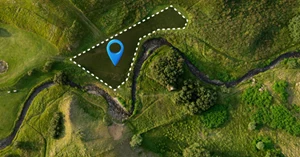
Farm Mapping in Tanzania is the process of digitally capturing and verifying smallholder plot boundaries using GPS, satellite imagery, and geospatial tools. It enables accurate identification of farm size, location, land use, and crop activity across fragmented smallholder landscapes. By digitizing plots, Farm Mapping in Tanzania improves traceability, supports land-tenure clarity, strengthens sustainability and deforestation-free compliance, and enables access to formal markets and climate-smart programs. This data foundation is increasingly essential for supply chain transparency, farmer inclusion, and regulatory readiness in agriculture-driven export sectors.
The State of Smallholder Farming in Tanzania
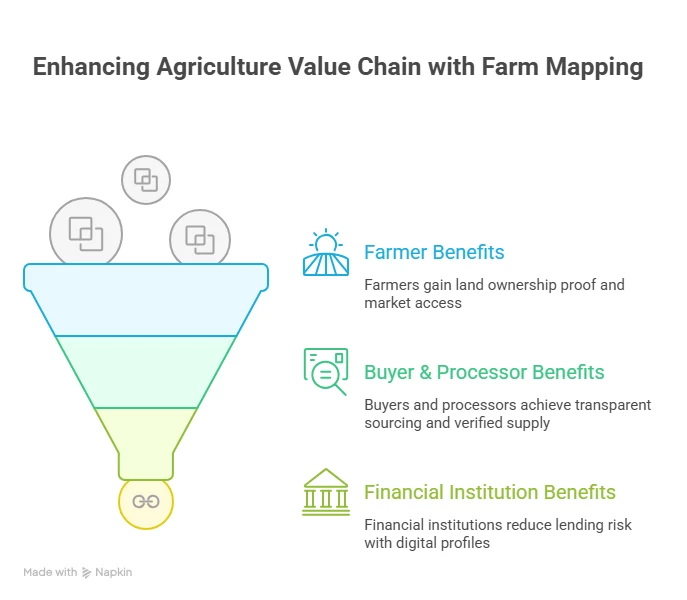
Smallholder farmers are the foundation of Tanzania’s agricultural sector, accounting for over 65–70% of total agricultural output and employing the majority of the rural population. Most smallholders operate on small, fragmented plots averaging 1–3 hectares, often without formally documented or digitally mapped land boundaries. This limited farm-level visibility creates challenges for buyers, financial institutions, development programs, and processors that require accurate data for sourcing, credit assessment, and compliance with global sustainability standards.
Land tenure remains a key constraint. While Tanzania has a structured village land system, many farmers cultivate land under customary or informal arrangements, with incomplete records, unclear boundaries, and limited geospatial documentation. As a result, many smallholders face barriers to long-term investment, formal financing, and participation in traceable supply chains.
Tanzania’s diverse agro-ecological zones support a wide mix of crops. Nationally significant crops include maize, rice, cassava, beans, sorghum, millet, sunflower, coffee, tea, cotton, cashew nuts, tobacco, and horticulture. Regional specialization is well defined coffee in Kilimanjaro and Mbeya, tea in the Southern Highlands, cashew in the Southern Coastal regions, cotton around Lake Victoria, and maize and rice across much of the country.
These structural gaps fragmented landholdings, limited plot documentation, and low digital visibility—highlight why digital farm mapping is becoming critical to improving productivity, enabling financing, strengthening traceability, and integrating millions of Tanzanian smallholders into modern, compliant value chains.
Ensure regulatory readiness and traceable sourcing with smart farm mapping. Learn how mapping every plot can streamline compliance and reduce risk across your supply chain. [Explore the Blog →]
Digitally profile farmers to capture verified data, improve traceability, and strengthen ESG and sustainability reporting. Discover how digital onboarding empowers both farmers and buyers. [Read the Blog →]
Why Digitizing Smallholder Plots Is Critical in Tanzania
1. Improving Input Distribution & Subsidy Targeting
Digitizing smallholder farms with GPS coordinates, mapped plot boundaries, and verified farmer identities enables more accurate delivery of inputs and government support. In Tanzania, fertilizer subsidies, seed distribution programs, and mechanization schemes often face challenges related to inaccurate farmer registries and plot size estimation. With digitized plots, authorities and agribusinesses can:
Align input quantities to actual farm size and crop type
Track distribution and usage more transparently
Reduce duplication, leakage, and misallocation Plot-level mapping ensures subsidies reach legitimate farmers cultivating real land, improving both efficiency and trust.
2. Enhancing Access to Finance
Limited access to finance remains a major barrier for Tanzanian smallholders, largely due to informal land tenure and lack of verifiable farm data. Digitized plots enable:
Verification of farm location, size, and crop through geospatial records
Creation of digital farm profiles for data-driven credit assessments
Development of index-based insurance linked to precise farm coordinates These capabilities improve lender confidence and unlock financing for key value chains such as coffee, cotton, cashew, sunflower, rice, and horticulture.
3. Supporting Climate-Smart Agriculture
Tanzania faces increasing climate variability, including droughts in central regions, flooding in river basins, and shifting rainfall patterns. Digitized farm plots allow:
Monitoring of weather, vegetation health, and soil moisture at farm level
Delivery of localized advisories and early-warning alerts to farmers
Data-driven climate resilience planning by governments and NGOs Geospatial farm data makes climate-smart interventions targeted and effective rather than generic and reactive.
4. Boosting Compliance & Traceability for Exports
Tanzania’s agricultural exports—coffee, cashew nuts, cotton, tobacco, tea, spices, and sesame—totaled $2.9 billion in Q4 2024 alone, up from $2.3 billion in 2023 (+9.5% YoY), with traditional cash crops comprising ~80% of overall exports amid tightening EU EUDR deforestation-free requirements. Coffee earnings surged 66.3% YoY to $227.9 million (41.38% increase), tobacco hit $340.41 million (+90.68% and +32% export value), cashew nuts reached $2.3 billion potential (1.05 million tons May 2025), while cotton stood at $170 million (94,600 tons) and sesame contributed to horticultural/spice gains alongside tea and cloves. Digitized farm plots deliver verified origin/land-use history and end-to-end traceability, slashing EU shipment rejection risks (critical as 17% of forex historically from coffee) and bolstering competitiveness in high-value markets, protecting farmers/exporters from disruptions as regulations intensify
How Farm Mapping Works in Tanzania
Farm mapping in Tanzania combines GIS tools, mobile data collection, remote sensing, and where required high-resolution drone surveys to digitally map smallholder plots with accurate and verifiable geolocation. Each farm receives a unique digital identity that supports traceability, access to finance, climate-risk monitoring, and participation in government and export programs.
GIS & GPS-Based Mapping
Capturing polygon boundaries: Enumerators, extension officers, or cooperative agents walk the perimeter of each farm using GPS-enabled mobile apps. Latitude–longitude points are recorded and converted into polygon boundaries that define plot size, shape, and exact location. This reduces land-boundary disputes and enables precise acreage-based planning.
Mobile data collection tools: Digital platforms collect farmer profiles, crop types, planting seasons, input usage, soil indicators, and geo-tagged photos. Offline functionality is essential for rural Tanzania, where connectivity can be intermittent, with data syncing automatically once a network is available.
Remote Sensing & Satellite Imagery
NDVI vegetation analysis: Satellite-derived NDVI data is used to monitor crop vigor, canopy cover, and stress across large farming zones. This allows government agencies, agribusinesses, and buyers to assess farm health remotely and at scale.
Crop classification & stress detection: Machine-learning models identify dominant crops such as maize, rice, sunflower, cotton, coffee, cashew, and horticulture, while flagging risks like drought stress, nutrient deficiencies, and pest or disease outbreaks. This supports production forecasting and early intervention.
Drone Mapping for High-Value Crops
Coffee, cashew, tea, cotton, and horticulture clusters: Drones provide centimeter-level imagery for plantation and high-value crop systems, enabling accurate tree counts, age profiling, canopy density analysis, and yield estimation—critical for export-oriented crops such as coffee, tea, cashew, and specialty horticulture.
Plant health insights: Multispectral drone sensors capture chlorophyll levels, water stress, and disease spread with greater precision than satellites. This supports precision agriculture, reduces input waste, and strengthens sustainability compliance for exporters and organized buyer groups.
Farm mapping in Tanzania creates a reliable digital foundation for agriculture turning smallholder plots into verifiable, traceable, and finance-ready assets that connect farmers to markets, climate programs, and modern value chains.
Farm Mapping Across Tanzania – Regional Insights
Northern & Central Tanzania
Northern and central regions form Tanzania’s primary staple-producing zones, with expansive smallholder landscapes supporting national food security. Key states include Arusha, Manyara, Kilimanjaro, Dodoma, Singida, and Tabora.
Key focus crops include:
Maize: Tanzania’s most important staple, widely grown across the north and central belt
Sorghum & millet: Climate-resilient crops dominant in semi-arid areas
Rice: Significant production in irrigation schemes and lowland areas
Sunflower: A major oilseed crop increasingly linked to processing value chains
Mapping priorities: large-scale acreage verification, yield forecasting, input targeting, and climate-risk monitoring in drought-prone zones.
Southern Highlands
The Southern Highlands are Tanzania’s most productive and export-oriented agricultural regions, including Mbeya, Njombe, Ruvuma, Iringa, and Songwe.
Key crops include:
Coffee (Arabica): High-altitude, export-quality production
Tea: Estate and smallholder-based systems
Maize & beans: National food baskets
Horticulture: Vegetables and seed crops
Mapping priorities: traceability for export crops, certification readiness, productivity benchmarking, and land-use verification.
Coastal & Southern Corridor
Coastal and southern regions such as Lindi, Mtwara, Pwani, and Morogoro support major tree-crop and cash-crop systems.
Key crops include:
Cashew nuts: Tanzania is one of Africa’s leading producers
Sesame: Important export crop
Cassava: Widely grown for food security and processing
Rice & horticulture in river basins
Mapping priorities: farm-level traceability, EUDR and sustainability compliance, smallholder aggregation, and export readiness.
Lake Zone
The Lake Victoria basin including Mwanza, Shinyanga, Simiyu, Mara, and Geita is a densely farmed region with mixed cropping systems.
Major crops include:
Cotton: Key cash crop supporting textile value chains
Maize, rice, and cassava
Fishing & aquaculture integrated into livelihood systems
Farm mapping is increasingly essential across Tanzania’s agricultural ecosystem, supporting stakeholders that rely on accurate, geotagged farm data:
Government & Ministry of Agriculture Uses mapped plots to improve subsidy targeting, farmer registry accuracy, land-use planning, and national food security strategies.
NGOs & Development Partners (IFAD, GIZ, World Bank, FAO) Apply farm-level geospatial data to monitor impact, strengthen climate-smart agriculture, and ensure accountability in donor-funded programs.
Processors & Exporters (Coffee, tea, cashew, cotton, sesame) Require mapped farms for origin verification, supply assurance, sustainability compliance, and EU market access.
Financial Institutions & Input Providers Use digitized plots for credit appraisal, insurance design, input-credit programs, and last-mile delivery optimization.
Extension & Advisory Service Providers Rely on accurate farm boundaries and crop data to deliver precision advisories, track adoption of best practices, and measure productivity improvements.
Regional farm mapping in Tanzania enables smarter planning, stronger traceability, and deeper integration of smallholders into resilient, export-ready agricultural value chains.
Challenges in Farm Mapping That Tanzania Must Overcome
While farm mapping is becoming essential for productivity, finance, and traceability in Tanzania, several structural and on-the-ground challenges must be addressed to scale it effectively and inclusively.
1. Informal and Fragmented Land Tenure
Although Tanzania operates under a village land governance system, many smallholders cultivate land based on customary or informal arrangements. Plot boundaries are often inherited, verbally defined, or seasonally adjusted, making precise mapping difficult. Conflicting claims and lack of updated land records can discourage farmers from participating due to fear of land disputes or exclusion.
2. Small, Scattered, and Intercropped Plots
Most Tanzanian smallholders farm plots averaging 0.5–3 hectares, frequently spread across multiple locations. Intercropping common in maize–legume, cassava–bean, or agroforestry systems makes crop classification and boundary delineation more complex than in monocropped systems.
3. Limited Digital Literacy and Trust Barriers
Many farmers have limited exposure to digital tools and may be unfamiliar with GPS mapping, mobile apps, or data-sharing concepts. Concerns around land security, taxation, or misuse of data can reduce participation unless mapping programs are paired with strong community engagement and transparency.
4. Connectivity and Infrastructure Constraints
Rural connectivity remains uneven, with many farming areas experiencing poor mobile network coverage and limited electricity access. Farm mapping solutions must therefore support offline data collection, delayed synchronization, and low-power devices—raising implementation complexity and cost.
5. Environmental and Climatic Limitations
Seasonal cloud cover, especially in the Lake Zone and Southern Highlands, can reduce satellite image quality. Flooding in river basins and coastal areas can alter plot boundaries seasonally, complicating temporal consistency in maps and land-use records.
6. Cost and Scalability Challenges
High-resolution satellite imagery, drones, skilled enumerators, and data validation processes require significant investment. Scaling farm mapping nationwide demands cost-efficient models that balance accuracy with affordability, especially for donor-funded and government-led programs.
7. Data Governance and Interoperability Gaps
Farm mapping initiatives are often conducted in silos by different projects, NGOs, or buyers, leading to fragmented datasets that cannot be easily shared or reused. Lack of common data standards and governance frameworks limits interoperability and long-term value.
Tanzania’s farm mapping challenge is not technical alone it is institutional, social, and operational. Overcoming these barriers requires trusted engagement with farmers, interoperable digital systems, supportive land policies, and scalable implementation models that prioritize inclusion as much as accuracy.
How TraceX Digitizes Farm Mapping in Tanzania
The TraceX Farm Management Platform delivers an end-to-end digital infrastructure to accurately map, profile, and monitor smallholder farms across Tanzania’s diverse agricultural landscapes from the Lake Zone and Southern Highlands to coastal and corridor-based production belts. It is purpose-built to support governments, NGOs, exporters, cooperatives, and financial institutions with reliable, real-time farm-level data.
Mobile App for Polygon-Based Farm Mapping
TraceX enables field teams, extension officers, and cooperatives to capture precise farm boundaries using GPS-enabled polygon mapping via a mobile app. Each plot is registered with accurate geolocation, essential for subsidy targeting, sourcing programs, and compliance with export and sustainability requirements.
Farmer Profiling and Identity Verification
Every mapped plot is linked to a structured farmer profile capturing demographics, farm size, crops grown (maize, rice, coffee, cotton, cashew, horticulture, etc.), input usage, and production history. Optional identity and cooperative membership verification strengthen trust for lenders, buyers, and development programs.
Geospatial Intelligence and Crop Monitoring
TraceX integrates satellite-derived analytics such as NDVI to monitor crop health, stress patterns, and growth cycles. These insights support climate-resilience planning, targeted advisory, yield forecasting, and early intervention, particularly critical in drought- and flood-prone regions.
Blockchain-Enabled Traceability for Global Compliance
The platform secures farm location data, production records, and sourcing movements on blockchain, ensuring tamper-proof traceability. This enables Tanzanian exporters to demonstrate deforestation-free sourcing and meet stringent EU and global standards for commodities such as coffee, cashew, cocoa, sesame, and spices.
End-to-End Supply Chain Visibility
TraceX digitally connects farmers to aggregators, processors, cooperatives, and exporters, creating full transparency across the value chain. Stakeholders gain verified visibility into origin, practices, and volumes, reducing risk, improving planning, and unlocking premium markets.
Digitize farmer networks in Tanzania with accurate farm mapping, trusted data, and compliant traceability.
Building the Digital Foundation for Tanzania’s Smallholders
Farm Mapping in Tanzania is no longer just a technical upgrade it is a strategic necessity for inclusive growth, sustainable production, and global market access. By digitizing smallholder plots with precise geolocation and verifiable data, Tanzania can strengthen land transparency, unlock finance for farmers, improve climate resilience, and meet rising traceability and sustainability expectations from global buyers. As regulations, climate risks, and competitive pressures intensify, accurate farm-level mapping will define which value chains remain export-ready and which smallholders are fully integrated into the future of agriculture.
Unlock the full potential of your farm! Explore our comprehensive guide to farm management and discover strategies to boost productivity, streamline operations, and enhance traceability.
Digitize your farm for a sustainable future! Learn how farm management software can help smallholders and agribusinesses monitor crops, ensure compliance, and meet global sustainability standards.
See your farm like never before! Discover how GIS technology is transforming agriculture with precise farm mapping, crop monitoring, and data-driven decision-making for higher efficiency and traceability.
Frequently Asked Questions (FAQ’s)
What is farm mapping in Tanzania?
Farm mapping involves digitally capturing the location, boundaries, and details of smallholder plots using GPS or GIS tools to improve traceability and compliance.
Why is farm mapping important for Tanzanian smallholders?
It helps verify land access, monitor crop production, ensure compliance with export regulations, and strengthen access to premium global markets.
Which crops benefit most from farm mapping in Tanzania?
Key export crops such as cocoa, cashew, ginger, hibiscus, and sesame benefit significantly from plot-level digitization for traceability and quality monitoring.
How does farm mapping support sustainability and ESG compliance?
Digitized farm data allows verification of environmentally responsible practices, deforestation-free sourcing, and ethical smallholder engagement.
Can farm mapping improve Tanzania’s export competitiveness?
Yes. By providing verifiable origin data, farm mapping increases buyer confidence, reduces compliance risks, and helps exporters meet international standards.
Start using TraceX
Transparency, Trust, & Success for your Climate Journey.
We use cookies on our website to give you the most relevant experience by remembering your preferences and repeat visits. By clicking “Accept All”, you consent to the use of ALL the cookies. However, you may visit "Cookie Settings" to provide a controlled consent.
This website uses cookies to improve your experience while you navigate through the website. Out of these, the cookies that are categorized as necessary are stored on your browser as they are essential for the working of basic functionalities of the website. We also use third-party cookies that help us analyze and understand how you use this website. These cookies will be stored in your browser only with your consent. You also have the option to opt-out of these cookies. But opting out of some of these cookies may affect your browsing experience.
Necessary cookies are absolutely essential for the website to function properly. These cookies ensure basic functionalities and security features of the website, anonymously.
Cookie
Duration
Description
cookielawinfo-checkbox-analytics
11 months
This cookie is set by GDPR Cookie Consent plugin. The cookie is used to store the user consent for the cookies in the category "Analytics".
cookielawinfo-checkbox-functional
11 months
The cookie is set by GDPR cookie consent to record the user consent for the cookies in the category "Functional".
cookielawinfo-checkbox-necessary
11 months
This cookie is set by GDPR Cookie Consent plugin. The cookies is used to store the user consent for the cookies in the category "Necessary".
cookielawinfo-checkbox-others
11 months
This cookie is set by GDPR Cookie Consent plugin. The cookie is used to store the user consent for the cookies in the category "Other.
cookielawinfo-checkbox-performance
11 months
This cookie is set by GDPR Cookie Consent plugin. The cookie is used to store the user consent for the cookies in the category "Performance".
viewed_cookie_policy
11 months
The cookie is set by the GDPR Cookie Consent plugin and is used to store whether or not user has consented to the use of cookies. It does not store any personal data.
Functional cookies help to perform certain functionalities like sharing the content of the website on social media platforms, collect feedbacks, and other third-party features.
Performance cookies are used to understand and analyze the key performance indexes of the website which helps in delivering a better user experience for the visitors.
Analytical cookies are used to understand how visitors interact with the website. These cookies help provide information on metrics the number of visitors, bounce rate, traffic source, etc.
Advertisement cookies are used to provide visitors with relevant ads and marketing campaigns. These cookies track visitors across websites and collect information to provide customized ads.
Download the 2026 Traceability Scorecard and Benchmark Your Supply Chain Across 10 Critical Capabilities.
Download our eBook
Don’t Wait for an Audit to Find Your EUDR Gaps
The 2026 Simplification Package changes how HS codes, DDS pass-through and geolocation rules apply to you. Get the free guide and 20-point readiness checklist before enforcement catches you unprepared.