Child Labour in Cocoa Supply Chains: From Reputational Risk to Buyer Requirement
Published
, 7 minute read
Share this article
Quick summary: Child labour in cocoa supply chains is now a market-access risk. See the root causes, the regulations driving buyer due diligence, and how to prove it.
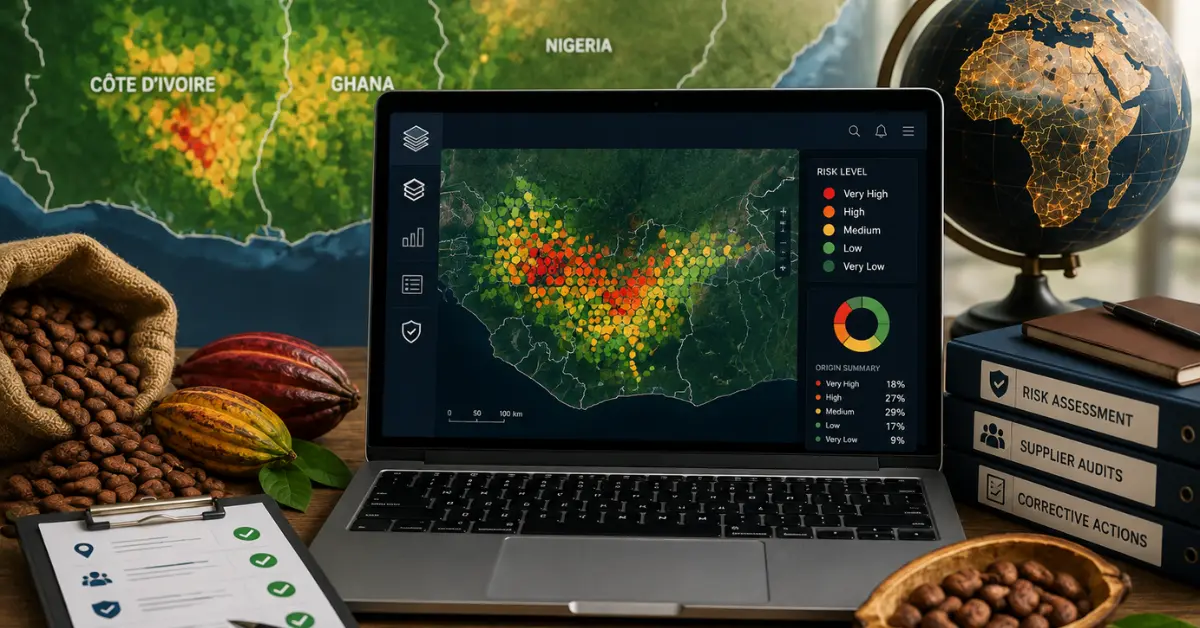
Child labour in cocoa supply chains refers to children performing work often hazardous on cocoa farms, concentrated in West Africa, where an estimated 1.56 million children are affected in Côte d’Ivoire and Ghana .It persists because roughly 5–6 million smallholders produce around 90% of the world’s cocoa under deep rural poverty, with informal aggregation that hides where beans come from. For buyers, it is no longer only an ethical concern: under CSDDD, EUDR, and import bans like the US CBP Withhold Release Orders, brands and traders must now demonstrate with farm-level evidence that their cocoa is not linked to child labour. The credible answer is a Child Labour Monitoring and Remediation System (CLMRS) built on traceable, farm-level data.
KEY TAKEAWAYS
It’s a business risk now: CSDDD, EUDR, and import bans turn child labour from a CSR topic into a market-access and legal-liability issue.
The origin is fragmented: millions of smallholders and informal buyers make farm-level visibility the hard part.
Certificates aren’t proof: audits and labels support risk mitigation but don’t give the household-level evidence regulators and buyers now expect.
CLMRS works — if digitised: monitoring and remediation can cut child labour by over 50% in three years, but still covers only about a quarter of the chain.
The data does double duty: the same farm-level traceability underpins both child-labour due diligence and EUDR compliance.
Concerned about child labour risks in your cocoa supply chain?
TraceX can help you build greater visibility across your cocoa supply chain from supplier and farmer onboarding to risk assessment, traceability and supporting evidence
Why child labour in cocoa supply chains is now a buyer risk
Child labour in cocoa supply chains has moved from a CSR footnote to a procurement decision. Three forces did it. First, regulation: the EU’s Corporate Sustainability Due Diligence Directive (CSDDD) requires human-rights due diligence across the value chain, and the EU Deforestation Regulation (EUDR) requires farm-level traceability for cocoa. Second, trade enforcement: import bans such as US Customs Withhold Release Orders can stop goods linked to forced or child labour at the border. Third, reputation and capital: one analysis found that 27% of food-sector human-rights incidents over a decade involved child labour on cocoa farms, and investors are watching.
The scale of child labour in cocoa supply chains is well documented, which removes any “we didn’t know” defence. When roughly 1.56 million children are affected across the two countries that grow about 60% of the world’s cocoa, buyers are expected to act on the risk, not plead ignorance of it.
For a procurement or sustainability lead, the consequences are concrete. A supplier that cannot evidence its cocoa origin can see shipments held at an EU or US border, be dropped from a retailer’s approved-vendor list, trigger an ESG rating downgrade, or become the subject of an NGO report that reaches customers before it reaches the boardroom. Increasingly, the first question in a sourcing RFP is not price but proof: show us your farm-level data and your remediation record. Suppliers who can answer win the contract; those who cannot are quietly designed out of the supply base.
Want to understand what makes a cocoa supply chain more transparent, traceable, and responsible?
Read the blog: Cocoa Supply Chain: A Complete Guide to Traceability, Sourcing & Sustainability
The root causes: why it persists
The root causes of child labour in cocoa supply chains are economic and structural, not simply a matter of bad actors:
Farm-gate poverty — smallholders earn the least of anyone in the chain, so family and child labour substitutes for wages they can’t pay.
Fragmentation — millions of tiny farms sell through informal buyers, so beans are mixed and origin is lost before export.
Low visibility — without household-level monitoring, high-risk families are invisible until an audit or journalist finds them.
What good looks like: CLMRS built on traceability
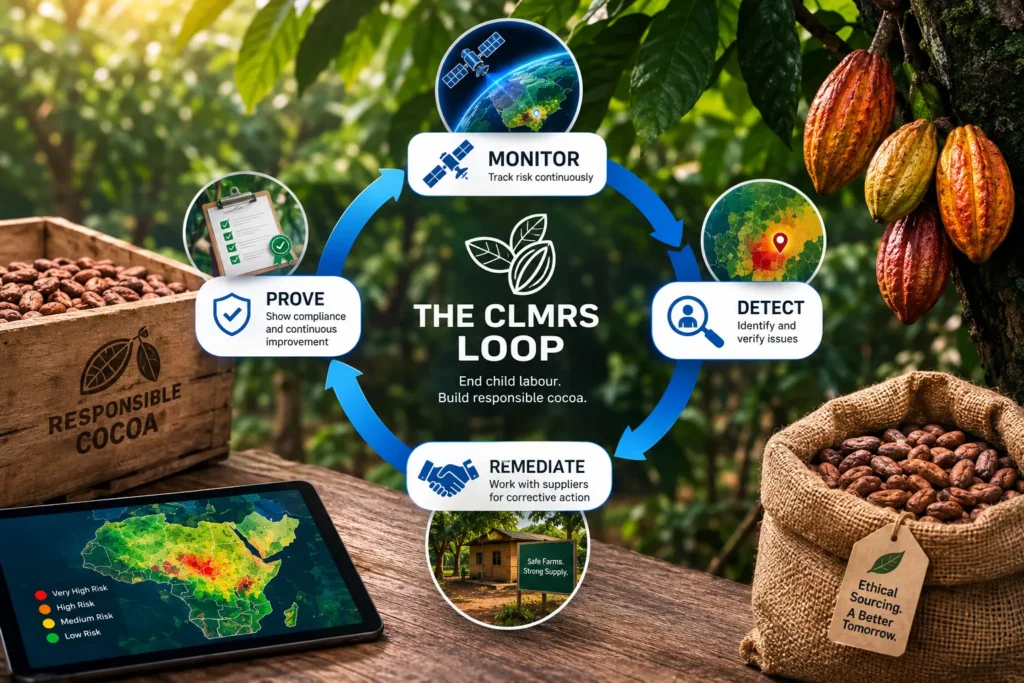
The credible way to address child labour in cocoa supply chains at the source is a Child Labour Monitoring and Remediation System (CLMRS) a structured, field-led system that finds children at risk and supports them until they are permanently removed from harm. Paired with digital traceability, a CLMRS follows a clear loop:
Monitor — field agents and mobile tools track risk at the farm and household level.
Detect early — data and community reporting flag high-risk cases so you can act before harm, helping detect child labour in cocoa supply chains early.
Remediate — families receive schooling support, income help, and follow-up, addressing the root cause rather than just delisting a farm.
Prove it — transparent, farm-level records evidence progress for buyers and regulators.
Managing the risk with the TraceX platform
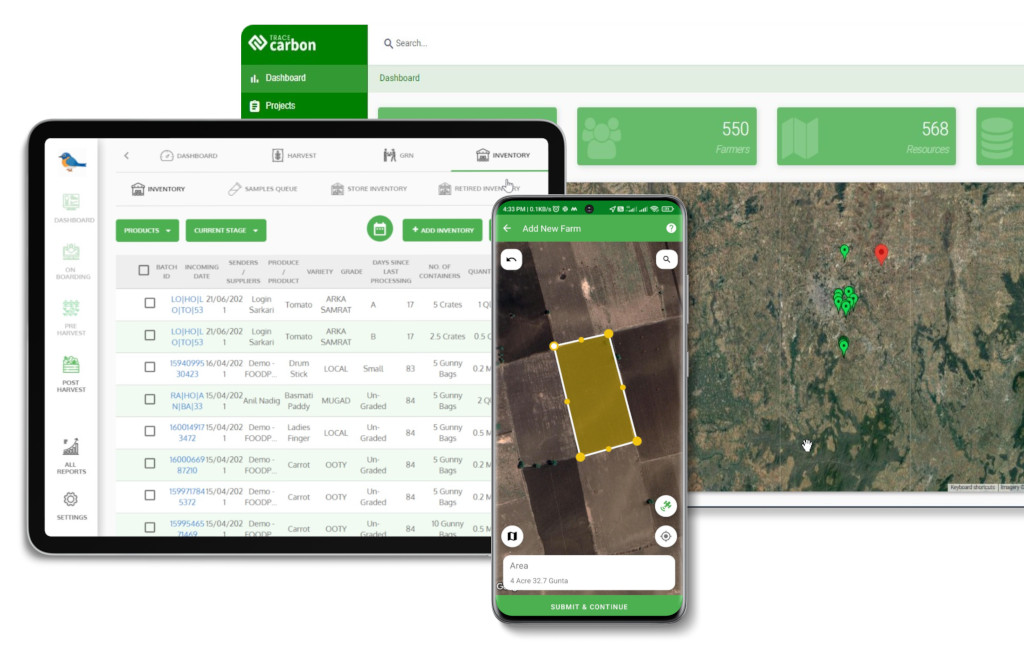
Managing the risk of child labour in cocoa supply chains means turning that loop into auditable data. The TraceX Sustainability platform digitises CLMRS, maps farms with GPS polygons, links each batch to its source households, and generates the evidence buyers and auditors ask for while the same farm-level data feeds EUDR due diligence and, where a Due Diligence Statement is required.
You cannot audit your way out of child labour in cocoa, and you cannot certify your way out either. A certificate is a snapshot; risk is continuous. The brands that will keep their EU and US business are the ones that can show a live, farm-level monitoring-and-remediation trail not a binder of last year’s audits. Treat child-labour data and traceability as one system, because regulators, buyers, and investors are now reading them together.
Audits-only vs. digitised CLMRS on the TraceX platform
What buyers now ask for
Certificates / audits only
Digitised CLMRS + TraceX
Household-level risk visibility
Snapshot at audit time
Continuous monitoring
Farm-to-batch traceability
Often broken at aggregation
GPS-mapped, batch-linked
Remediation evidence
Hard to demonstrate
Tracked case-by-case
Regulator/buyer reporting
Manual, static
Audit-ready records on demand
EUDR data reuse
Separate effort
Same data feeds DDS via TraceX EUDR
Prove your cocoa is clean.
Book a TraceX demo and we’ll show how digitised CLMRS and farm-level traceability give you buyer- and regulator-ready evidence on child labour in cocoa supply chains.
Before you can credibly claim to manage child labour in cocoa supply chains, you should be able to answer yes to each:
Do you have farm-level (GPS polygon) mapping for the origins you buy from?
Is there household-level monitoring, not just annual third-party audits?
Can you show remediation actions and outcomes for flagged cases?
Can you link a specific cocoa batch back to its source community?
Does the same data support your CSDDD and EUDR obligations?
Frequently Asked Questions
What causes child labour in cocoa supply chains?
Child labour in cocoa supply chains is driven mainly by farm-gate poverty, a highly fragmented smallholder base, and low household-level visibility not simply by individual bad actors.
How many children are affected?
An estimated 1.56 million children are in child labour on cocoa farms in Côte d’Ivoire and Ghana, the two countries that grow around 60% of the world’s cocoa
What is a CLMRS?
A Child Labour Monitoring and Remediation System is a field-led system that identifies children at risk and supports them until they are removed from harm; digitised, it also produces the farm-level evidence buyers and regulators require.
Which regulations apply to buyers?
Chiefly the EU’s CSDDD (human-rights due diligence) and EUDR (farm-level cocoa traceability), plus trade measures such as US CBP Withhold Release Orders on forced/child-labour goods.
Do certifications prove there is no child labour?
No. Audits and certifications support risk mitigation but provide a snapshot; they do not deliver the continuous, household-level evidence now expected.
Can technology actually reduce child labour?
Yes. Properly implemented monitoring and remediation can cut child labour by over 50% within three years, though coverage across the chain is still only about 25%.
How does this connect to EUDR compliance?
The same farm-level geolocation and traceability that supports child-labour due diligence also underpins EUDR’s deforestation-free proof and Due Diligence Statement.
Start using TraceX
Transparency, Trust, & Success for your Climate Journey.
We use cookies on our website to give you the most relevant experience by remembering your preferences and repeat visits. By clicking “Accept All”, you consent to the use of ALL the cookies. However, you may visit "Cookie Settings" to provide a controlled consent.
This website uses cookies to improve your experience while you navigate through the website. Out of these, the cookies that are categorized as necessary are stored on your browser as they are essential for the working of basic functionalities of the website. We also use third-party cookies that help us analyze and understand how you use this website. These cookies will be stored in your browser only with your consent. You also have the option to opt-out of these cookies. But opting out of some of these cookies may affect your browsing experience.
Necessary cookies are absolutely essential for the website to function properly. These cookies ensure basic functionalities and security features of the website, anonymously.
Cookie
Duration
Description
cookielawinfo-checkbox-analytics
11 months
This cookie is set by GDPR Cookie Consent plugin. The cookie is used to store the user consent for the cookies in the category "Analytics".
cookielawinfo-checkbox-functional
11 months
The cookie is set by GDPR cookie consent to record the user consent for the cookies in the category "Functional".
cookielawinfo-checkbox-necessary
11 months
This cookie is set by GDPR Cookie Consent plugin. The cookies is used to store the user consent for the cookies in the category "Necessary".
cookielawinfo-checkbox-others
11 months
This cookie is set by GDPR Cookie Consent plugin. The cookie is used to store the user consent for the cookies in the category "Other.
cookielawinfo-checkbox-performance
11 months
This cookie is set by GDPR Cookie Consent plugin. The cookie is used to store the user consent for the cookies in the category "Performance".
viewed_cookie_policy
11 months
The cookie is set by the GDPR Cookie Consent plugin and is used to store whether or not user has consented to the use of cookies. It does not store any personal data.
Functional cookies help to perform certain functionalities like sharing the content of the website on social media platforms, collect feedbacks, and other third-party features.
Performance cookies are used to understand and analyze the key performance indexes of the website which helps in delivering a better user experience for the visitors.
Analytical cookies are used to understand how visitors interact with the website. These cookies help provide information on metrics the number of visitors, bounce rate, traffic source, etc.
Advertisement cookies are used to provide visitors with relevant ads and marketing campaigns. These cookies track visitors across websites and collect information to provide customized ads.
Download the 2026 Traceability Scorecard and Benchmark Your Supply Chain Across 10 Critical Capabilities.
Download our eBook
Don’t Wait for an Audit to Find Your EUDR Gaps
The 2026 Simplification Package changes how HS codes, DDS pass-through and geolocation rules apply to you. Get the free guide and 20-point readiness checklist before enforcement catches you unprepared.