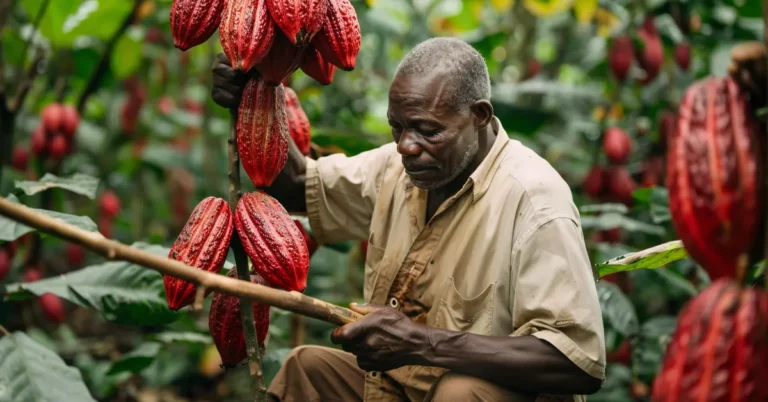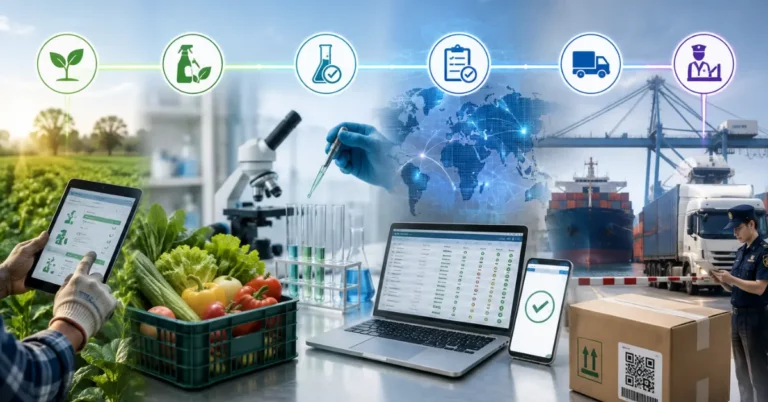
MRLs for Food Exports: How Residue Limits Decide Whether Your Shipment Clears the Border
MRLs for food exports decide whether a shipment clears customs or is rejected. See how residue limits work across the EU, US and Codex — and how to comply.
Pick your industry to see the traceability & compliance solutions built for it.
Explore all solutions →Digitize farm operations to improve visibility, efficiency, and traceability.
Learn more »Enable end-to-end traceability from farm to market with complete supply chain visibility.
Learn more »Verify sustainability claims with trusted, audit-ready data and reporting.
Learn more »Achieve EUDR compliance with end-to-end traceability, risk assessment, and automated due diligence.
Learn more »Simplify PPWR compliance with connected packaging data, technical documentation, and conformity management.
Learn more »Create Digital Product Passports with trusted product data and end-to-end traceability.
Learn more »Ensure timber traceability and due diligence to comply with ILPA requirements.
Learn more »Digitally measure, monitor, and verify nature-based projects with trusted, standards-aligned data.
Learn more »Industry-focused solutions for sustainable sourcing, product traceability, packaging data, and regulatory compliance.
Explore all industries →Explore expert insights, practical guides, webinars, and industry resources to stay ahead of evolving sustainability and regulatory requirements.
Explore all resources →The team helping supply chains go traceable, compliant, and sustainable.
About TraceX →Welcome to our blog page dedicated to sustainability in food value chains. Here, we explore the latest trends, innovations and practices related to creating a more sustainable and equitable food system. We focus on topics of traceability, sustainability and carbon management which are critical components in ensuring that our food is produced, transported and consumed in an environmentally responsible way.

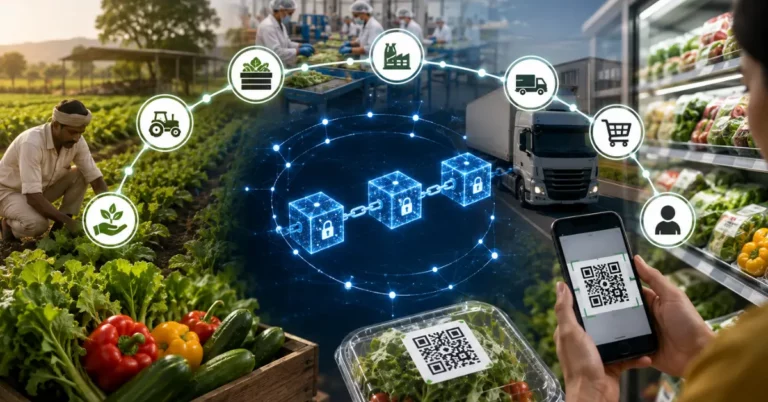
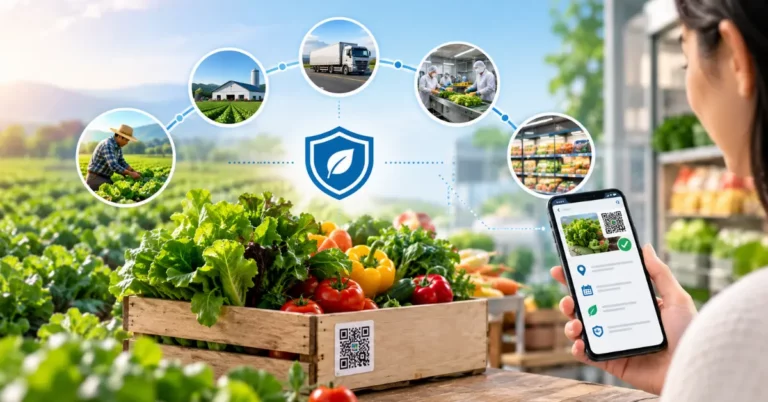
MRLs for food exports decide whether a shipment clears customs or is rejected. See how residue limits work across the EU, US and Codex — and how to comply.

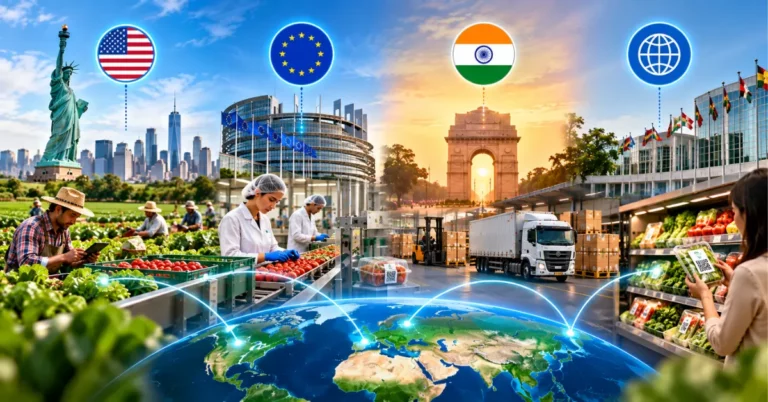
Food safety regulations in the US, EU and India now test one thing: can you produce lot-level records fast? Compare FSMA 204, EU and FSSAI rules and act now.

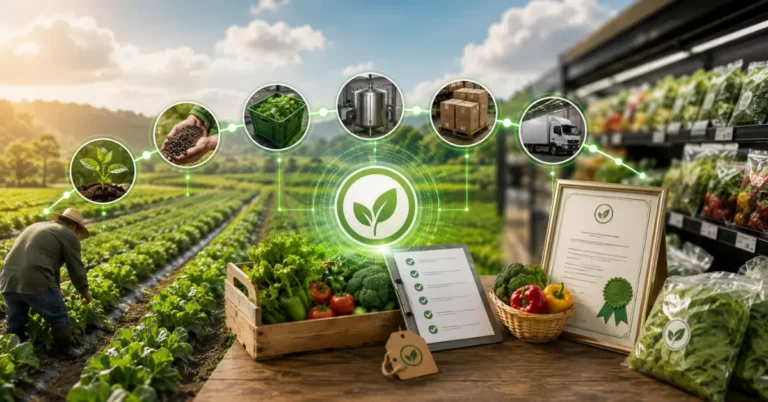
Organic food traceability protects your certification, blocks fraud and unlocks premium markets. See what a strong system captures and how to stay audit-ready.

Blockchain for food traceability explained — how immutable records speed recalls, cut fraud and prove compliance, and the buyer questions to ask first.

Food safety improves when supply-chain data, batch traceability and blockchain connect every stage—strengthening transparency, recalls and accountability.
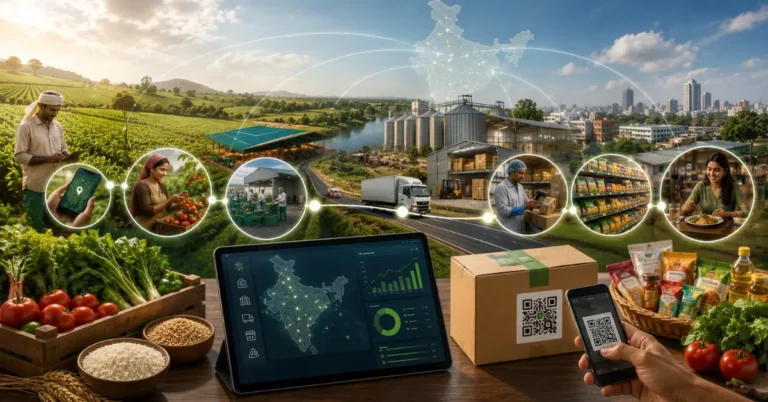
Food Supply Chains in India lose ₹1.5 trillion a year to fragmentation. See where the traceability gaps are and how farm-to-fork visibility closes them.

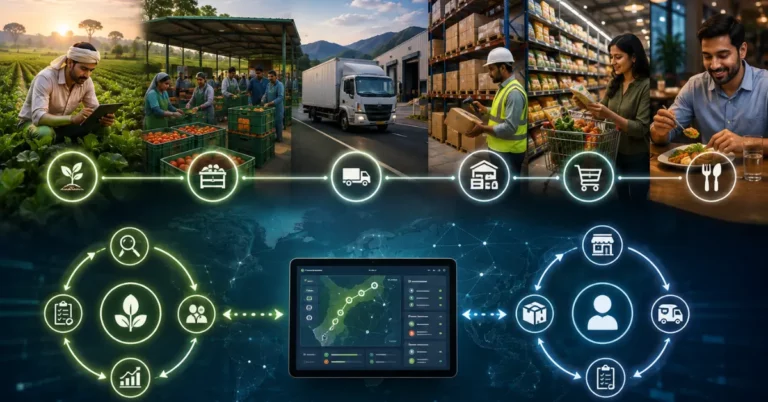
Food traceability explained: how lot-level tracking powers food safety, faster recalls and supply chain transparency — plus a buyer’s checklist for 2026.

TraceX and GCC are bringing farm-to-cup visibility to Araku Valley’s tribal coffee, helping growers prove origin, strengthen market access, and prepare for rising sustainability and EUDR compliance demands.

Discover 5 supply chain traceability challenges—data inconsistency, workflow silos, last-mile data gaps, offline failures, and partial adoption—and how to fix them before your next audit.

Learn how to collect, verify, and manage smallholder farmer data for EUDR-compliant cocoa traceability. Step-by-step guide + TraceX platform overview.

Timber chain of custody breaks at processing. Learn how to maintain origin integrity across sawmills, traders & exporters and automate EUDR compliance. | TraceX

Learn how to conduct a traceability gap analysis for agri-food companies identify compliance gaps, improve supply chain visibility, and build an audit-ready traceability system step by step.

Timber traceability systems help companies track wood from forest to finished products, preventing illegal substitution and ensuring compliance with global timber legality and sustainability regulations.

Learn how to successfully onboard farmers into digital farm management systems with practical strategies that improve adoption, training, and long-term engagement.

Discover how digital traceability in cold pressed oils ensures transparency, quality, and trust with a complete farm-to-fork guide for producers and consumers.

Discover the role of Farmer Agreements in Grower Management Systems and how they enable structured sourcing, supply predictability, quality control, and digital traceability across modern agricultural value chains.

Boost farm productivity with automated input distribution! Discover how digital records streamline operations, enhance compliance, and ensure farmers get the right inputs on time.

Mapping the textile value chain from fiber to fashion enables traceability, ESG compliance, and sustainable sourcing. Learn how transparency supports responsible textile supply chains.

The 5-Layer Supply Chain Traceability Framework explained: learn how identity, geospatial verification, volume reconciliation, compliance workflows, and real-time monitoring work together to build audit-ready, aggregation-resilient traceability across complex global supply chains.

As the world’s most versatile and land-efficient vegetable oil, palm oil remains a cornerstone of global trade. However, in 2026, the market is undergoing a massive structural shift. This guide ranks the Top 10 Global Palm Oil Exporters, analyzes the transition from volume-driven to compliance-driven trade, and explores how the EUDR mandate and digital traceability are redefining market access. Discover why verified data is now just as valuable as the commodity itself.

Discover how ERP Integration in Food Traceability improves compliance, accelerates recall response, strengthens supplier transparency, and ensures audit readiness for food manufacturers.

Traceability in the arecanut value chain enables farm-to-export transparency, reduces compliance risks, improves quality consistency, and unlocks premium global markets. Discover how digital traceability drives ROI.

Learn what businesses must know about Traceability Regulations, global compliance rules, recall readiness, and digital traceability solutions.

Learn the types of traceability in food supply chains forward, backward, and internal traceability and how they support food safety, regulatory compliance, faster recalls, and supply chain resilience.

Traceability in the soy supply chain in Ethiopia ensures verified origin, quality control, and regulatory compliance, helping exporters meet global buyer standards and secure sustainable market access.

Learn how to implement traceability in the food industry with this step-by-step framework. Discover how TraceX traceability solutions enable real-time data capture, blockchain transparency, and compliance for sustainable, farm-to-fork food systems.

Discover six best practices for implementing a robust food traceability system. Enhance transparency, safety, and compliance in your supply chain while building trust with consumers. Learn how to leverage technology, standardize processes, and foster collaboration for effective traceability from farm to fork.

Indian fruits and vegetable market has a fragile supply chain; about 30% of the produce is lost annually because of changes in prices, market demand, increase in the cost of inputs, lack of storage facility, and unstable logistics. Farm management software enhances operational efficiency and reduces production costs. It serves as a Digital diary for the farmer to plan and carry out farm activities efficiently.

Discover the significant threat of product recalls in the food industry and learn how technology can help mitigate these risks. Understand the causes, financial impacts, and strategies for maintaining profitability.

Discover 5 food supply chain traceability examples that highlight the importance of transparency in ensuring food safety, sustainability, and ethical sourcing. Learn how blockchain is revolutionizing the industry.

Discover the five key factors influencing food supply chain management, including demand forecasting, regulatory compliance, technological advancements, sustainability practices, and global trade dynamics. Understand how these elements shape efficiency and safety in food distribution.
We use cookies on our website to give you the most relevant experience by remembering your preferences and repeat visits. By clicking “Accept All”, you consent to the use of ALL the cookies. However, you may visit "Cookie Settings" to provide a controlled consent.
| Cookie | Duration | Description |
|---|---|---|
| cookielawinfo-checkbox-analytics | 11 months | This cookie is set by GDPR Cookie Consent plugin. The cookie is used to store the user consent for the cookies in the category "Analytics". |
| cookielawinfo-checkbox-functional | 11 months | The cookie is set by GDPR cookie consent to record the user consent for the cookies in the category "Functional". |
| cookielawinfo-checkbox-necessary | 11 months | This cookie is set by GDPR Cookie Consent plugin. The cookies is used to store the user consent for the cookies in the category "Necessary". |
| cookielawinfo-checkbox-others | 11 months | This cookie is set by GDPR Cookie Consent plugin. The cookie is used to store the user consent for the cookies in the category "Other. |
| cookielawinfo-checkbox-performance | 11 months | This cookie is set by GDPR Cookie Consent plugin. The cookie is used to store the user consent for the cookies in the category "Performance". |
| viewed_cookie_policy | 11 months | The cookie is set by the GDPR Cookie Consent plugin and is used to store whether or not user has consented to the use of cookies. It does not store any personal data. |
WhatsApp us
Download the 2026 Traceability Scorecard and Benchmark Your Supply Chain Across 10 Critical Capabilities.
The 2026 Simplification Package changes how HS codes, DDS pass-through and geolocation rules apply to you. Get the free guide and 20-point readiness checklist before enforcement catches you unprepared.
Your essential compliance guide