
What Is Climate-Smart Agriculture and Why Does It Matter for Future Food Security?

Climate-smart agriculture (CSA) is an integrated approach that sustainably increases agricultural productivity, enhances resilience to climate change, and reduces greenhouse gas emissions. It is vital for future food security because it enables farmers—especially smallholders—to adapt to unpredictable weather, maintain yields, and protect natural resources. CSA supports long-term supply chain stability and aligns with global goals like the SDGs and Paris Agreement.
According to the Food and Agriculture Organization (FAO), CSA is essential to feeding a growing population under increasing climate stress while safeguarding ecosystems.
Agriculture is both a victim of and contributor to climate change. Food systems—including production, processing, and transport—account for nearly 25–30% of global greenhouse gas emissions, making the sector a key driver of environmental change .At the same time, rising temperatures, erratic rainfall, and extreme weather events are disrupting harvest cycles, particularly for smallholder farmers who produce over 30% of the world’s food but often lack access to adaptive technologies. As climate shocks intensify, the urgency to transition to resilient, low-emission farming systems becomes non-negotiable—not just for environmental survival, but for global food security.
Key Takeaways
Climate-Smart Agriculture (CSA) is an integrated approach that improves productivity, enhances climate resilience, and reduces emissions in farming. As climate variability disrupts yields—especially in the Global South—CSA ensures food security and market stability. Key practices include crop diversification, regenerative soil techniques, and climate-resilient seed systems.
Digital technologies like satellite monitoring, mobile onboarding, and digital MRV platforms (e.g., TraceX) enable CSA adoption at scale by connecting farm-level actions to certification, carbon finance, and regulatory reporting. Sustainable land management and risk-based implementation frameworks help agribusinesses build climate-proof, data-driven supply chains.
By embedding CSA into procurement, exporters, buyers, and governenable agribusinesses to build climate-resilientments not only align with global climate goals (EU Green Deal, SDGs) but also empower smallholders, unlock green financing, and de-risk their operations.
See How Integrated KYC Transforms Farmer Onboarding
Discover how digital KYC validation streamlines farmer profiling, boosts traceability, and ensures compliance from the ground up.
What Is Climate-Smart Agriculture (CSA)?
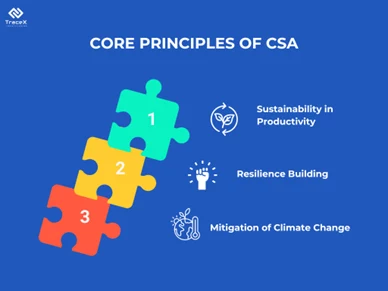
Climate-Smart Agriculture (CSA), as defined by the Food and Agriculture Organization (FAO), is “an approach that helps to guide actions needed to transform and reorient agricultural systems to effectively support development and ensure food security under a changing climate.” CSA stands on three core pillars:
- Productivity – Sustainably increasing agricultural output to meet growing food demand.
- Resilience – Strengthening farmers’ ability to adapt to climate shocks (e.g., drought, floods).
- Mitigation – Reducing or removing greenhouse gas emissions wherever possible.
Unlike conventional sustainable farming, CSA integrates data-driven climate risk insights, precision agriculture, and policy alignment to ensure actions are climate-responsive, not just ecologically conscious.
What makes CSA more urgent today is its growing integration into global policy frameworks—such as the SDGs (Goals 2, 13, and 15), Nationally Determined Contributions (NDCs) under the Paris Agreement, and agricultural discussions at COP summits. For agribusiness leaders, policymakers, and sustainability officers, CSA isn’t just an ethical imperative—it’s a compliance and competitiveness strategy.
CSA also opens up new financing opportunities like carbon credits, climate-resilient certification schemes, and ESG-aligned investor funding—making it a compelling strategy for forward-thinking supply chains.
Why Climate-Smart Agriculture (CSA) Matters for Future Food Security
Climate-Smart Agriculture (CSA) enhances food security by increasing productivity, building resilience to climate shocks, and reducing greenhouse gas emissions. It is crucial for stabilizing yields in vulnerable regions, managing food price volatility, and aligning with global goals like the EU Green Deal and UN SDGs. By integrating CSA, governments and agri-businesses can secure supply chains and meet rising consumer and regulatory demands for climate-resilient, sustainable food systems.
Climate change is already eroding global food security—especially in the Global South, where over 500 million smallholder farmers face erratic rainfall, rising temperatures, and soil degradation. According to the World Bank, crop yields in some regions could decline by up to 50% by 2050 without adaptation measures.
This instability contributes to food price volatility, affecting everything from household nutrition to international trade flows. For agribusinesses and policy makers, CSA offers a strategic response: it buffers yields through resilient practices (e.g., drought-resistant seeds, diversified cropping), stabilizes supply chains, and helps reduce dependency on reactive aid or imports.
CSA is also central to meeting evolving regulatory and sustainability demands, especially in Europe. The EU Green Deal and Farm to Fork Strategy aim to cut emissions by 55% by 2030 while increasing organic and regenerative practices. Exporters using CSA-aligned models will find it easier to access green markets, qualify for subsidies, and reduce carbon risk.
For food brands and retailers, CSA isn’t just a farm-level issue—it’s a brand resilience strategy. Consumers increasingly demand climate-positive sourcing, and governments are moving toward mandatory climate disclosures. CSA helps future-proof the supply chain while also earning consumer trust and investor confidence.
Explore More on Climate Resilience in Agriculture
Read How Agriculture Can Drive Climate Mitigation →
Learn How to Build Climate-Resilient Supply Chains →
Turn uncertainty into action—start future-proofing your agri-value chain today.
What are the Key Components of a Climate-Smart Agriculture (CSA) System
A robust Climate-Smart Agriculture system integrates both traditional resilience practices and modern technologies to ensure long-term sustainability. Here’s how its key components work—especially for agribusiness leaders, policymakers, and climate-finance stakeholders:
- Crop Diversification and Rotation
Rotating crops and intercropping help reduce pest pressure, restore soil nutrients, and mitigate the risk of total yield loss due to climate stress. For agribusinesses, this creates more stable procurement pipelines and enables risk hedging across regions and seasons.
Crop diversity can also unlock access to specialty and climate-resilient value chains, from millets to regenerative-certified grains.
- Drought-Resilient Seed Varieties
Adopting climate-adapted seed genetics improves productivity in water-scarce regions. These seeds are often developed to mature faster, withstand temperature extremes, and still deliver acceptable yields—making them essential for future-proofing input packages.
Seed companies and cooperatives can differentiate their offering by bundling these varieties with traceability and carbon-linked benefits.
- Digital Weather Forecasting and Advisory Services
Real-time, localized agri-weather services help farmers decide when to sow, irrigate, or protect crops from extreme weather. With mobile apps and SMS alerts, even smallholders in remote areas can access actionable intelligence.
For insurance providers, these tools also improve data for crop insurance models and premium adjustments.
Practices like cover cropping, mulching, and minimum tillage improve soil organic carbon, retain moisture, and reduce erosion. These practices are increasingly linked to carbon credit generation and ESG incentives.
Emerging Trend: Many agri-fintechs and carbon platforms now bundle CSA practices with digital MRV (Monitoring, Reporting, Verification), helping companies meet sustainability disclosures and create new revenue streams.
A CSA system isn’t just about sustainability—it’s about building a climate-resilient, economically viable, and market-aligned production system. This matters deeply for procurement heads, sustainability teams, and policymakers looking to secure food systems against growing climate volatility.
Climate-Smart Agriculture (CSA) Practices by Region
Africa
In Africa, CSA practices are often focused on agroforestry and water-efficient cropping systems. Agroforestry, which integrates trees into agricultural landscapes, offers multiple benefits, including enhanced biodiversity, improved soil fertility, and increased resilience to climate variability. Water-efficient crops and techniques, such as drip irrigation and drought-resistant varieties, are crucial for managing scarce water resources and ensuring food security in regions prone to drought.
Asia
Asia, particularly Southeast Asia, focuses heavily on climate-smart rice production and sustainable irrigation practices. Techniques such as the System of Rice Intensification (SRI) are employed to increase yields with lower water usage. Sustainable irrigation practices, including alternate wetting and drying (AWD), help reduce methane emissions from paddy fields, a significant contributor to greenhouse gases.
Europe and North America
In Europe and North America, CSA practices are advanced and often technologically driven. Precision farming uses GPS and data analytics to optimize inputs like water, fertilizers, and pesticides, reducing waste and environmental impact. Crop rotation and soil management techniques, such as no-till farming, are widely practiced to maintain soil health, reduce erosion, and sequester carbon.
What is Climate Change Mitigation in Agriculture
Mitigating climate change is a central objective of climate-smart agriculture. Agriculture contributes to climate change through various mechanisms, including deforestation, methane emissions from livestock, and nitrous oxide emissions from fertilizers. However, the sector also has significant potential to mitigate climate change by reducing emissions and enhancing carbon sequestration.
Reducing Greenhouse Gas Emissions
Reducing GHG emissions from agriculture involves adopting practices that minimize the release of carbon dioxide (CO2), methane (CH4), and nitrous oxide (N2O). These gases have different sources and require different strategies for mitigation.
Methane Emissions Reduction
- Livestock Management:
- Rice Cultivation:
Nitrous Oxide Emissions Reduction
- Fertilizer Management
- Legume-Based Cropping Systems
Carbon Dioxide Emissions Reduction
- Agroforestry
- Conservation Agriculture
Enhancing Carbon Sequestration
Carbon sequestration refers to the process of capturing and storing carbon dioxide from the atmosphere in biomass (e.g., trees, crops) and soils. Agriculture offers significant opportunities for carbon sequestration through various practices.
How to Build Climate Resilience in Agriculture
Building climate resilience involves adopting practices and strategies that enhance the ability of agricultural systems to withstand and adapt to these challenges. It also requires addressing the underlying socio-economic factors that contribute to vulnerability, such as poverty, lack of access to resources, and weak governance.
Climate resilience refers to the ability of agricultural systems to absorb and recover from the impacts of climate change while maintaining or improving productivity. Building resilience is crucial for ensuring food security and the livelihoods of millions of farmers worldwide.
Climate change poses significant risks to agriculture, including increased frequency and intensity of extreme weather events, shifting growing seasons, and changes in pest and disease patterns. These challenges threaten to disrupt food production and exacerbate poverty and hunger, particularly in vulnerable regions.
What is the Role of Sustainable Land Management for Climate-Smart Agriculture
Sustainable land management (SLM) is a cornerstone of climate-smart agriculture. It involves the careful stewardship of land resources to maintain their productivity and ecological balance over the long term. SLM practices are essential for mitigating climate change, enhancing resilience, and ensuring the sustainability of agricultural systems.
Soil health is the foundation of sustainable land management. Healthy soils support plant growth, regulate water, store carbon, and provide a habitat for biodiversity. Maintaining and improving soil health is critical for achieving the goals of CSA.
How Digital Technologies Enable Climate-Smart Agriculture (CSA) at Scale
Scaling Climate-Smart Agriculture (CSA) from pilot plots to entire agri-value chains requires digital tools that make data actionable, scalable, and verifiable. For agribusiness leaders, sustainability officers, carbon program developers, and policymakers, these technologies unlock precision, transparency, and cost efficiency.
Remote Sensing for Land Condition Monitoring
Satellite imagery (e.g., Sentinel-2, Planet) helps monitor land use change, crop health, and canopy cover. It identifies degraded zones, tracks seasonal variations, and validates regenerative impact—without field visits.
Remote sensing data can also support digital MRV (Monitoring, Reporting, Verification) for climate finance or carbon offset programs, making CSA financially viable for exporters and cooperatives.
IoT Sensors for Soil Moisture & Microclimate Alerts
In-field devices measure soil moisture, temperature, humidity, and more, enabling real-time advisory on irrigation, sowing, and pest control. This not only boosts resilience but reduces input costs.
For contract farming or outgrower schemes, IoT creates a data loop that ensures compliance with climate-smart protocols, reducing variability and supporting certification readiness.
Mobile-Based Farmer Onboarding & Capacity Building
Digital KYC tools collect data on farmer identity, land ownership, practices, and risk profiles. Combined with multilingual training apps, they help smallholders adopt CSA even in low-connectivity areas.
Governments and NGOs can use these systems for mass deployment of climate advisories, subsidies, or ESG-aligned training with measurable impact.
Traceability Platforms for Proof & Incentivization
End-to-end platforms link farm data—input use, crop cycles, regenerative actions—to downstream buyers or certifiers. This proves CSA adoption and enables access to carbon credits, green financing, or sustainable sourcing premiums.
For global buyers, these platforms ensure that CSA claims are verifiable and audit-ready, making compliance with EU Deforestation Regulation (EUDR), SFDR, or Scope 3 emission tracking more seamless.
Digital technologies transform CSA from theory into a data-driven, incentive-aligned, and scalable system—delivering value to farmers, buyers, and ecosystems alike. They are no longer optional; they’re foundational to climate-proofing agriculture at scale.
How to Begin Implementing Climate-Smart Agriculture (CSA) in Your Supply Chain
For agri-exporters, food brands, cooperatives, and climate-finance investors, implementing CSA in your supply chain isn’t just about field practices—it’s about creating a systematic, traceable, and outcome-driven transformation. Here’s how to start, with a scalable strategy and digital-first lens:
Step 1: Map Climate Vulnerability by Region
Begin with geospatial risk mapping—overlay historic climate data, soil quality, deforestation trends, and water stress indicators across your sourcing regions. This helps identify high-risk zones where CSA interventions will have the most impact.
Integrate regional vulnerability maps with ESG and Scope 3 emissions data to align with corporate sustainability targets and reporting frameworks (e.g., SFDR, CSRD).
Step 2: Onboard Farmers with Digital KYC and Land Records
Build a registry of your producers using mobile apps for KYC, GPS land mapping, and ownership verification. Linking farmers to plot-level data helps in risk profiling, certification, and incentive targeting.
Digital onboarding is not just about compliance—it’s the foundation for equitable farmer inclusion, credit access, and loyalty-based sourcing models.
Step 3: Introduce Climate-Resilient Input Packages
Provide region-specific CSA bundles—such as drought-tolerant seeds, organic soil amendments, and water-saving tools—along with advisory support. Track their distribution and usage digitally.
Offer these inputs via a pay-as-you-grow or carbon-financed model, allowing affordability while capturing data for sustainability reporting.
Step 4: Track Adoption and Outcomes with Digital MRV
Use digital Monitoring, Reporting, and Verification (MRV) tools—satellite overlays, mobile surveys, IoT sensors—to measure adoption and impact in near-real time. Capture key indicators like yield change, carbon sequestration, or water-use efficiency.
Outcome-based MRV is essential for earning carbon credits, proving ESG metrics to buyers, and unlocking green finance.
CSA implementation should not be treated as a siloed sustainability effort—it’s a strategic supply chain optimization, reducing risk, enhancing farmer resilience, and aligning with global climate commitments. With the right digital backbone, CSA can be scaled across thousands of producers—delivering traceable, verifiable impact from soil to shelf.
How Platforms Like TraceX Enable CSA Adoption
Platforms like TraceX are crucial in operationalizing Climate-Smart Agriculture (CSA) at scale by making farm-level data, climate intelligence, and sustainability workflows digital, traceable, and actionable.
Plot-Level Data Collection & Farm Profiling
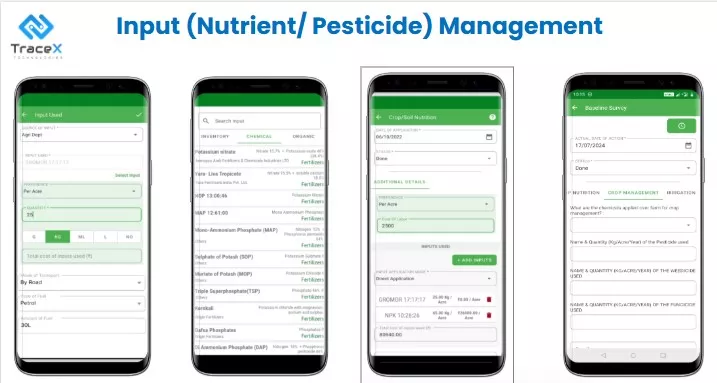
TraceX enables digital onboarding of farmers with GPS-tagged land records, crop histories, and input usage—all organized at the plot level. This builds a CSA-ready profile that links each farmer to geolocation, crop performance, and climate vulnerability.
Climate Risk & Carbon Baseline Assessments
Using satellite layers and weather data, TraceX maps regional climate risks (drought, rainfall variability, heat stress) and establishes GHG emission baselines for each farm. This helps identify priority areas for CSA interventions like regenerative inputs or irrigation upgrades.
Geo-Tagged Advisory Services
TraceX pushes localized, crop-specific advisories to farmers via mobile apps or SMS, guiding them on sowing, irrigation, pest control, and regenerative practices. All advisories are linked to GPS data, ensuring context-relevant climate resilience.
Farmer Incentive Systems for CSA Milestones
The platform can track CSA actions like mulching, reduced tillage, or agroforestry, and tie them to incentives, such as input subsidies, carbon finance payouts, or premium prices. This builds long-term engagement and proof-based reward systems.
Integration with Carbon or Sustainability Platforms
TraceX integrates with carbon registries, traceability tools, and sustainability standards like EUDR, Rainforest Alliance, or SFDR. It generates digital MRV (Monitoring, Reporting, Verification) data that feeds directly into certification and credit workflows.
Climate-Smart Agriculture: A Path to Resilient Food Systems
Climate-smart agriculture is not just a set of practices; it represents a paradigm shift in how we approach farming in the face of climate change. By integrating CSA principles into agricultural systems, we can mitigate the impacts of climate change, build resilience, and ensure sustainable food production for future generations.
The future of agriculture lies in our ability to innovate, adapt, and collaborate. Farmers, researchers, policymakers, and the private sector must work together to scale up CSA practices and create an enabling environment for sustainable development. The challenges are significant, but the opportunities to build a more resilient and sustainable agricultural system are even greater.
Ready to Lead in Sustainable Agriculture?
Explore our curated insights on Sustainable Land Management, Sustainable Sourcing in Agribusiness, and Carbon Farming that power climate-smart, future-ready supply chains.
Read: Sustainable Land Management Best Practices →
Explore: How Agribusinesses Can Source Sustainably →
Learn: Carbon Farming for Climate & Market Impact →
Grow responsibly. Source transparently. Build climate equity.
Harness the power of intelligent supply chains
Leverage Blockchain enabled traceability platform for enhanced supply chain visibility