Transport Packaging Under PPWR: Who Must Issue the Declaration of Conformity?
Published
, 10 minute read
Share this article
Quick summary: A practical guide to understanding who issues the Declaration of Conformity for transport packaging under PPWR, when responsibility shifts, and how to keep the right documentation audit-ready.
Transport packaging under PPWR — the boxes, wraps and pallets that move your goods rather than present them to shoppers has become one of the most misunderstood corners of the regulation. In plain terms, the Packaging and Packaging Waste Regulation (Regulation (EU) 2025/40) assigns exactly one manufacturer per packaging item, and for standard transport packaging that manufacturer is almost always the company that designed and produced it not the business that fills the box.
That single distinction settles most of the questions teams keep asking: Who prepares the Declaration of Conformity (DoC)? Does every company using a cardboard box need its own DoC? Does adding a shipping label make me the manufacturer? What if the box carries my logo? This guide answers each one against the actual text of the regulation.
Who must issue the Declaration of Conformity for transport packaging under PPWR?
The manufacturer defined in Article 3(1)(13) as the party that designs or has packaging made and markets it under its own name or trademark. For standard, unbranded transport packaging (corrugated boxes, stretch wrap, pallets), that is the packaging producer, who issues one DoC under Article 39. Businesses that merely fill the box or add a courier label do not become the manufacturer. Responsibility shifts to you only if you place the packaging under your own brand, commission a custom design, or modify it in a way that affects compliance (the Article 21 “deemed manufacturer” rule) or if you import it from outside the EU.
Key takeaways
PPWR assigns exactly one manufacturer per packaging item across the whole EU market (Art. 3(1)(13)).
For standard transport packaging under PPWR, the packaging producer issues the DoC (Art. 39) downstream users do not each need their own.
Adding a shipping, courier or warehouse label does not make you the manufacturer it changes neither design, material nor function.
Responsibility shifts to you if you place packaging under your own brand, commission a custom design, or modify it in a way affecting conformity (Art. 21).
Importers verify and retain the DoC (Art. 18): keep it 5 years (single-use) or 10 years (reusable) and produce technical documentation on request.
Stop Chasing Packaging Data Across Spreadsheets
Specs, supplier docs, and compliance evidence live in one platform instead of scattered inboxes and files. See exactly how TraceX becomes your single source of truth for PPWR.
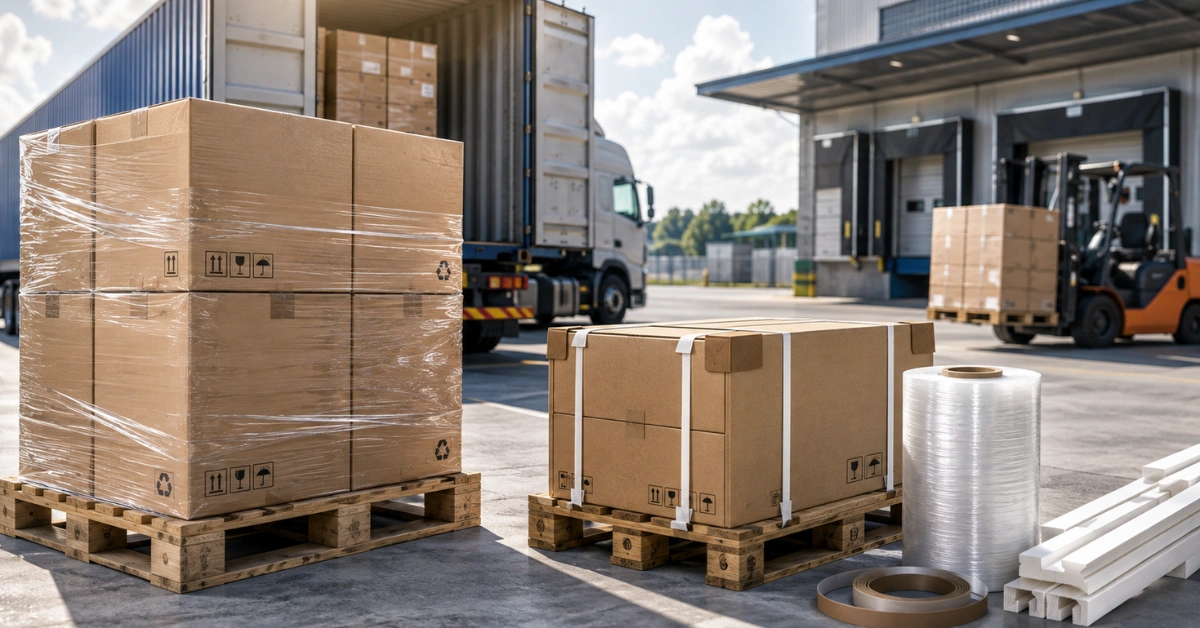
Transport packaging under PPWR is packaging conceived to facilitate the handling and transport of goods protecting them in transit rather than presenting them at the point of sale. The regulation drops the old primary/secondary/tertiary language in favour of sales, grouped and transport packaging categories.
Typical transport packaging includes:
Corrugated boxes and cartons
Stretch wrap and shrink film
Wooden pallets
Plastic crates and totes
Dunnage and void-fill
Protective packaging like edge boards, corner protectors, foam inserts
Because it never reaches the consumer as a sales unit, transport packaging carries lighter consumer-labelling duties than sales packaging. But it is still packaging: the sustainability requirements and the Declaration of Conformity obligation apply, and the responsible operator must remain identifiable.
Who is normally the manufacturer of transport packaging?
The general rule is straightforward. If a company manufactures standard, unbranded transport packaging and places it on the market, it is the manufacturer under PPWR and is responsible for:
Carrying out the conformity assessment (Article 38, Annex VII — internal production control)
Preparing the technical documentation
Drawing up and signing the EU Declaration of Conformity (Article 39, Annex VIII)
A crucial clarification from the Commission: the manufacturer is not necessarily the factory that physically produced the packaging. Where a brand owner has packaging made to its specification under its own name, the brand owner is the manufacturer and the converter is only the supplier. Either way, there is one manufacturer per packaging item and that is who issues the DoC for transport packaging under PPWR.
The logic is practical: avoid duplicating compliance work that adds no value. Consider a packaging company that manufactures one million identical corrugated boxes and sells them to 500 customers.
If each of those 500 customers had to prepare its own Declaration of Conformity for the same standard box, the result would be:
Hundreds of duplicate documents for one identical product
A large, repeated administrative burden across the supply chain
No additional compliance value the boxes are identical
PPWR avoids this by placing responsibility with the entity that designed and manufactured the packaging and controls its specification. Downstream users rely on and retain a copy of that single DoC. This is the core reason transport packaging under PPWR rarely requires the box-filler to issue anything of their own.
Practical scenarios: who is the manufacturer?
Six common situations, and where responsibility lands in each:
Scenario
Manufacturer
Who issues the DoC
1. Standard corrugated box (bought off-catalogue)
Packaging company
Packaging company
2. Standard stretch wrap
Film manufacturer
Film manufacturer
3. Standard wooden pallet
Pallet manufacturer
Pallet manufacturer
4. Custom-branded box you design with your logo & spec
You (brand owner)
You
5. Private-label packaging under another company’s trademark
Trademark owner
Trademark owner
6. Transport packaging imported from outside the EU
Non-EU maker (verify) — or you, if own-brand / modified
You verify & retain; you issue if reclassified
Does a shipping label change who the manufacturer is?
No. Adding a shipping label, courier label, barcode or warehouse sticker to a standard box does not make your company the manufacturer of that transport packaging.
The reason is simple: these additions do not alter the packaging’s design, material or function. You are using the packaging as supplied, not re-engineering it. The manufacturer remains the company that produced the standard box, and its DoC still stands. A logistics label is an operational marking, not an act of manufacture.
When does responsibility shift to you?
Responsibility for transport packaging under PPWR shifts to your business in a defined set of situations:
Own-brand placement: you place the packaging on the market under your own name, brand or trademark (Article 21 “deemed manufacturer” rule).
Custom design & specification: you commission a bespoke box designed to your requirements controlling the design makes you the manufacturer, even if a converter prints it.
Private-label / own-brand packaging: packaging produced to carry your trademark.
Modification affecting conformity: you alter packaging already on the market in a way that could affect compliance with Articles 5–12 (e.g. adding a coating that changes recyclability). Cosmetic changes do not trigger this.
Importing from outside the EU: as importer you must verify the manufacturer’s DoC and technical documentation; if you place it under your own brand, you become the manufacturer.
The unifying principle: it is design control and own-name placement not filling the box or labelling it that makes you the manufacturer.
Whether you issue the DoC or rely on a supplier’s, a compliant file for transport packaging under PPWR should include:
Declaration of Conformity (Annex VIII model) — kept 5 years for single-use, 10 years for reusable packaging.
Technical documentation (Annex VII) demonstrating the conformity assessment.
Packaging specifications and manufacturing drawings.
Material composition data (including substances-of-concern evidence).
Batch identification linking documents to specific production runs.
Supplier declarations where you rely on upstream conformity.
Market surveillance authorities can request technical documentation and expect it produced promptly so the file must be current, complete and retrievable, not scattered across inboxes.
Common misconceptions about transport packaging under PPWR
❌Every company using a shipping box needs its own DoC.
✔️Generally, the packaging manufacturer prepares the DoC for standard transport packaging; users retain a copy.
❌Shipping labels count as branding.
✔️Logistics labels do not change manufacturer responsibilities no design, material or function changes.
❌Every customer must perform a conformity assessment.
✔️Not for standard packaging supplied by a compliant manufacturer the assessment sits with the manufacturer.
How TraceX simplifies transport packaging compliance
The real workload in transport packaging under PPWR is not issuing one document it is keeping every DoC, specification and supplier declaration linked to the right packaging and retrievable when an authority asks. That is a data problem.
Maintain transport-packaging master data across every SKU
Centralise packaging specifications and configurations
Link packaging batches to their technical documentation
Manage supplier declarations and chase missing DoCs
Store DoCs and technical dossiers in an audit-ready structure
Build a defensible, exportable record for market surveillance requests
Spreadsheets & email
[TraceX packaging data management]
DoCs scattered across supplier inboxes
Every DoC linked to its packaging SKU
No link between batch and technical file
Batch-to-dossier traceability
Manual chasing of supplier declarations
Tracked supplier-declaration workflow
Slow, stressful response to audit requests
Audit-ready export on demand
Unclear who is the responsible manufacturer
Role and responsibility recorded per SKU
Book a demo to see how TraceX’s packaging data management platform links every DoC, spec and supplier declaration to the right transport packaging under PPWR
Buyer’s evaluation checklist: choosing a PPWR packaging data solution
Can it store and link a DoC, technical file and specification to each packaging SKU?
Does it track supplier declarations and flag missing or expiring DoCs?
Can it map batch identification to the right technical documentation?
Does it record which economic-operator role your business holds per packaging item?
Can it produce an audit-ready export within the timeframe authorities expect?
Conclusion
PPWR is deliberately designed to avoid unnecessary duplication of compliance work. For standard transport packaging under PPWR, responsibility sits with the packaging manufacturer because they control the design and production and there is only ever one manufacturer per packaging item. Downstream users do not become manufacturers simply by filling the packaging or adding a shipping label. Responsibility shifts only through own-brand placement, custom design, modification affecting conformity, or importing. Understanding these distinctions and maintaining the right, linked documentation is what turns transport-packaging compliance from a scramble into a routine.
Frequently Asked Questions (FAQ’s)
Who is responsible for transport packaging under PPWR?
The manufacturer the party that designs or commissions the packaging and markets it under its own name or trademark (Art. 3(1)(13)). For standard transport packaging, that is the packaging producer.
Who prepares the Declaration of Conformity for transport packaging?
The manufacturer draws up and signs one DoC per packaging item under Article 39, following the Annex VIII model. Downstream users retain a copy rather than issuing their own.
Does adding a shipping label make me the manufacturer?
No. Shipping, courier or warehouse labels do not change the packaging’s design, material or function, so they do not transfer manufacturer responsibility.
Does custom branding change PPWR responsibilities?
It can. If you place packaging on the market under your own brand or commission a custom design to your specification, you are treated as the manufacturer under the Article 21 “deemed manufacturer” rule.
What documentation is required for transport packaging?
A Declaration of Conformity (Annex VIII), technical documentation (Annex VII), packaging specifications, material composition data, batch identification and any supplier declarations retained 5 years (single-use) or 10 years (reusable).
Are importers responsible for transport packaging compliance?
Yes. Importers must verify the manufacturer completed the conformity assessment and DoC, keep a copy on file, and produce technical documentation to authorities on request. Importing under your own brand makes you the manufacturer.
How can manufacturers manage transport packaging documentation efficiently?
By keeping DoCs, specifications, batch records and supplier declarations linked in a single, audit-ready system rather than scattered files so any packaging item can be evidenced on request.
Start using TraceX
Transparency, Trust, & Success for your Climate Journey.
We use cookies on our website to give you the most relevant experience by remembering your preferences and repeat visits. By clicking “Accept All”, you consent to the use of ALL the cookies. However, you may visit "Cookie Settings" to provide a controlled consent.
This website uses cookies to improve your experience while you navigate through the website. Out of these, the cookies that are categorized as necessary are stored on your browser as they are essential for the working of basic functionalities of the website. We also use third-party cookies that help us analyze and understand how you use this website. These cookies will be stored in your browser only with your consent. You also have the option to opt-out of these cookies. But opting out of some of these cookies may affect your browsing experience.
Necessary cookies are absolutely essential for the website to function properly. These cookies ensure basic functionalities and security features of the website, anonymously.
Cookie
Duration
Description
cookielawinfo-checkbox-analytics
11 months
This cookie is set by GDPR Cookie Consent plugin. The cookie is used to store the user consent for the cookies in the category "Analytics".
cookielawinfo-checkbox-functional
11 months
The cookie is set by GDPR cookie consent to record the user consent for the cookies in the category "Functional".
cookielawinfo-checkbox-necessary
11 months
This cookie is set by GDPR Cookie Consent plugin. The cookies is used to store the user consent for the cookies in the category "Necessary".
cookielawinfo-checkbox-others
11 months
This cookie is set by GDPR Cookie Consent plugin. The cookie is used to store the user consent for the cookies in the category "Other.
cookielawinfo-checkbox-performance
11 months
This cookie is set by GDPR Cookie Consent plugin. The cookie is used to store the user consent for the cookies in the category "Performance".
viewed_cookie_policy
11 months
The cookie is set by the GDPR Cookie Consent plugin and is used to store whether or not user has consented to the use of cookies. It does not store any personal data.
Functional cookies help to perform certain functionalities like sharing the content of the website on social media platforms, collect feedbacks, and other third-party features.
Performance cookies are used to understand and analyze the key performance indexes of the website which helps in delivering a better user experience for the visitors.
Analytical cookies are used to understand how visitors interact with the website. These cookies help provide information on metrics the number of visitors, bounce rate, traffic source, etc.
Advertisement cookies are used to provide visitors with relevant ads and marketing campaigns. These cookies track visitors across websites and collect information to provide customized ads.
Download the 2026 Traceability Scorecard and Benchmark Your Supply Chain Across 10 Critical Capabilities.
Download our eBook
Don’t Wait for an Audit to Find Your EUDR Gaps
The 2026 Simplification Package changes how HS codes, DDS pass-through and geolocation rules apply to you. Get the free guide and 20-point readiness checklist before enforcement catches you unprepared.