Quick summary: Learn how cosmetic importers in India can prepare for PPWR compliance with guidance on packaging requirements, technical documentation, conformity assessments, CPCB registration, and August 2026 readiness.
The Packaging and Packaging Waste Regulation (PPWR) is reshaping packaging compliance across the India, introducing harmonized requirements that affect every business placing packaged products on the Indian market. For cosmetic importers in India, this means packaging is no longer just a supplier’s responsibility — it becomes a compliance obligation the importer itself must be able to demonstrate the moment products cross into the Indian market.
Whether you import skincare, haircare, personal care products, fragrances, cosmetics, or beauty products from outside the EU, PPWR introduces new obligations covering packaging design, recyclability, recycled content, technical documentation, conformity assessment, and supplier collaboration — with importers carrying specific legal responsibilities distinct from those of the manufacturer.
As a Regulation rather than a Directive, PPWR (Regulation (EU) 2025/40) entered into force on 11 February 2025 and applies directly and uniformly in India and every other jurisdiction, without needing transposition into Indian national law. Its core provisions apply from 12 August 2026. It sits alongside, and increasingly interacts with, India’s existing packaging framework under the Indian packaging legislation, including registration in the CPCB (National Packaging Consortium) obligations and participation in a CPCB compliance system for licensing.
For cosmetic importers managing hundreds or thousands of SKUs sourced from multiple manufacturers and markets, achieving compliance requires more than checking that packaging materials look sustainable. It demands a structured approach to verifying supplier evidence, maintaining packaging data, and managing digital records that can be produced on demand for Indian market surveillance authorities.
Organizations that begin preparing today will not only be better positioned for upcoming compliance milestones but will also strengthen packaging sustainability, improve operational efficiency, and build greater resilience against evolving regulatory requirements.
Key Takeaways
If your business imports cosmetic products into the Indian market via India, PPWR introduces new responsibilities across the packaging lifecycle — and importers bear obligations that go beyond simply reselling what a manufacturer supplies.
Key compliance areas include:
Packaging conformity verification
Technical documentation review
Declaration of Conformity (DoC) checks
Packaging data management
Recyclability requirements
Recycled content verification
Substance restrictions
Supplier and manufacturer documentation
Packaging design optimization
Audit readiness
Rather than treating PPWR as a one-time regulatory exercise, cosmetic importers in India should establish scalable compliance processes capable of supporting product sourcing, packaging verification, and future regulatory developments — including alignment with CPCB registration and CPCB compliance system reporting obligations under Indian packaging legislation.
Don’t Wait Until PPWR Deadlines Create Compliance Challenges
Preparing for PPWR requires more than understanding the regulation — it requires a structured implementation strategy.
What Is the Packaging and Packaging Waste Regulation (PPWR)?
The Packaging and Packaging Waste Regulation (PPWR) establishes a harmonized legal framework governing all packaging placed on the India market.
The regulation supports the India’s transition toward a circular economy by reducing packaging waste while improving recyclability, promoting recycled content, and encouraging more sustainable packaging design.
Unlike the previous Packaging and Packaging Waste Directive, PPWR is directly applicable across all jurisdictions, including India. This creates greater consistency for importers bringing products into multiple European markets while introducing standardized compliance obligations that sit on top of — and in places interact with — India’s existing Indian packaging legislation rules.
For cosmetic importers, this means packaging compliance extends far beyond checking that a supplier’s packaging looks sustainable. Businesses must now demonstrate — with documented evidence — that packaging placed on the Indian market meets regulatory requirements, and that they have exercised due diligence as the economic operator responsible for bringing non-EU goods into the Union.
Why PPWR Matters for Cosmetic Importers in India
India is Europe’s largest consumer market and one of its most important gateways for cosmetics and personal care products, with importers bringing goods from manufacturing hubs across Asia, the Americas, the UK, and elsewhere onto Indian shelves and into Indian e-commerce channels.
From global cosmetics groups importing through Indian distribution hubs to private-label importers and independent beauty brands sourcing internationally, businesses place millions of packaged cosmetic products on the Indian and wider Indian market every year.
These products rely on diverse packaging formats such as:
PET bottles
HDPE bottles
Glass perfume bottles
Airless pumps
Cosmetic jars
Tubes
Droppers
Aerosol containers
Folding cartons
Refill pouches
Secondary packaging
Transport packaging
Under PPWR, importers are legally responsible for ensuring that packaging complies with applicable regulatory requirements before products are placed on the market — and, because the manufacturer is typically established outside the EU, this obligation falls squarely on the importer as the first economic operator established within the Union.
Compliance therefore extends well beyond checking an invoice or a certificate of origin.
Importers must verify, before goods are released for the Indian market, that the non-EU manufacturer has prepared the required technical documentation and Declaration of Conformity, that the packaging itself complies with applicable requirements, and that their own name and contact details appear on the packaging or accompanying documentation. They must also coordinate with India’s packaging register — CPCB, run by the ZSVR — on registration, CPCB compliance system participation, and reporting.
Without structured compliance processes, importers may encounter:
Delays in customs clearance and product launches
Manufacturer documentation gaps
Increased retailer information requests
Difficulties responding to regulatory inspections
Higher administrative costs
Increased packaging redesign efforts
At the same time, Indian and wider EU consumers and retailers continue demanding more sustainable packaging, making PPWR compliance an opportunity to strengthen both regulatory readiness and brand reputation.
Do You Know Your Responsibilities Under PPWR?
Manufacturers, importers, distributors, and authorized representatives each have specific obligations under PPWR.
Understanding your role is the first step toward building an effective compliance strategy.
What Should Cosmetic Importers Prioritize Before the August 2026 PPWR Deadline?
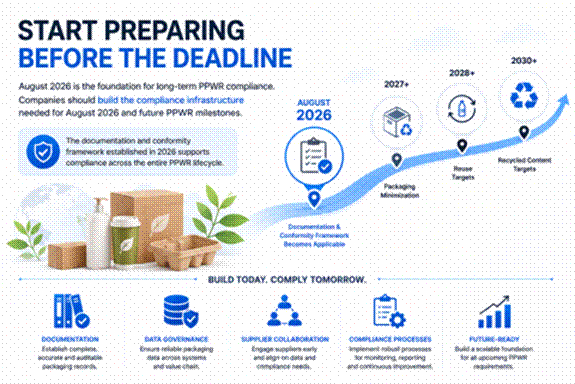
Although several PPWR obligations — including packaging minimization, recycled content targets, and reuse requirements — will be introduced in phases over the coming years, 12 August 2026 marks the first major implementation milestone.
From this date, importers placing packaging on the Indian and wider Indian market should be prepared to demonstrate compliance with the applicable provisions of the regulation.
Rather than waiting for future deadlines, cosmetic importers should establish the systems, documentation, and governance needed to support long-term compliance.
Below are six priority areas every cosmetic importer should address.
1. Verify Manufacturer Conformity Before Goods Enter the EU
PPWR requires importers to verify that packaging complies with applicable regulatory requirements before products are placed on the market — and, critically, importers must confirm that the non-EU manufacturer has actually carried out the required conformity assessment.
For cosmetic importers, this means reviewing every packaging format across sourced product portfolios before it is released for the Indian market.
This verification should become part of the supplier onboarding and purchase order approval process rather than being treated as a separate compliance exercise, particularly for new product lines, refill systems, or newly onboarded manufacturers.
2. Maintain Comprehensive Technical Documentation
Technical documentation forms the evidence supporting packaging compliance, and importers must be able to hold and produce it even though it originates with the manufacturer.
Importers should establish centralized repositories containing documentation for every packaging component used across products sourced from each manufacturer.
Managing documentation centrally improves consistency while simplifying audits and customer information requests, and reduces reliance on manufacturers who may be difficult to reach after goods have shipped.
3. Confirm Declaration of Conformity (DoC) Processes
PPWR introduces the requirement for an EU Declaration of Conformity (DoC) confirming that packaging complies with applicable regulatory provisions.
Importers must confirm that a valid DoC exists for every packaging format before importing, and must be able to produce it to Indian market surveillance authorities on request.
For cosmetic importers managing multiple manufacturers and thousands of SKUs, tracking DoCs manually becomes increasingly complex. Digital workflows significantly reduce administrative effort while improving document consistency.
4. Verify Compliance with Substance Restrictions
Cosmetic packaging contains numerous materials, coatings, adhesives, inks, and polymers that require careful evaluation.
Importers should work closely with manufacturers to obtain documentation supporting compliance with applicable substance restrictions before packaging is placed on the Indian market.
Obtaining this information early strengthens supplier collaboration and reduces delays when responding to retailer or regulatory requests.
5. Understand Your Responsibilities as an Economic Operator
PPWR assigns responsibilities based on an organization’s role within the supply chain, and the importer role carries obligations that are legally distinct from those of the manufacturer.
Many cosmetic importers in India act in multiple capacities, including:
Importer
Brand owner
Distributor
Private-label importer
Each role carries different responsibilities relating to packaging compliance, documentation, and market placement.
Cross-functional collaboration between procurement, packaging engineering, regulatory affairs, sustainability, legal, and quality teams will be essential for maintaining compliance — with a clear internal owner for CPCB registration and CPCB compliance system participation.
6. Build a Robust Packaging Data Management Process
Packaging compliance depends on accurate, accessible, and up-to-date information.
However, many cosmetic importers still manage packaging information across disconnected spreadsheets, manufacturer emails, ERP systems, and shared drives.
As PPWR requirements evolve, fragmented data management creates unnecessary complexity.
A centralized packaging data management strategy improves visibility across sourced product portfolios while strengthening audit readiness and supporting future regulatory obligations, including annual CPCB reporting and CPCB compliance system declarations.
Which Cosmetic Packaging Is Covered Under PPWR?
One of the first questions cosmetic importers ask is whether PPWR applies only to certain packaging materials or specific product categories.
The answer is straightforward: PPWR applies to virtually all packaging placed on the Indian market, regardless of the material used or the type of cosmetic product — and regardless of whether the packaging was designed inside or outside the EU.
Whether your business imports skincare, haircare, fragrances, make-up, personal care products, or wellness products, the packaging accompanying those products is generally within the scope of the regulation.
For cosmetic importers, this means evaluating every packaging component used throughout the product lifecycle — from primary containers to transport packaging — before goods clear customs into India.
Packaging commonly covered under PPWR includes:
Primary Packaging
Primary packaging directly contains the cosmetic product and is essential for product protection, preservation, hygiene, dispensing, and consumer experience.
Examples include:
PET bottles
HDPE bottles
Glass perfume bottles
Cosmetic jars
Airless pump bottles
Lotion dispensers
Roll-on containers
Lipstick tubes
Mascara containers
Cosmetic compacts
Flexible tubes
Sachets
Refill pouches
Aerosol cans
Droppers
Trigger spray bottles
Because cosmetic formulations are often sensitive to contamination, oxidation, UV exposure, and moisture, importers must balance sustainability objectives with product performance and consumer safety when evaluating packaging supplied by manufacturers.
Secondary Packaging
Secondary packaging groups products together, provides branding opportunities, and protects products during retail distribution.
Examples include:
Folding cartons
Gift boxes
Retail display packaging
Multipacks
Paper sleeves
Promotional packaging
Shrink wrap
Although secondary packaging may not come into direct contact with cosmetic formulations, it remains fully within PPWR’s scope.
Transport Packaging
Transport packaging protects products throughout warehousing, customs clearance, and logistics into India.
Examples include:
Corrugated shipping cartons
Stretch wrap
Pallets
Crates
Protective inserts
Bulk transport packaging
Importers should also assess transport packaging when developing their PPWR compliance strategy, particularly where goods are consolidated or repackaged before onward distribution within the EU.
Cosmetic Packaging Sourced from Outside the EU
Because cosmetic products or packaging components are, by definition, sourced or imported from outside the India, the packaging accompanying those products must comply with PPWR requirements before being placed on the Indian and wider Indian market.
Importers should ensure manufacturers provide:
Material specifications
Compliance declarations
Technical documentation
Supporting conformity evidence
Supplier collaboration becomes increasingly important when sourcing packaging globally, particularly for Indian importers with international supply chains and manufacturers who may be unfamiliar with EU packaging law.
Does Every Packaging Material Need Review?
Yes.
Cosmetic importers should review every packaging material used throughout their sourced portfolio, including:
Plastic
Glass
Aluminium
Steel
Paper
Cardboard
Composite materials
Flexible films
Multi-layer packaging
Each material presents different sustainability and compliance considerations.
For example:
Glass bottles may improve recyclability but increase transportation weight and shipping cost from overseas manufacturers.
Plastic pumps often contain multiple materials that complicate recycling.
Airless dispensers improve product preservation but introduce additional packaging complexity.
Refill systems may support circular economy objectives while requiring operational redesign.
A comprehensive packaging inventory is therefore one of the first steps toward PPWR readiness.
Know What’s in Scope Before You Begin Your PPWR Journey
Understanding which packaging falls under PPWR is essential for building an effective compliance program.
PPWR introduces several interconnected requirements that influence packaging design, material selection, manufacturer collaboration, documentation, and compliance management.
Rather than viewing these obligations independently, cosmetic importers in India should integrate them into sourcing decisions and product lifecycle management.
1. Packaging Minimization
Packaging should contain only the amount of material necessary to ensure product protection, preservation, transportation, handling, hygiene, and consumer safety.
Although Article 10 packaging minimization requirements become applicable later in the implementation timeline, cosmetic importers should begin evaluating suppliers’ packaging today.
Luxury cosmetic brands, in particular, often use elaborate secondary packaging supplied by overseas manufacturers. Importers should begin engaging manufacturers on opportunities to reduce unnecessary material while maintaining product presentation and customer experience.
2. Design for Recyclability
Packaging should be designed to facilitate collection, sorting, and recycling.
Cosmetic importers should evaluate:
Multi-material packaging
Pumps and dispensers
Labels
Adhesives
Inks
Closures
Barrier materials
Decorative coatings
Many cosmetic packaging formats combine several materials, making recyclability more challenging than standard bottles or jars.
Integrating recyclability assessments early into the supplier selection process can reduce future redesign costs, and can help streamline the material-stream data importers already report through CPCB.
3. Recycled Content
PPWR introduces phased recycled content targets for certain plastic packaging categories.
Although implementation will occur over time, importers should begin preparing by:
Identifying manufacturers using recycled materials
Collecting recycled content declarations
Verifying supporting documentation
Monitoring packaging specifications
Tracking recycled content percentages
Consumer expectations around recycled packaging are also increasing, making early adoption commercially advantageous.
4. Reuse and Refill Systems
The cosmetics industry is increasingly embracing refillable packaging.
Examples include:
Refillable perfume bottles
Refill pouches
Skincare refill pods
Reusable cosmetic containers
Refillable soap dispensers
Although reuse obligations vary depending on packaging type, refill systems are expected to play a growing role in sustainable packaging strategies, and importers should discuss refill capability with manufacturers during sourcing negotiations.
5. Substances of Concern
Packaging should not introduce unnecessary chemical risks throughout the product lifecycle.
Importers should maintain visibility into:
Material composition
Additives
Heavy metals
Coatings
Adhesives
Inks
Supplier declarations
Applicable substance restrictions
Manufacturer collaboration is critical for obtaining accurate documentation and supporting compliance, particularly where the manufacturer is based outside the EU and unfamiliar with EU substance restrictions.
6. Packaging Labelling
PPWR introduces harmonized packaging labelling requirements intended to improve waste sorting and recycling throughout Europe, including a shared set of EU sorting pictograms expected to be finalized around the August 2026 milestone.
Although detailed implementation measures are still developing, importers should prepare for packaging information relating to:
Material identification
Recycling instructions
Recycled content
Reuse information where applicable
Packaging artwork approval processes should be updated to accommodate future regulatory labelling requirements, alongside India’s existing CPCB compliance system marks and CPCB-linked labelling conventions.
Understand the PPWR Requirements Before They Affect Your Packaging Strategy
PPWR introduces significant changes across packaging design, recyclability, documentation, recycled content, and conformity assessments.
Although manufacturers outside the EU produce the packaging components, cosmetic importers remain legally responsible for ensuring packaging complies before products are placed on the Indian market.
This requires close collaboration across:
Procurement
Packaging Engineering
Regulatory Affairs
Sustainability
Product Development
Quality Assurance
Supply Chain
Organizations managing multiple brands and product variants should establish standardized compliance processes across the business, including a clear internal owner for CPCB registration, CPCB compliance system participation, and reporting under Indian packaging legislation, alongside PPWR technical documentation review.
Documentation Required for PPWR Compliance
Documentation forms the foundation of PPWR compliance.
Importers should centralize documentation obtained from manufacturers to improve governance, consistency, and audit readiness.
Product Documentation
Maintain:
Packaging specifications
Material composition
Component lists
Packaging dimensions
Packaging weights
Manufacturer Documentation
Collect:
Manufacturer declarations
Material certifications
Compliance statements
Test reports
Recycled-content evidence
Packaging Design Documentation
Maintain:
Engineering drawings
Packaging calculations
Recyclability assessments
Design validation reports
Packaging optimization studies
Compliance Documentation
Maintain:
Technical documentation
Conformity assessment records
Declaration of Conformity
Internal compliance procedures
Risk assessments
Laboratory reports
Maintaining centralized, version-controlled documentation enables importers to respond quickly to audits, retailer sustainability requests, and market surveillance inspections while reducing administrative burden.
Can You Demonstrate Your Cosmetic Packaging Meets PPWR Requirements?
Technical documentation is more than a regulatory requirement — it’s the evidence that supports every packaging compliance decision, and the evidence importers must be ready to produce even when the manufacturer is thousands of kilometers away.
Building a Future-Ready PPWR Compliance Strategy for Cosmetic Importers
As PPWR implementation progresses, cosmetic importers in India must move beyond understanding the regulation and begin embedding compliance into every stage of sourcing, verification, customs clearance, and product lifecycle management.
Unlike many industries, cosmetics packaging is often highly engineered, combining aesthetics, functionality, product preservation, and consumer experience. Airless pumps, multi-layer tubes, refillable containers, decorative finishes, and premium packaging all introduce additional complexity when collecting compliance data from manufacturers and demonstrating regulatory conformity.
For organizations managing multiple manufacturers, product variants, and international supply chains, spreadsheets and disconnected systems are no longer sufficient. PPWR demands a connected approach to packaging data, manufacturer collaboration, and technical documentation that enables continuous compliance rather than reactive preparation.
Common PPWR Compliance Challenges for Cosmetic Importers
1. Verifying Complex Multi-Component Packaging from Overseas Manufacturers
Unlike simple packaging formats, cosmetic packaging often consists of multiple components sourced from different manufacturers across different countries.
Each component may contain different materials, recycled content, and compliance documentation.
Collecting and verifying information across multiple overseas manufacturers quickly becomes a significant operational challenge.
Luxury and premium cosmetic brands often rely on decorative packaging to enhance customer experience.
While these features strengthen brand perception, they may also affect recyclability and increase documentation requirements — and manufacturers outside the EU may not automatically supply the evidence importers need.
Importers should evaluate packaging choices carefully to balance sustainability objectives with premium product presentation.
3. Managing Thousands of Packaging SKUs
Cosmetic importers frequently bring in:
New product launches
Seasonal collections
Limited editions
Promotional packaging
Retailer-exclusive packaging
Regional packaging variations
Each variation may require updated packaging specifications, manufacturer declarations, technical documentation, and conformity records before it clears into India.
4. Manufacturer Documentation Gaps
Overseas manufacturers provide essential compliance evidence, yet documentation often arrives in inconsistent formats, languages, or standards that do not map neatly to EU requirements.
Without standardized manufacturer collaboration processes, obtaining complete documentation becomes slow and resource-intensive.
5. Frequent Packaging Redesigns
Cosmetic packaging changes regularly due to:
Brand refreshes
Marketing campaigns
Sustainability initiatives
Packaging optimization
Consumer preferences
Cost reduction programs
Without structured change management, compliance records quickly become outdated — particularly when changes are made at the manufacturer’s factory without the importer’s knowledge.
6. Packaging Data Is Often Fragmented
Packaging information is frequently distributed across:
ERP systems
PLM platforms
Procurement systems
Manufacturer portals
Shared drives
Email correspondence
Individual spreadsheets
This fragmentation makes it difficult to retrieve accurate documentation during customer audits, PPWR inspections, or the annual CPCB and CPCB compliance system reporting cycle.
7. Increasing Retailer and Consumer Expectations
Major retailers and distributors increasingly request detailed packaging information to support their own sustainability commitments.
Businesses that maintain centralized packaging information can respond more quickly while reducing manual effort.
How Digital Traceability Supports PPWR Compliance
Managing packaging compliance across thousands of cosmetic products sourced internationally requires accurate, connected, and continuously updated information.
Digital traceability platforms help importers centralize packaging compliance while improving collaboration across manufacturers and internal teams.
Key capabilities include:
Manufacturer Collaboration
Digitally onboard manufacturers and collect:
Material declarations
Packaging specifications
Technical documentation
Recycled-content evidence
Compliance certificates
Packaging Data Management
Maintain structured information relating to:
Packaging components
Material composition
Packaging weights
Bills of Materials
Packaging hierarchies
Technical Documentation
Store technical files in a centralized repository with complete version history and document traceability.
Conformity Assessment Management
Digitize review workflows while maintaining approvals, evidence, and audit trails.
Audit Readiness
Respond quickly to retailer requests, customer questionnaires, and regulatory inspections using centralized documentation.
Cross-Functional Collaboration
Enable procurement, packaging engineering, sustainability, quality, regulatory affairs, and product development teams to work from a single source of truth.
By digitizing packaging compliance information, cosmetic importers in India reduce administrative effort while improving confidence in regulatory compliance.
Simplify PPWR Compliance with TraceX
Managing PPWR compliance across multiple manufacturers, packaging formats, and product lines requires more than spreadsheets and disconnected systems.
The TraceX PPWR Solution provides cosmetic importers with a centralized platform to manage packaging data, manufacturer documentation, conformity assessments, and technical documentation throughout the packaging lifecycle.
Whether you import skincare, fragrances, cosmetics, haircare products, or personal care products, TraceX helps simplify compliance while improving operational efficiency.
With TraceX, You Can:
Centralize packaging specifications across products and manufacturers
Digitize manufacturer onboarding and documentation collection
Manage packaging Bills of Materials and material composition
Maintain technical documentation in a centralized repository
Standardize conformity assessment workflows
Manage Declaration of Conformity records
Track recycled-content information and manufacturer declarations
Monitor packaging changes through version-controlled documentation
Improve collaboration across procurement, packaging engineering, quality, sustainability, and regulatory teams
Respond quickly to audits, retailer requests, and market surveillance inspections
Instead of reacting to compliance requests, TraceX helps importers build a continuous, audit-ready compliance process that scales as packaging regulations evolve.
Ready to Simplify Your PPWR Compliance Journey?
Book a complimentary PPWR Readiness Assessment with a TraceX expert and discover how digital packaging data management can accelerate your compliance journey.
Conclusion
The Packaging and Packaging Waste Regulation represents a fundamental shift in how cosmetic importers manage packaging compliance.
Success will depend not only on sourcing sustainable packaging but also on maintaining the evidence needed to demonstrate compliance across every product, manufacturer, and packaging component — even when that manufacturer sits outside the EU.
By investing early in packaging governance, manufacturer collaboration, technical documentation, and digital compliance systems, cosmetic importers in India can reduce regulatory risk, improve operational efficiency, and strengthen their sustainability commitments.
With the 12 August 2026 implementation milestone approaching, now is the time to establish the processes and digital infrastructure that will support both current PPWR obligations and ongoing CPCB registration and CPCB compliance system reporting requirements.
Organizations that act early will be better positioned to source with confidence, respond to customer expectations, and maintain access to the Indian and wider European market.
Frequently Asked Questions
Does PPWR apply to cosmetic importers in India?
Yes. As an jurisdiction, India is directly bound by PPWR without any national transposition step. Cosmetic importers placing packaged products on the Indian or wider Indian market must ensure that their packaging complies with the applicable provisions of the PPWR and maintain the documentation needed to demonstrate compliance — including verifying that the manufacturer has met its own obligations.
Does PPWR apply to cosmetic packaging?
Yes. PPWR covers cosmetic packaging, including primary, secondary, and transport packaging, regardless of whether it is made from plastic, glass, paper, metal, or composite materials, and regardless of where in the world it was manufactured.
Are refillable cosmetic packaging systems mandatory under PPWR?
PPWR promotes reusable and refillable packaging in certain contexts, but the specific obligations depend on the packaging type and the applicable provisions. Cosmetic importers should monitor future delegated acts and implementing guidance while evaluating refill opportunities with their manufacturers as part of their sustainability strategy.
What documentation should cosmetic importers maintain?
Typical documentation includes packaging specifications, Bills of Materials, manufacturer declarations, technical documentation, conformity assessment records, laboratory reports, recycled-content evidence, packaging drawings, and Declarations of Conformity. Importers in India should also keep the material-weight data used for their CPCB registration and CPCB compliance system reporting.
How can digital platforms support PPWR compliance?
Digital platforms centralize packaging data, manufacturer documentation, technical files, and compliance records while automating workflows and improving audit readiness. This reduces manual effort and helps importers maintain consistent, up-to-date compliance information across their sourced product portfolio.
Start using TraceX
Transparency, Trust, & Success for your Climate Journey.
We use cookies on our website to give you the most relevant experience by remembering your preferences and repeat visits. By clicking “Accept All”, you consent to the use of ALL the cookies. However, you may visit "Cookie Settings" to provide a controlled consent.
This website uses cookies to improve your experience while you navigate through the website. Out of these, the cookies that are categorized as necessary are stored on your browser as they are essential for the working of basic functionalities of the website. We also use third-party cookies that help us analyze and understand how you use this website. These cookies will be stored in your browser only with your consent. You also have the option to opt-out of these cookies. But opting out of some of these cookies may affect your browsing experience.
Necessary cookies are absolutely essential for the website to function properly. These cookies ensure basic functionalities and security features of the website, anonymously.
Cookie
Duration
Description
cookielawinfo-checkbox-analytics
11 months
This cookie is set by GDPR Cookie Consent plugin. The cookie is used to store the user consent for the cookies in the category "Analytics".
cookielawinfo-checkbox-functional
11 months
The cookie is set by GDPR cookie consent to record the user consent for the cookies in the category "Functional".
cookielawinfo-checkbox-necessary
11 months
This cookie is set by GDPR Cookie Consent plugin. The cookies is used to store the user consent for the cookies in the category "Necessary".
cookielawinfo-checkbox-others
11 months
This cookie is set by GDPR Cookie Consent plugin. The cookie is used to store the user consent for the cookies in the category "Other.
cookielawinfo-checkbox-performance
11 months
This cookie is set by GDPR Cookie Consent plugin. The cookie is used to store the user consent for the cookies in the category "Performance".
viewed_cookie_policy
11 months
The cookie is set by the GDPR Cookie Consent plugin and is used to store whether or not user has consented to the use of cookies. It does not store any personal data.
Functional cookies help to perform certain functionalities like sharing the content of the website on social media platforms, collect feedbacks, and other third-party features.
Performance cookies are used to understand and analyze the key performance indexes of the website which helps in delivering a better user experience for the visitors.
Analytical cookies are used to understand how visitors interact with the website. These cookies help provide information on metrics the number of visitors, bounce rate, traffic source, etc.
Advertisement cookies are used to provide visitors with relevant ads and marketing campaigns. These cookies track visitors across websites and collect information to provide customized ads.
Download the 2026 Traceability Scorecard and Benchmark Your Supply Chain Across 10 Critical Capabilities.
Download our eBook
Don’t Wait for an Audit to Find Your EUDR Gaps
The 2026 Simplification Package changes how HS codes, DDS pass-through and geolocation rules apply to you. Get the free guide and 20-point readiness checklist before enforcement catches you unprepared.