PPWR Compliance for Food Manufacturers in the Netherlands
Published
, 7 minute read
Share this article
Quick summary: Learn how food manufacturers in the Netherlands can prepare for PPWR compliance, including packaging requirements, technical documentation, conformity assessments, food-contact packaging, and August 2026 readiness.
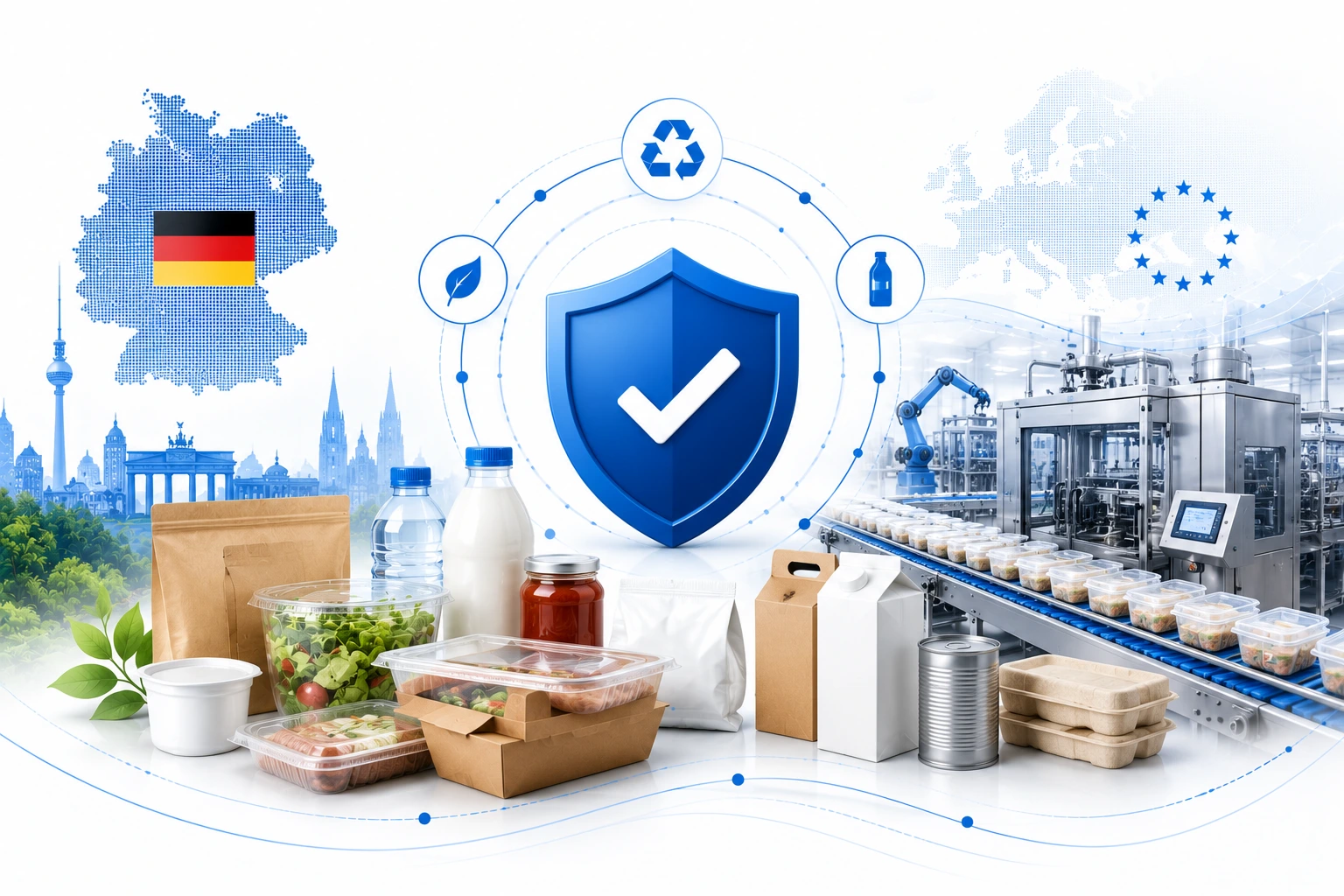
The Netherlands is one of Europe’s largest food manufacturing and export hubs, supplying packaged products across the EU and beyond. From dairy, bakery, and beverages to potato products, confectionery, flowers-adjacent food logistics, and ready-to-eat meals, packaging is essential to protecting product quality and enabling efficient distribution.
The Packaging and Packaging Waste Regulation (PPWR) introduces a harmonized EU framework governing how packaging is designed, documented, and managed throughout its lifecycle. Unlike the previous Packaging Directive, PPWR is directly applicable across all Member States, including the Netherlands, removing the flexibility the Netherlands previously had under its own transposition of EU packaging rules.
For Dutch food manufacturers, compliance goes beyond reducing plastic or lightweighting packaging. Businesses must show that packaging is optimized, designed for recyclability, backed by technical documentation, and aligned with recycled-content, labelling, and producer-responsibility requirements.
Businesses that prepare now will reduce compliance risk, strengthen retailer relationships, and meet growing consumer demand for sustainable packaging.
Key Takeaways
PPWR applies to all packaging placed on the EU market, including primary, secondary, and transport packaging used by food manufacturers.
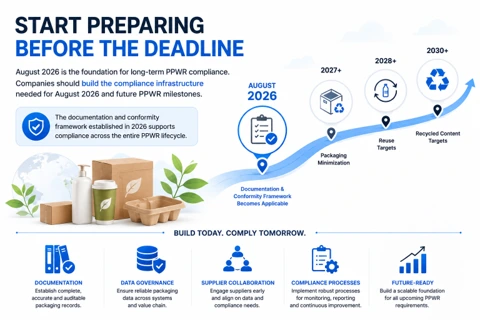
Core provisions begin applying from 12 August 2026, with further obligations phased in over subsequent years.
Manufacturers must optimize packaging design, improve recyclability, maintain technical documentation, and collaborate with suppliers.
Compliance requires centralized packaging data and governance rather than disconnected spreadsheets.
Digital platforms help streamline packaging data management, supplier collaboration, and audit readiness.
Don’t Wait Until PPWR Deadlines Create Compliance Challenges
Preparing for PPWR requires more than understanding the regulation—it requires a practical implementation strategy.
What Is the Packaging and Packaging Waste Regulation (PPWR)?
PPWR is the EU’s new legislative framework designed to reduce packaging waste, promote circularity, and improve packaging sustainability across the single market.
Unlike the previous Directive, which allowed Member States including the Netherlands to apply different national rules, PPWR establishes one harmonized set of requirements covering packaging design, minimization, recyclability, recycled content, labelling, technical documentation, conformity assessment, Extended Producer Responsibility (EPR), and reuse.
For the Netherlands’ food industry, PPWR is one of the most significant packaging regulatory shifts in decades, requiring manufacturers to rethink packaging governance across product development, procurement, operations, sustainability, and compliance functions.
Do You Know Your Responsibilities Under PPWR?
Understanding your responsibilities as an economic operator is the first step toward building a successful PPWR compliance strategy.
Why PPWR Matters for Food Manufacturers in the Netherlands
The Netherlands is one of the EU’s largest food producers and re-exporters, packaging huge volumes of product in plastics, glass, paperboard, aluminium, and composite materials each year for retailers, food service, and export markets.
Packaging is no longer judged only on protection and cost. Regulators, retailers, and consumers expect manufacturers to show that packaging is intentionally designed to minimize waste and support the circular economy.
Key focus areas include eliminating unnecessary packaging, improving recyclability, increasing recycled content where required, maintaining specifications, collecting supplier declarations, and demonstrating compliance during audits.
For manufacturers operating across multiple Dutch sites or selling across EU markets, managing these requirements manually quickly becomes complex.
Which Food Manufacturers Are Affected?
PPWR affects virtually every food manufacturer placing packaged products on the EU market, regardless of size — from multinational producers to growing regional Spanish brands.
Sectors affected include dairy and cheese makers, bakery producers, beverage manufacturers (including beer), meat and seafood processors, frozen food, ready-to-eat meals, snacks, coffee, chocolate, potato and vegetable processors, organic brands, and private-label manufacturers.
The regulation covers nearly every packaging format — bottles, cans, cartons, pouches, corrugated boxes, trays, labels, and transport packaging. If your business places packaged food on the EU market, PPWR should already be part of your compliance strategy.
Understand Your Packaging Scope Before You Begin
Identifying which packaging formats fall under PPWR is the first step toward building a successful compliance program.
Packaging must contain only the material necessary to protect, transport, preserve, and market the product. Manufacturers should eliminate unnecessary components, reduce excess headspace, optimize dimensions, and minimize empty space in transport packaging.
2. Design for Recyclability
Packaging must be designed for effective collection, sorting, and recycling. Manufacturers should assess whether packaging uses recyclable materials, avoids hard-to-recycle combinations, and supports efficient sorting within the Netherlands’ existing recycling infrastructure.
3. Recycled Content Requirements
PPWR introduces mandatory recycled-content targets for certain plastic packaging categories. Manufacturers should identify affected packaging, understand current recycled content levels, obtain supplier declarations, and maintain supporting evidence.
4. Packaging Labelling and Consumer Information
PPWR aims to improve consumer understanding of how to sort, recycle, or dispose of packaging. Depending on packaging type, manufacturers may need to provide information on material composition, recycling instructions, and disposal methods.
5. Technical Documentation and Compliance Records
PPWR requires comprehensive technical documentation demonstrating packaging compliance. Rather than scattered files, organizations need structured, accessible records that can be produced quickly during audits or retailer requests.
EPR remains central to packaging compliance in the Netherlands, where producers and importers register and report packaging placed on the market through Verpact (formerly Stichting Afvalfonds Verpakkingen), paying a Packaging Waste Management Contribution under the Besluit beheer verpakkingen 2014. PPWR complements this system by adding harmonized EU-wide design, recyclability-grading, and documentation requirements. Reliable packaging data is essential for both Verpact reporting and PPWR compliance.
Common PPWR Compliance Challenges for Food Manufacturers
Common PPWR Compliance Challenges
Many manufacturers already hold packaging data in ERP or PLM systems, but it’s often fragmented across procurement, R&D, sustainability, and regulatory teams.
Packaging data spread across multiple systems
Difficulty collecting supplier information
Inconsistent specifications across sites
Manual document management and version control issues
Lengthy audit preparation
Difficulty responding to retailer requests
As regulations grow more complex, manual processes and disconnected documentation are unlikely to provide the governance needed for long-term compliance.
How TraceX Simplifies PPWR Compliance
TraceX PPWR Solutions help food manufacturers centralize packaging data, supplier collaboration, technical documentation, and compliance records within a single digital platform.
With TraceX, organizations can centralize packaging specifications and material data, streamline supplier collaboration, maintain audit-ready documentation, improve data governance, reduce manual effort, and build a scalable foundation for future regulatory requirements.
Ready to Simplify Your PPWR Compliance Journey?
Book a complimentary consultation with a TraceX PPWR expert to assess your packaging compliance readiness and explore how digital traceability can streamline your compliance journey.
PPWR represents a significant shift in how packaging is managed across the EU. For food manufacturers in the Netherlands, compliance requires a comprehensive approach to packaging design, supplier collaboration, technical documentation, and governance — not just sustainable material selection.
Organizations that prepare today will be better positioned to meet regulatory expectations, strengthen customer confidence, and reduce future compliance burdens. Used well, PPWR is an opportunity to optimize packaging, cut costs, and build more resilient supply chains, with a centralized digital platform making the transition efficient and scalable.
FAQs
Does PPWR apply to food manufacturers in the Netherlands?
Yes. Food manufacturers placing packaged products on the EU market are responsible for ensuring that the packaging used complies with the applicable provisions of the PPWR. This includes maintaining the documentation and evidence needed to demonstrate compliance.
Does PPWR apply to food-contact packaging?
Yes. Food-contact packaging is within the scope of PPWR. In addition to PPWR obligations, food-contact packaging must continue to comply with applicable EU food-contact material legislation and any other relevant regulatory requirements.
What documentation should food manufacturers maintain?
Typical documentation includes packaging specifications, supplier declarations, technical documentation, conformity assessment records, Declaration of Conformity (DoC), material composition information, recycled content evidence, laboratory reports, and supporting compliance documentation.
When should food manufacturers begin preparing for PPWR?
Organizations should begin preparing well before the 12 August 2026 application date. Early preparation provides time to review packaging portfolios, engage suppliers, establish documentation processes, and implement packaging data management systems.
How can digital traceability support PPWR compliance?
Digital traceability platforms centralize packaging specifications, supplier declarations, technical documentation, recycled content data, and compliance records. This improves collaboration, simplifies audits, reduces manual administration, and helps organizations maintain accurate, up-to-date compliance information across the packaging lifecycle.
Start using TraceX
Transparency, Trust, & Success for your Climate Journey.
We use cookies on our website to give you the most relevant experience by remembering your preferences and repeat visits. By clicking “Accept All”, you consent to the use of ALL the cookies. However, you may visit "Cookie Settings" to provide a controlled consent.
This website uses cookies to improve your experience while you navigate through the website. Out of these, the cookies that are categorized as necessary are stored on your browser as they are essential for the working of basic functionalities of the website. We also use third-party cookies that help us analyze and understand how you use this website. These cookies will be stored in your browser only with your consent. You also have the option to opt-out of these cookies. But opting out of some of these cookies may affect your browsing experience.
Necessary cookies are absolutely essential for the website to function properly. These cookies ensure basic functionalities and security features of the website, anonymously.
Cookie
Duration
Description
cookielawinfo-checkbox-analytics
11 months
This cookie is set by GDPR Cookie Consent plugin. The cookie is used to store the user consent for the cookies in the category "Analytics".
cookielawinfo-checkbox-functional
11 months
The cookie is set by GDPR cookie consent to record the user consent for the cookies in the category "Functional".
cookielawinfo-checkbox-necessary
11 months
This cookie is set by GDPR Cookie Consent plugin. The cookies is used to store the user consent for the cookies in the category "Necessary".
cookielawinfo-checkbox-others
11 months
This cookie is set by GDPR Cookie Consent plugin. The cookie is used to store the user consent for the cookies in the category "Other.
cookielawinfo-checkbox-performance
11 months
This cookie is set by GDPR Cookie Consent plugin. The cookie is used to store the user consent for the cookies in the category "Performance".
viewed_cookie_policy
11 months
The cookie is set by the GDPR Cookie Consent plugin and is used to store whether or not user has consented to the use of cookies. It does not store any personal data.
Functional cookies help to perform certain functionalities like sharing the content of the website on social media platforms, collect feedbacks, and other third-party features.
Performance cookies are used to understand and analyze the key performance indexes of the website which helps in delivering a better user experience for the visitors.
Analytical cookies are used to understand how visitors interact with the website. These cookies help provide information on metrics the number of visitors, bounce rate, traffic source, etc.
Advertisement cookies are used to provide visitors with relevant ads and marketing campaigns. These cookies track visitors across websites and collect information to provide customized ads.
Download the 2026 Traceability Scorecard and Benchmark Your Supply Chain Across 10 Critical Capabilities.
Download our eBook
Don’t Wait for an Audit to Find Your EUDR Gaps
The 2026 Simplification Package changes how HS codes, DDS pass-through and geolocation rules apply to you. Get the free guide and 20-point readiness checklist before enforcement catches you unprepared.