PPWR Compliance for Packaging Importers in Germany
Published
, 16 minute read
Share this article
Quick summary: Germany is Europe’s largest manufacturing economy and one of the European Union’s biggest markets for packaging materials and packaging products. Every year, businesses across Germany import billions of euros’ worth of packaging from manufacturing hubs around the world to support industries including food and beverage, pharmaceuticals, cosmetics, chemicals, consumer goods, automotive, industrial manufacturing, and e-commerce. […]
Germany is Europe’s largest manufacturing economy and one of the European Union’s biggest markets for packaging materials and packaging products. Every year, businesses across Germany import billions of euros’ worth of packaging from manufacturing hubs around the world to support industries including food and beverage, pharmaceuticals, cosmetics, chemicals, consumer goods, automotive, industrial manufacturing, and e-commerce.
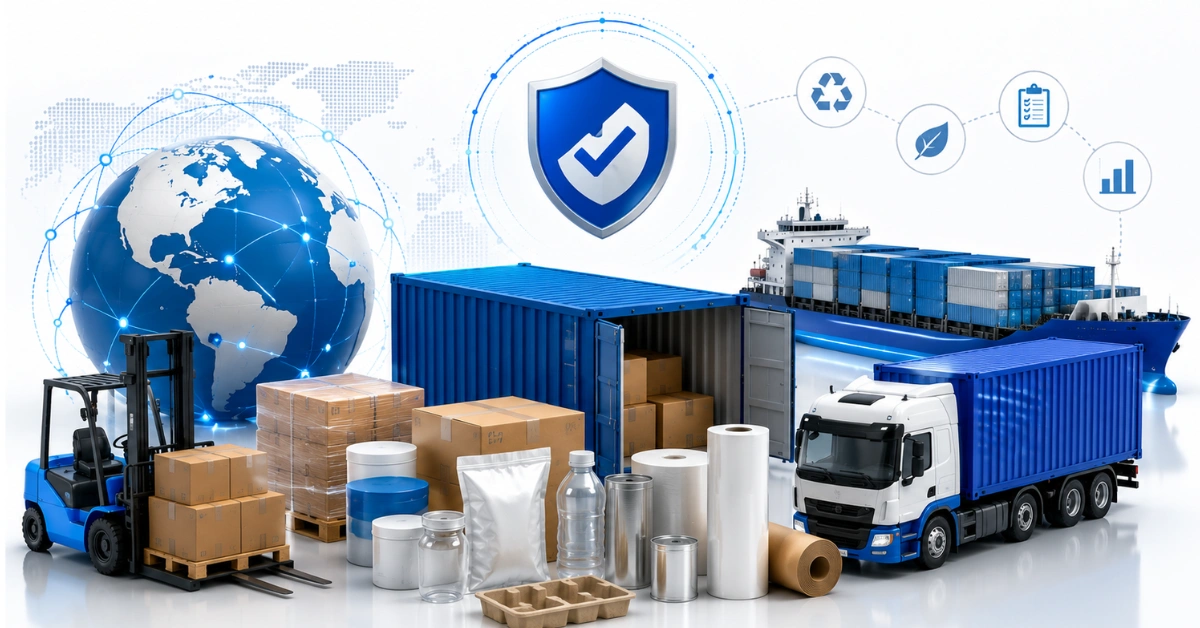
Packaging products are imported from countries such as China, India, Turkey, Vietnam, Thailand, Malaysia, Indonesia, South Korea, Taiwan, and other global manufacturing centers. These imports include everything from corrugated boxes and folding cartons to flexible plastic packaging, glass containers, metal cans, industrial packaging, protective packaging, and transport packaging.
Unlike many industries where the Packaging and Packaging Waste Regulation (PPWR) governs only the packaging accompanying a product, for packaging importers, the packaging itself is the product being placed on the European Union market.
This distinction makes PPWR particularly significant for businesses importing packaging into Germany.
Whether your organization imports plastic packaging, paper packaging, glass containers, aluminium cans, steel drums, flexible packaging, corrugated cartons, wooden pallets, industrial packaging, or composite packaging materials, PPWR introduces new responsibilities for ensuring that imported packaging complies with applicable sustainability and technical requirements before it is placed on the EU market.
Unlike the previous Packaging and Packaging Waste Directive (PPWD), which required implementation through national legislation, the Packaging and Packaging Waste Regulation (PPWR) applies directly across all EU Member States. This creates a harmonized regulatory framework governing packaging manufacturers, importers, distributors, and other economic operators placing packaging on the European market.
For packaging importers, compliance can no longer rely solely on product specifications received from overseas manufacturers or supplier declarations collected during procurement.
As PPWR implementation progresses, compliance will increasingly depend on structured packaging data, technical documentation, supplier collaboration, declaration management, and digital governance not simply maintaining packaging specifications in emails or spreadsheets.
Packaging importers frequently manage thousands of packaging products across multiple material types, including:
Corrugated boxes
Folding cartons
Flexible plastic packaging
Rigid plastic packaging
Glass bottles and jars
Aluminium cans
Steel containers
Paper bags
Plastic films
Shrink films
Stretch films
Labels
Wooden pallets
Plastic pallets
Protective packaging
Composite packaging
Each packaging product may be supplied by a different manufacturer and may require supporting technical documentation, material information, declarations, and compliance evidence under PPWR.
For organizations importing hundreds or thousands of packaging SKUs from multiple countries, managing this information manually quickly becomes a significant operational challenge.
Rather than viewing PPWR as another environmental regulation, packaging importers should see it as an opportunity to establish stronger packaging governance, improve supplier collaboration, centralize technical documentation, maintain audit-ready compliance records, and build scalable packaging compliance processes that support long-term business growth across the European Union.
Key Takeaways
If your organization imports packaging products into Germany, PPWR introduces new responsibilities throughout the packaging lifecycle.
Your compliance priorities should include:
Packaging conformity verification
Technical documentation management
Declaration of Conformity (where applicable)
Supplier compliance documentation
Material declarations
Packaging data management
Design-for-recyclability verification
Recycled-content evidence (where applicable)
Packaging minimization
Packaging governance
Audit readiness
Cross-functional collaboration
Rather than treating PPWR as a one-time regulatory obligation, packaging importers should establish scalable packaging governance processes that support regulatory compliance, supplier collaboration, operational efficiency, and future sustainability requirements.
Prepare for PPWR Before Compliance Deadlines Arrive
Download our complimentary PPWR Implementation Handbook and learn how to build a scalable packaging compliance program for imported packaging products before the August 2026 compliance milestone.
What Is the Packaging and Packaging Waste Regulation (PPWR)?
The Packaging and Packaging Waste Regulation (PPWR) establishes a harmonized legal framework governing packaging placed on the European Union market, regardless of the industry in which it is used or the products it ultimately contains.
Its objectives are to:
Reduce packaging waste across the European Union
Improve packaging recyclability
Increase the use of recycled materials
Encourage reusable packaging systems where applicable
Minimize unnecessary packaging
Support the EU’s transition toward a circular economy
Unlike the previous Packaging and Packaging Waste Directive (PPWD), which required implementation through national legislation, PPWR is a regulation. This means it applies directly across all EU Member States, creating a consistent set of packaging requirements for manufacturers, importers, distributors, and other economic operators placing packaging on the EU market.
For packaging importers, compliance extends well beyond importing products that meet commercial specifications.
Organizations should be able to demonstrate that imported packaging is supported by appropriate technical documentation, supplier information, material declarations, conformity evidence, and structured packaging data before that packaging is placed on the EU market.
This requires close collaboration with packaging manufacturers, raw material suppliers, converters, printers, logistics providers, and procurement teams across global supply chains.
Rather than viewing PPWR as a standalone environmental regulation, packaging importers should consider it part of a broader packaging governance strategy that integrates regulatory compliance, supplier collaboration, sustainability objectives, and operational excellence.
Why PPWR Matters for Packaging Importers in Germany
Germany is one of Europe’s largest importers and consumers of packaging materials, supplying industries ranging from food and beverage to pharmaceuticals, cosmetics, chemicals, automotive, industrial manufacturing, retail, and e-commerce.
Every year, German businesses import millions of packaging products from manufacturing facilities across the world. Major sourcing countries include China, India, Turkey, Vietnam, Thailand, Malaysia, Indonesia, South Korea, Taiwan, Poland, and other established packaging manufacturing hubs.
Common imported packaging categories include:
Corrugated boxes
Folding cartons
Flexible plastic packaging
Rigid plastic packaging
Paper bags
Glass bottles and jars
Metal cans
Aluminium packaging
Steel drums
Composite packaging
Industrial packaging
Protective packaging
Transport packaging
Labels and sleeves
Pallets and crates
Unlike many other industries where PPWR regulates the packaging surrounding a product, packaging importers place packaging itself on the European Union market.
This makes packaging compliance central to their business operations rather than an extension of product compliance.
Each packaging product may consist of one or more materials and components that require supporting technical information before being placed on the EU market.
For example, a folding carton imported from Asia may include:
Virgin or recycled paperboard
Printing inks
Adhesives
Coatings
Labels
Protective finishes
Similarly, a flexible packaging pouch may consist of:
Multiple polymer layers
Barrier coatings
Printing inks
Adhesives
Closures
Labels
Each material or component may originate from different suppliers and require its own supporting documentation.
As packaging portfolios become more diverse, so does the complexity of managing compliance information.
Many packaging importers assume that overseas manufacturers will automatically provide all documentation required under PPWR.
However, relying solely on supplier declarations without structured packaging governance can create significant operational challenges.
For organizations importing hundreds or thousands of packaging SKUs from multiple suppliers, these challenges quickly become operational rather than administrative.
Each supplier may maintain documentation in different formats, languages, systems, and revision cycles.
Managing this information through spreadsheets, shared folders, and email chains becomes increasingly difficult as supplier networks expand.
At the same time, customers are placing greater emphasis on packaging transparency and sustainability.
Brand owners, manufacturers, retailers, distributors, and regulatory authorities increasingly request information
Organizations that can quickly retrieve accurate packaging information are better positioned to support customer due diligence, respond to regulatory inspections, and strengthen supplier relationships.
For packaging importers, establishing centralized packaging governance today will not only support PPWR compliance but also improve operational efficiency, supplier collaboration, customer confidence, and long-term business resilience.
Manufacturers, Importers, and Other Economic Operators All Have Different Responsibilities
One of the most important aspects of PPWR is understanding which role your organization performs within the packaging supply chain.
What Should Packaging Importers Prioritize Before the August 2026 PPWR Deadline?
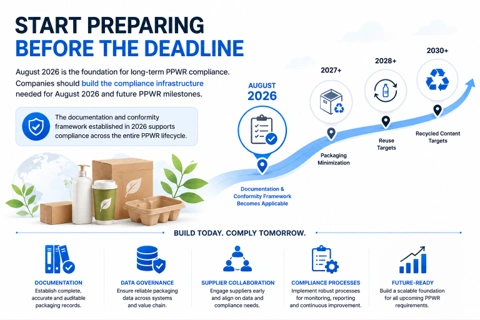
Although several PPWR obligations including packaging minimization, design-for-recycling criteria, recycled-content targets, labeling requirements, and reuse provisions—will be introduced progressively over the coming years, 12 August 2026 marks the first major implementation milestone for the Packaging and Packaging Waste Regulation (PPWR).
By this date, packaging importers placing packaging products on the EU market should be prepared to demonstrate compliance with the applicable provisions of the regulation.
Waiting until implementation deadlines approach is likely to create unnecessary pressure across procurement, quality, regulatory affairs, sustainability, product management, logistics, and compliance teams.
Instead, organizations should begin establishing the governance, supplier collaboration, technical documentation, and digital infrastructure needed to support long-term packaging compliance.
The following priorities form the foundation of a robust PPWR compliance strategy for packaging importers.
Verify That Imported Packaging Meets PPWR Requirements
Collect Technical Documentation from Global Packaging Suppliers
Strengthen Collaboration with Packaging Suppliers
Build a Centralized Packaging Data Management Strategy
Prepare for Market Surveillance and Regulatory Audits
Future-Proof Your Packaging Compliance Program
Common PPWR Scenarios for Packaging Importers
Understanding PPWR becomes much easier when viewed through practical business situations. The following examples illustrate how packaging compliance responsibilities arise during day-to-day packaging import operations.
Scenario 1: Importing Folding Cartons from China into Germany
A German packaging importer sources folding cartons from a manufacturer in China for supply to food and consumer goods companies.
The cartons meet the agreed commercial specifications and are ready for shipment.
However, before placing the packaging on the EU market, the importer should verify that appropriate technical documentation, material information, and supporting compliance documentation are available.
Without centralized packaging records, responding to customer requests or regulatory inspections can become time-consuming and resource-intensive.
Scenario 2: A Supplier Changes the Paperboard Grade
A packaging manufacturer replaces the paperboard grade used to produce folding cartons because of changes in raw material availability.
The packaging design appears unchanged, but the underlying material specification has been modified.
If this change is not communicated and documented, previously collected compliance information may no longer accurately represent the packaging being placed on the EU market.
This highlights the importance of packaging change management and version control within every PPWR compliance program.
Scenario 3: Importing Flexible Packaging from Multiple Countries
A German importer sources flexible packaging from manufacturers in Vietnam, Thailand, India, and Turkey.
Each supplier uses different material structures, manufacturing processes, documentation formats, and revision controls.
Managing compliance documentation manually across multiple suppliers becomes increasingly difficult as product portfolios grow.
A centralized packaging governance platform enables organizations to standardize supplier collaboration, maintain accurate documentation, and simplify compliance management across global supply chains.
Scenario 4: A Brand Owner Requests Packaging Sustainability Information
A multinational food manufacturer evaluates packaging suppliers before awarding a long-term supply agreement.
In addition to pricing and quality, the procurement team requests supporting documentation related to recyclability, material composition, technical documentation, and packaging sustainability.
Organizations with centralized packaging information can respond quickly and confidently.
Those relying on emails, spreadsheets, and manual document collection often spend days contacting overseas suppliers to retrieve the required information.
As sustainability expectations continue to increase, the ability to provide accurate packaging information efficiently is becoming an important competitive advantage alongside product quality, delivery performance, and pricing.
Challenges Packaging Importers Commonly Face
As PPWR implementation progresses, packaging importers are discovering that compliance extends far beyond collecting a few supplier declarations or maintaining packaging specifications.
Most organizations source packaging products from multiple manufacturers across different countries, each using their own documentation formats, approval processes, material specifications, and revision controls.
Without structured packaging governance, these differences create operational complexity that becomes increasingly difficult to manage as product portfolios expand.
Some of the most common challenges packaging importers face include:
Limited visibility into packaging supplied by overseas manufacturers
Thousands of packaging SKUs across multiple material types
Multiple suppliers contributing to different packaging categories
Packaging revisions introduced without centralized notification
Inconsistent technical documentation formats
Missing or outdated supplier declarations
Manual document collection through emails and spreadsheets
Limited version control for packaging specifications
Difficulty tracking material changes
Increasing customer requests for packaging sustainability information
Greater administrative effort during inspections and audits
Limited collaboration between procurement, sustainability, quality, and regulatory teams
For organizations importing hundreds or even thousands of packaging products, these issues rapidly become operational challenges rather than isolated compliance tasks.
Meeting PPWR requirements starts with accurate packaging data, comprehensive technical documentation, effective supplier collaboration, and structured governance processes that ensure packaging information remains current throughout the product lifecycle.
Learn how to prepare your organization for packaging conformity assessments, documentation requirements, recyclability obligations, declaration management, and ongoing compliance.
How Packaging Importers Can Build a PPWR Compliance Program
Achieving PPWR compliance requires much more than assembling documentation shortly before a regulatory inspection.
For packaging importers managing multiple suppliers, manufacturing sites, packaging categories, and material types, compliance should become an embedded operational process supported by structured governance, centralized packaging information, and continuous supplier collaboration.
Rather than reacting to regulatory requests, organizations should establish standardized workflows that maintain packaging compliance throughout the packaging lifecycle.
An effective PPWR compliance program typically consists of five core pillars.
1. Centralize Packaging Information
Packaging information should be maintained in one trusted location rather than scattered across spreadsheets, shared folders, procurement systems, email chains, and individual document repositories.
Creating a single source of truth improves consistency while reducing duplicate records and simplifying regulatory reporting.
It also enables organizations to retrieve packaging information quickly whenever customers, auditors, or regulators request supporting documentation.
2. Digitize Supplier Collaboration
Supplier collaboration is fundamental to successful PPWR compliance.
Most of the documentation required under PPWR originates from packaging manufacturers and material suppliers.
Rather than relying on lengthy email exchanges and manual follow-ups, packaging importers should establish standardized digital supplier collaboration workflows.
Digital collaboration helps ensure supplier documentation remains current throughout the packaging lifecycle while significantly reducing administrative effort.
3. Manage Technical Documentation
Technical documentation should be treated as a strategic compliance asset rather than a collection of disconnected files.
Organizations should establish standardized processes for collecting, reviewing, approving, and maintaining documentation across all imported packaging products.
Documentation should remain linked to the relevant packaging SKU, supplier, material specification, and packaging version.
Version control is equally important.
Whenever packaging materials, specifications, suppliers, or manufacturing processes change, supporting documentation should be reviewed and updated before the revised packaging is placed on the EU market.
A structured documentation management process reduces compliance risk while improving operational efficiency.
4. Establish Packaging Governance
Packaging products evolve continuously.
Suppliers change materials.
Packaging designs are optimized.
Raw materials become unavailable.
Manufacturing processes improve.
Without formal governance, documentation quickly becomes outdated.
Embedding governance into everyday operations helps organizations maintain compliance without relying on reactive document collection.
5. Maintain Continuous Audit Readiness
PPWR compliance should not begin when regulators request documentation.
Instead, packaging importers should maintain continuously updated compliance records that are readily available whenever required.
Organizations that embed audit readiness into their daily operations significantly reduce the effort required during market surveillance inspections, customer audits, sustainability assessments, and regulatory reviews.
PPWR introduces obligations that extend well beyond packaging design. From technical documentation and conformity assessments to recyclability, packaging minimization, declaration management, and economic operator responsibilities, understanding the regulation is essential for building a scalable compliance strategy.
How TraceX Helps Packaging Importers Prepare for PPWR
Managing packaging compliance across multiple suppliers, countries, packaging categories, and thousands of SKUs is becoming increasingly complex.
Unlike ERP systems that primarily manage purchasing, inventory, and logistics, packaging information is often fragmented across procurement teams, quality departments, sustainability functions, regulatory affairs, suppliers, and disconnected document repositories.
TraceX PPWR Solutions helps packaging importers centralize this information through a purpose-built digital platform designed to simplify packaging compliance, strengthen supplier collaboration, and improve regulatory readiness.
Whether your organization imports paper packaging, plastic packaging, glass containers, metal packaging, industrial packaging, or flexible packaging, TraceX enables you to standardize packaging governance across your global supplier network.
Rather than building separate compliance processes for every packaging supplier or product category, TraceX enables organizations to standardize packaging governance across their entire packaging portfolio.
The result is improved operational efficiency, stronger supplier collaboration, faster access to compliance documentation, and greater confidence during regulatory inspections and customer audits.
Final Thoughts
For packaging importers in Germany, PPWR represents far more than another environmental regulation.
It fundamentally changes how packaging products are managed before they are placed on the European Union market.
Historically, packaging importers have focused on commercial specifications, pricing, quality, supplier performance, and delivery timelines. While technical documentation and compliance records have always been important, they have often been managed through fragmented spreadsheets, emails, shared folders, and disconnected supplier communications.
PPWR raises the bar by requiring organizations to adopt a more structured approach to packaging governance.
As packaging portfolios continue to grow and supplier networks become increasingly global, relying on manual document collection and reactive compliance processes will become increasingly difficult.
Organizations importing packaging products from multiple countries should be prepared to demonstrate that appropriate documentation, supplier information, and packaging data are readily available whenever requested by customers or market surveillance authorities.
This requires moving beyond isolated compliance activities toward an integrated packaging governance strategy built on centralized data, standardized supplier collaboration, effective documentation management, and continuous audit readiness.
Frequently Asked Questions (FAQ’s)
Does PPWR apply to packaging importers?
Yes.
Packaging importers placing packaging products on the European Union market have responsibilities under PPWR. Depending on the packaging being imported and the role performed by the organization, importers should ensure that imported packaging complies with the applicable provisions of the regulation before it is placed on the EU market.
What documentation should packaging importers collect?
Depending on the packaging type and applicable PPWR requirements, organizations should maintain documentation such as:
Technical Documentation
Declaration of Conformity (where applicable)
Packaging specifications
Material composition
Material declarations
Supplier declarations
Laboratory or test reports
Packaging drawings
Recyclability assessments
Recycled-content information (where applicable)
Maintaining structured documentation helps organizations respond efficiently to customer requests, regulatory inspections, and market surveillance activities.
Can packaging importers rely entirely on overseas manufacturers for PPWR compliance?
No.
While packaging manufacturers and material suppliers provide much of the supporting documentation, packaging importers should verify that appropriate technical documentation and compliance information are available before placing packaging products on the EU market.
Establishing standardized supplier collaboration processes helps ensure documentation remains accurate and up to date throughout the packaging lifecycle.
Why is packaging data management important for packaging importers?
Packaging information is often distributed across procurement teams, quality departments, sustainability functions, regulatory affairs, suppliers, and multiple software systems.
A centralized packaging data strategy improves supplier collaboration, simplifies regulatory reporting, strengthens audit readiness, and enables organizations to manage packaging changes more effectively while supporting long-term PPWR compliance.
How can digital platforms help packaging importers prepare for PPWR?
Digital compliance platforms replace fragmented manual processes with standardized workflows for supplier collaboration, technical documentation management, declaration management, packaging governance, and audit readiness.
By creating a centralized source of truth for packaging information, organizations can reduce compliance risk, improve operational efficiency, respond more quickly to regulatory requests, and establish a scalable foundation for future sustainability regulations.
How TraceX Helps Packaging Importers Prepare for PPWR
Managing packaging compliance across multiple suppliers, countries, packaging categories, and thousands of packaging SKUs is becoming increasingly complex.
TraceX PPWR Solutions provides a centralized digital platform purpose-built to help packaging importers streamline compliance while strengthening supplier collaboration and packaging governance.
Start using TraceX
Transparency, Trust, & Success for your Climate Journey.
We use cookies on our website to give you the most relevant experience by remembering your preferences and repeat visits. By clicking “Accept All”, you consent to the use of ALL the cookies. However, you may visit "Cookie Settings" to provide a controlled consent.
This website uses cookies to improve your experience while you navigate through the website. Out of these, the cookies that are categorized as necessary are stored on your browser as they are essential for the working of basic functionalities of the website. We also use third-party cookies that help us analyze and understand how you use this website. These cookies will be stored in your browser only with your consent. You also have the option to opt-out of these cookies. But opting out of some of these cookies may affect your browsing experience.
Necessary cookies are absolutely essential for the website to function properly. These cookies ensure basic functionalities and security features of the website, anonymously.
Cookie
Duration
Description
cookielawinfo-checkbox-analytics
11 months
This cookie is set by GDPR Cookie Consent plugin. The cookie is used to store the user consent for the cookies in the category "Analytics".
cookielawinfo-checkbox-functional
11 months
The cookie is set by GDPR cookie consent to record the user consent for the cookies in the category "Functional".
cookielawinfo-checkbox-necessary
11 months
This cookie is set by GDPR Cookie Consent plugin. The cookies is used to store the user consent for the cookies in the category "Necessary".
cookielawinfo-checkbox-others
11 months
This cookie is set by GDPR Cookie Consent plugin. The cookie is used to store the user consent for the cookies in the category "Other.
cookielawinfo-checkbox-performance
11 months
This cookie is set by GDPR Cookie Consent plugin. The cookie is used to store the user consent for the cookies in the category "Performance".
viewed_cookie_policy
11 months
The cookie is set by the GDPR Cookie Consent plugin and is used to store whether or not user has consented to the use of cookies. It does not store any personal data.
Functional cookies help to perform certain functionalities like sharing the content of the website on social media platforms, collect feedbacks, and other third-party features.
Performance cookies are used to understand and analyze the key performance indexes of the website which helps in delivering a better user experience for the visitors.
Analytical cookies are used to understand how visitors interact with the website. These cookies help provide information on metrics the number of visitors, bounce rate, traffic source, etc.
Advertisement cookies are used to provide visitors with relevant ads and marketing campaigns. These cookies track visitors across websites and collect information to provide customized ads.
Download the 2026 Traceability Scorecard and Benchmark Your Supply Chain Across 10 Critical Capabilities.
Download our eBook
Don’t Wait for an Audit to Find Your EUDR Gaps
The 2026 Simplification Package changes how HS codes, DDS pass-through and geolocation rules apply to you. Get the free guide and 20-point readiness checklist before enforcement catches you unprepared.